
A crash on I-44, Memorial Drive, or a quiet street in Midtown can leave you trying to make decisions before the adrenaline wears off. This accident response example gives Tulsa drivers a practical order of operations: protect people first, secure the scene if possible, document what happened, and get the vehicle handled safely.
The goal is not to solve every detail at the roadside. It is to avoid a second collision, make sure anyone who needs medical help gets it, and keep a damaged vehicle from creating more trouble.
Accident Response Example: A Rear-End Crash in Tulsa
Picture a common situation. You are headed through South Tulsa during afternoon traffic when another vehicle hits the back of your car at a stoplight. Your car still starts, but the rear bumper is pushed in, one taillight is broken, and traffic is moving around you.
First, check yourself and your passengers for injuries. Ask plainly if anyone is hurt, dizzy, confused, or having pain. If there is any injury, possible injury, fire, leaking fluid, or immediate traffic danger, call 911. Do not try to move someone who may have a serious injury unless staying put creates a greater danger.
If everyone is safe enough to move and the vehicle can be moved without dragging parts, leaking fluids, or creating another hazard, carefully pull out of the traffic lane. A nearby parking lot, wide shoulder, or safe side street is usually better than stopping in an active lane. Turn on hazard lights. On busy roads such as US 75 or Highway 169, staying visible matters as much as exchanging information.
If the car will not move safely, leave it where it is and get to a safer position away from traffic when possible. Do not stand between vehicles or remain directly behind a damaged car. Other drivers may not see the scene in time, especially at night or in bad weather.
Once the scene is stable, call law enforcement when required or when the crash involves injuries, disputed facts, substantial damage, or an unsafe roadway situation. Follow the dispatcher’s and responding officer’s instructions. They can tell you whether vehicles should stay in place and what information is needed at the scene.
What to Do Before a Tow Truck Arrives
After everyone is safe and help is on the way, use your phone to record the basics. Take wide photos showing the position of the vehicles, close photos of damage, pictures of license plates, and photos of the surrounding area. Include skid marks, traffic signals, road conditions, and debris if they help show what happened. A quick photo is often more reliable than trying to remember details later.
Exchange names, contact information, driver’s license details, insurance information, and vehicle information with the other driver. Keep the conversation calm and limited to the facts. You do not need to argue about fault at the roadside or make assumptions about damage that cannot be seen yet.
If there are witnesses, ask for a name and phone number. A witness may leave before an officer arrives, and their account can be useful later. If you have a dash camera, make sure the footage is saved rather than overwritten.
There are a few things not to do after a crash. Do not drive away just because the damage looks minor. Do not accept a handshake agreement in place of proper information. Do not let a damaged vehicle keep running if you smell fuel, see smoke, notice a fluid leak, or hear grinding from a wheel or underbody.
Decide Whether the Vehicle Should Be Driven
A car can look drivable and still be unsafe after an accident. A damaged bumper may be loose against a tire. A hit to the wheel can affect steering. A low-clearance car may have underbody damage that is not obvious from the driver’s seat. With an electric vehicle, damage near the battery area needs extra caution even when the vehicle appears normal.
If there is any doubt, arrange a tow. This is not just about getting the car off the road. It is about preventing more damage and avoiding a breakdown halfway home or on the way to a repair shop.
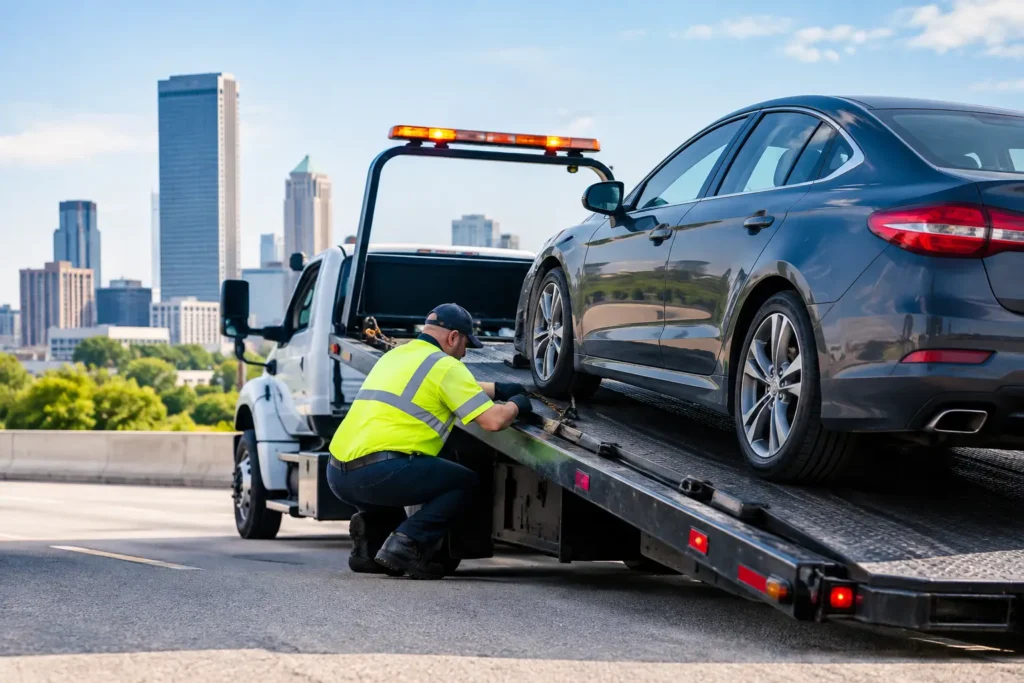
A proper flatbed is a good fit for many accident vehicles because the car rides fully off the ground. That matters for all-wheel-drive vehicles, low-profile cars, trucks with suspension damage, and EVs such as Tesla. The loading process should be planned around the vehicle’s condition, not rushed because traffic is waiting.
Choosing a Safe Destination After an Accident
Before requesting towing, decide where you want the vehicle delivered. Most drivers choose a body shop, repair shop, dealership, or their home. If your insurer has a preferred repair process, you can ask them for direction, but you still need a clear plan for where the vehicle should go that day.
Give the tow operator the make, model, location, and a straightforward description of the damage. Mention if the vehicle will not roll, has a flat tire, has wheel damage, is in a parking garage, or is an EV. Those details help ensure the right equipment and loading approach are used.
For example, a disabled pickup near Tulsa Hills may need a different setup than a low sedan in a Downtown garage. A vehicle with a bent wheel in Broken Arrow may need to be winched carefully onto the bed instead of driven or pulled in a way that adds damage. Clear information up front saves time once the truck arrives.
Tulsa Towing, powered by Neptune Towing, focuses on getting accident-damaged vehicles to the customer’s chosen destination with proper flatbed handling. The work is straightforward: assess the vehicle, load it safely, secure it correctly, and transport it without adding unnecessary stress to an already difficult situation.
Keep Your Personal Property in Mind
Before the vehicle leaves, remove essentials you may need right away: your wallet, keys, medication, work equipment, child seats if appropriate, and any valuables in plain sight. Take a final look through the cabin, trunk, and glove box if it is safe to do so.
You should also take a few photos of the vehicle immediately before towing. This is a simple record of its condition and visible damage at pickup. If a tow operator needs access to a special tow hook location, battery disconnect, or neutral override, provide the owner’s manual information when available. Do not guess, especially with an EV or newer vehicle.
A Simple Accident Checklist When Stress Takes Over
When people are shaken up, they often remember the steps out of order. Keep this sequence in mind:
- Check for injuries and call 911 when needed.
- Get out of traffic only if it is safe and the vehicle can move safely.
- Turn on hazards and stay away from moving vehicles.
- Document the scene and exchange information.
- Follow law enforcement instructions.
- Choose a safe tow destination instead of driving a questionable vehicle.
That is the practical accident response example most drivers need. It is not about handling the whole situation perfectly. It is about making the next safe decision, then the one after that.
A crash can turn a normal drive home from Jenks or Bixby into a long evening quickly. Keep your phone charged when possible, know where your insurance information is stored, and remember that a careful tow is usually the better call when the vehicle has taken a hit. Once the car is safely where it needs to be, you can handle the repair decisions without standing on the side of a busy Tulsa road.

