
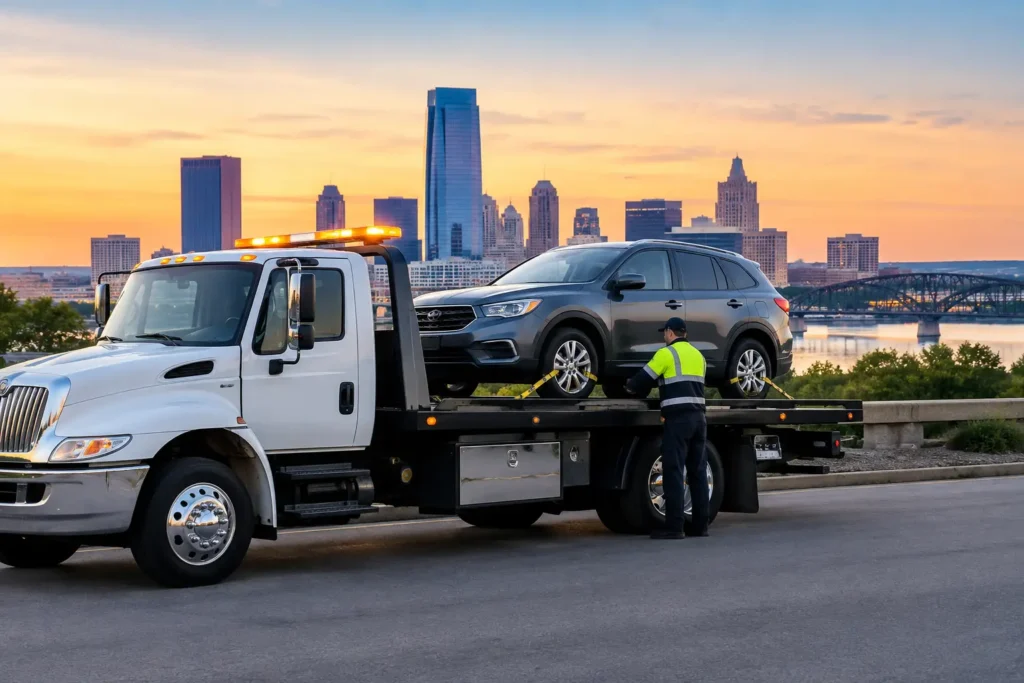
A stalled vehicle on I-44, a dead battery in a Midtown parking lot, or an accident near Memorial can turn a normal day into a problem fast. When you need a tow truck in Tulsa, the first goal is simple: get yourself out of danger, get clear information to the driver, and make sure your vehicle is handled the right way.
Not every situation requires the same response. Some vehicles need a jumpstart or tire change. Others should not be driven another foot and need to be loaded onto a flatbed. Knowing the difference can help you make a better call while keeping the process moving.
Get Safe Before Calling a Tow Truck
If your vehicle quits on a busy road, safety comes before diagnosing the problem. Move as far from traffic as the vehicle will safely allow. On US 75, Highway 169, Riverside Drive, and other high-traffic Tulsa routes, a disabled vehicle can become a hazard quickly.
Turn on your hazard lights. If you can exit safely, stand well away from traffic, preferably behind a guardrail or in a protected area. Do not stay in a travel lane or try to push a vehicle across active traffic. If there is an immediate danger, call emergency services first.
In a parking lot, apartment complex, garage, or residential street, the risk may be lower, but the same idea applies. Give the tow operator room to work and keep passengers clear while the vehicle is being loaded. Tight spaces in Downtown Tulsa garages or crowded South Tulsa shopping areas often require careful positioning before a truck can safely approach.
Decide Whether You Need Roadside Help or a Tow
A tow truck is not always the first thing your vehicle needs. If the problem is a dead battery, a flat tire with a usable spare, or keys locked inside, roadside assistance may get you moving without transport. A trained operator can assess the situation on site and let you know whether a tow is still the safer choice.
There are times when towing is the clear answer. Do not drive the vehicle if it has collision damage, a serious fluid leak, overheating, steering trouble, a broken wheel, or a warning light accompanied by poor handling. Continuing to drive can turn a repairable issue into more expensive damage.
Electric vehicles deserve extra care. A Tesla or other EV may have specific loading points and transport requirements. Improper towing can damage the battery area, suspension, or drivetrain. Flatbed transport is usually the right method for EVs and for many all-wheel-drive, low-clearance, and luxury vehicles.
What to Tell the Tow Truck Driver
Clear details make dispatch faster and help the driver arrive with the right equipment. You do not need to know every mechanical detail. Describe what happened in plain terms: the vehicle will not start, the tire is flat, it was in an accident, it is stuck, or it cannot be shifted into gear.
Your exact location matters just as much. A street name alone may not be enough if you are on a highway, at a large retail center, or in a complex with multiple entrances. Mention the nearest cross street, exit number, store, apartment gate, or visible landmark. If you are near Tulsa Hills, for example, say which side of the shopping area you are on and whether the vehicle is accessible from the main drive.
Also share the vehicle year, make, model, and color. Let the operator know if it is lowered, electric, all-wheel drive, carrying heavy cargo, parked in a garage, or blocked by another vehicle. These details are not minor. They affect the safest way to load and transport the vehicle.
If you already know where the vehicle needs to go, have that address ready. It may be a repair shop, dealership, your home, or another location within the local service area. Confirming the destination before the truck arrives prevents delays once the vehicle is loaded.
Why Flatbed Towing Matters
A flatbed carries the entire vehicle off the ground. That protects tires, wheels, suspension components, and drivetrain parts from unnecessary movement during transport. For a vehicle that will not roll, has accident damage, or has a low front end, it is often the safest option.
Careful loading matters as much as the truck itself. The operator needs to look at clearance, wheel position, vehicle condition, and the space around it before pulling anything onto the bed. A car that is sitting nose-down near a curb needs a different approach than a heavy-duty pickup stuck in soft ground near Bixby.
There can be trade-offs. A tight garage or narrow driveway may limit where a flatbed can position. In those cases, the driver may need to assess the scene, adjust the approach, or use a controlled winch setup to get the vehicle into a safe loading position. The right answer depends on the vehicle and the location, not on rushing through the job.
Common Tulsa Situations That Need Careful Handling
Tulsa roads and weather create plenty of real-world towing calls. Summer heat exposes weak batteries and cooling problems. Heavy rain can leave vehicles stuck in muddy shoulders, wet grass, or drainage areas. Winter ice can lead to slide-offs on bridges, ramps, and neighborhood hills.
A winch-out may be needed when the vehicle is off the pavement or unable to move under its own power. This is not simply hooking up a cable and pulling. The angle of the pull, ground condition, vehicle location, and available anchor points all matter. A poor recovery can cause more damage or put people nearby at risk.
Accident towing also requires patience. Even if a vehicle looks drivable, a damaged wheel, loose bumper, leaking fluid, or shifted suspension can make driving unsafe. A flatbed keeps the vehicle stable while it goes to the repair facility or dealership you choose.
For drivers in Broken Arrow, Jenks, Glenpool, and Bixby, the same basics apply. The best call is one where the operator understands exactly where you are, what vehicle is involved, and what condition it is in before arriving.
Avoid Making the Situation Worse
When a car will not start or move, it is tempting to keep trying. Repeated jump attempts, hard acceleration, spinning tires, or forcing a vehicle into gear can create a larger problem. If the engine is overheating, shut it down rather than trying to make it to the next exit. If a tire is damaged, do not drive on it until it fails completely.
Be cautious about accepting help from someone without proper towing equipment. A strap pull from another vehicle can be risky, especially with modern vehicles, all-wheel-drive systems, or vehicles stuck at an angle. The recovery points may not be obvious, and attaching to the wrong part can damage the bumper, suspension, or undercarriage.
If your vehicle is in a safe spot, take a few photos of its condition before loading. This is particularly useful after an accident or when there is visible body damage. Then remove valuables, gather your registration and insurance information if needed, and make sure the operator has the correct destination.
A Straightforward Local Towing Call
A good towing call should not add confusion to an already stressful situation. You should know that help is on the way, understand what service is being provided, and feel confident that the vehicle will be handled carefully.
Tulsa Towing, powered by Neptune Towing, focuses on flatbed transport, emergency towing, and roadside help for drivers throughout Tulsa and nearby communities. The work is centered on getting the vehicle where it needs to go safely, without unnecessary complications.
If your vehicle is disabled, stay safe, share clear details, and do not force it to keep moving when something is wrong. The right tow truck and careful handling can turn a bad roadside stop into a manageable repair day.

