A car lockout can turn serious fast when it happens on I-44, a busy Memorial Drive lot, or outside your home after dark. This car lockout safety guide covers the first decisions that protect you, your passengers, and your vehicle while help is on the way.
The goal is not to get back inside as fast as possible at any cost. The goal is to get everyone to a safe place, avoid damaging the vehicle, and use the right kind of help for the situation. A bent door frame, broken window, or damaged weather seal can cost far more than a professional lockout service.
First, Move Yourself Out of Danger
Before you think about the keys, look at where the vehicle is sitting. A lockout in a quiet driveway in South Tulsa is frustrating, but it is different from being stranded on the shoulder of US 75 or in a crowded Downtown Tulsa parking area.
If the vehicle is in a travel lane, near moving traffic, or on a narrow shoulder, get yourself and passengers as far away from traffic as you safely can. Stand behind a barrier when one is available. Do not stand between your vehicle and approaching traffic, and do not sit in a vehicle that is exposed to a possible rear-end collision just because your keys are inside it.
At night, stay in a well-lit spot where you can see approaching people and vehicles. If you are in a parking lot, a nearby business entrance can be safer than waiting beside the car. Keep your phone charged if possible and avoid walking a long distance along a highway to find help.
If someone is threatening you, you are in immediate danger, or the vehicle is creating a hazardous traffic situation, call 911. A roadside lockout service can handle the locked vehicle, but emergency responders should handle an active safety threat.
Children, Pets, and Medical Needs Change the Call
A child, pet, or medically vulnerable passenger locked inside a vehicle is an emergency, especially during Oklahoma heat or freezing weather. Call 911 immediately. Do not wait to compare prices, call several providers, or assume you have time because a window is cracked.
Vehicle temperatures can rise quickly, even on days that do not feel extremely hot. Tell dispatch the location, vehicle description, whether the engine is running, and who is inside. Stay close enough to monitor the situation without putting yourself in traffic danger.
If a person inside is showing signs of distress, follow the instructions given by emergency dispatch. Breaking a window may be necessary in a true life-safety emergency, but it carries injury risk from glass and should not be the first move in a standard lockout.
Car Lockout Safety Guide: Avoid DIY Damage
When keys are visible on the seat or locked in the ignition, it is tempting to grab a coat hanger, screwdriver, wedge, or whatever is nearby. That approach causes a lot of avoidable damage.
Modern door systems have side airbags, wiring, electronic locks, window tracks, and tight weather seals inside the door. Forcing a metal tool through the top of the door can bend the frame or tear the seal. On some vehicles, especially newer models and EVs, a bad attempt can create a much larger repair than the original lockout.
Do not pry the door open, force the window down, or repeatedly pull on handles and key fobs. If the fob battery is weak, check your owner’s manual for the vehicle’s emergency entry procedure. Many fobs have a concealed mechanical key, but the release location and method vary by make and model. Use that feature only if you know how it works without forcing anything.
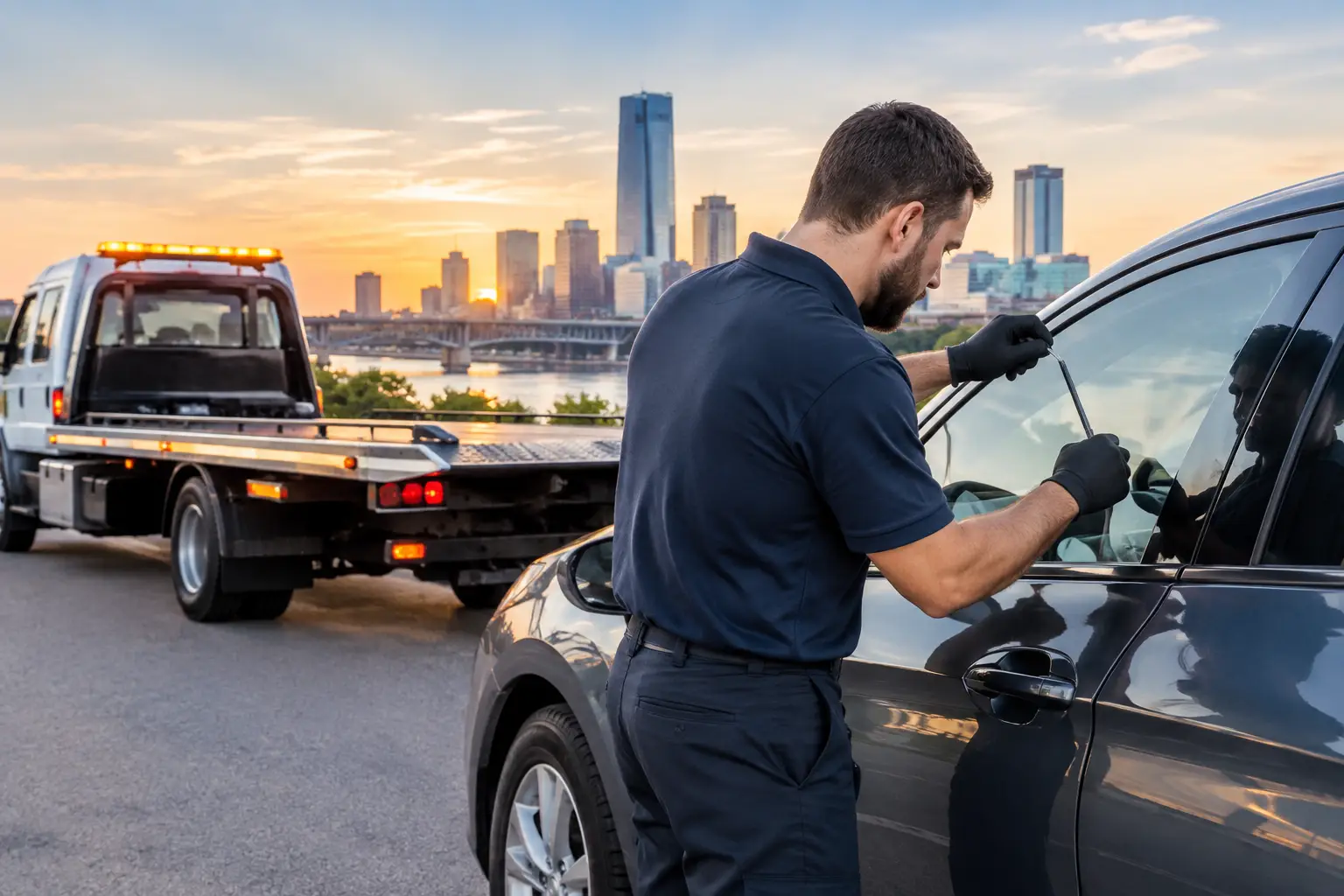
A professional lockout technician uses vehicle-appropriate tools and controlled techniques to open the door without unnecessary damage. The method depends on the vehicle, its lock design, and whether the keys are inside, in the trunk, or lost altogether. There is no one tool that is safe for every car.
Be Careful With Trunk Lockouts
A locked trunk can be more complicated than a locked cabin. Many newer cars do not allow trunk access without the fob or a working interior release, and trying to force it can damage the latch, body panel, or electronic release system.
If your keys are locked in the trunk, tell the roadside provider before they arrive. That detail helps them bring the proper equipment and plan the right approach. Never climb through a folding rear seat if it requires force or puts you in an unsafe position, particularly near traffic.
Make the Wait Safer and Easier
Once help is called, share clear details. Give the exact location, not just the closest major road. A provider can find you much faster with details such as a store name, apartment gate, parking-level number, cross street, or direction of travel.
For example, saying you are near Riverside and 71st is useful, but saying you are in the north lot of a business near Riverside Drive, beside the main entrance, is better. The same applies on highways. Tell dispatch whether you are eastbound or westbound, which exit you are near, and whether the car is on the shoulder or in a parking area.
Have your vehicle’s make, model, color, and approximate year ready. Mention anything unusual, including low ground clearance, aftermarket door hardware, a dead battery, or an electric vehicle. A Tesla or other EV may have specific entry and power considerations that should be handled correctly rather than guessed at.
While waiting, keep your phone available and listen for calls or texts from the driver. If your location changes, notify the provider. Do not accept help from an unmarked person who approaches and offers to open the car unless you are confident they are the service you requested.
Know When a Lockout Is More Than a Lockout
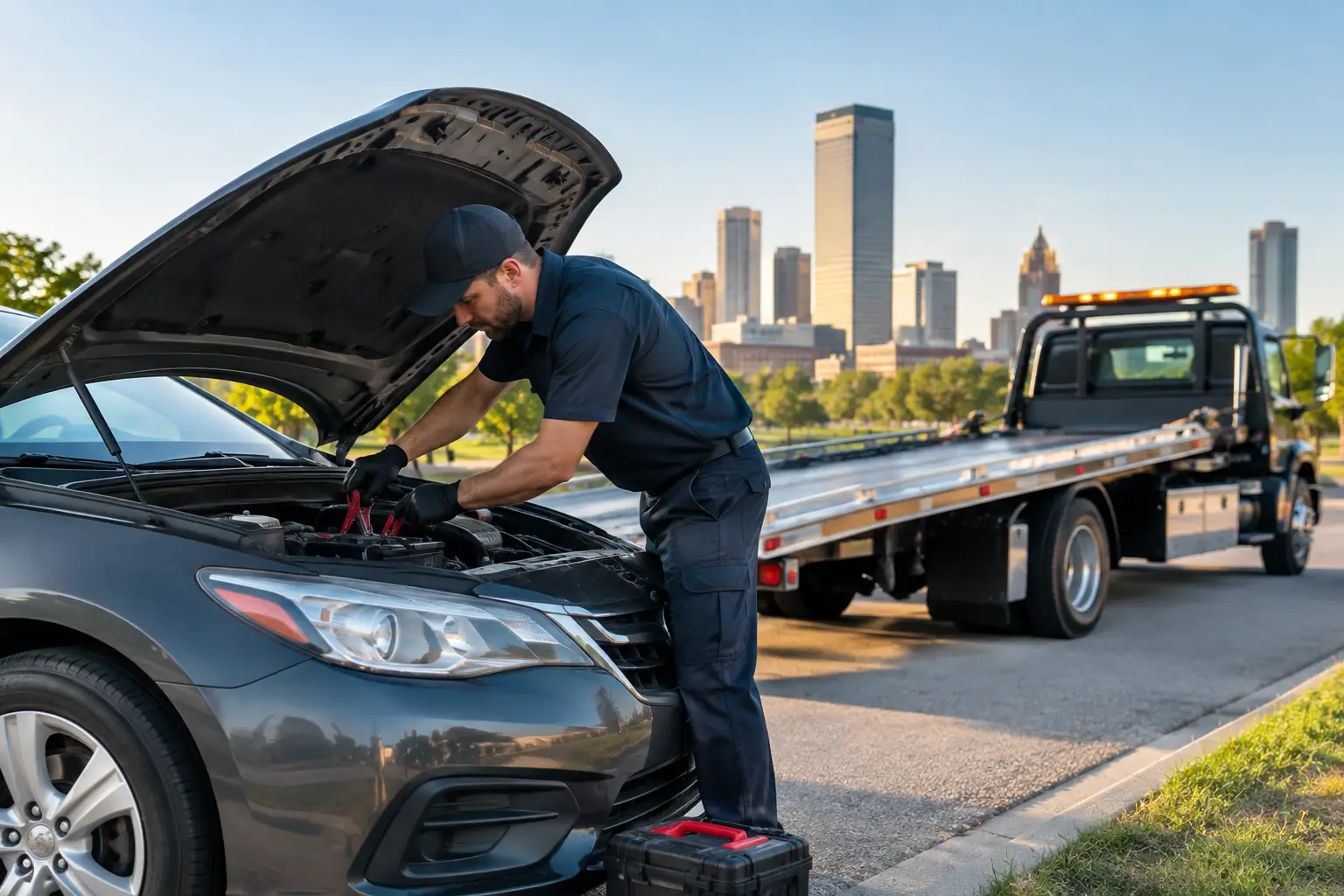
Sometimes the locked door is only part of the problem. If the keys are inside because the battery died, the vehicle may still need a jumpstart after entry. If the car will not start after the door is opened, it could be a key fob battery issue, a dead vehicle battery, or another mechanical problem.
Be honest about what happened. A clear description prevents wasted time and helps determine whether roadside assistance is enough or whether the vehicle needs to be moved safely to a repair shop. If a vehicle is blocking traffic, has a flat tire, or is disabled in an unsafe location, a tow may be the better choice after the lockout is resolved.
This matters around high-traffic areas such as Tulsa Hills, Midtown, and Broken Arrow routes during busy commute hours. Getting the door open is useful, but getting the vehicle and driver out of a risky spot is the bigger priority.
What to Check Before You Drive Away
After the vehicle is opened, take a moment before pulling into traffic. Make sure the door closes and latches normally, the window operates properly, and no weather stripping has been disturbed. A careful lockout service should leave the vehicle operating as it did before.
If the car was running when it locked, check the fuel level and temperature gauge. If it was parked in an unsafe place, take a breath and reenter traffic carefully rather than rushing because you are frustrated.
It also helps to decide how you will prevent the next one. Keep a spare key with a trusted person, replace a weak key fob battery, and use a consistent spot for keys before closing the door. Remote-start systems and app-based keys can help in some vehicles, but they are not a replacement for a backup plan when a phone battery dies or cell service is weak.
Tulsa Towing handles vehicle lockouts with the same basic approach used for every roadside call: confirm the situation, use the proper equipment, and avoid creating more problems for the driver. Whether you are locked out near Brookside, at home in Jenks, or parked along a busy Tulsa corridor, calm decisions and careful vehicle handling make the difference.
A locked car is stressful, but it does not have to become a damaged car or a dangerous roadside situation. Get to a safe place, give clear location details, and let the right help handle the entry.