A dead battery in an electric vehicle is stressful enough. The bigger problem starts when the wrong tow method turns a simple pickup into drivetrain damage, underbody damage, or a trip to the wrong shop. That is why ev towing is not something to guess your way through.
Electric vehicles are heavier, sit differently, and use drivetrains that do not forgive careless handling. Some can enter a transport mode. Some need wheel dollies in specific situations. Many should only be moved on a flatbed. If the vehicle is disabled in traffic, parked in a garage, or stopped on a shoulder near I-44 or US 75, the tow has to be done with the right equipment and a clear plan.
Why EV towing is different
The main difference is simple. An EV is not just another car with a different fuel source. The battery pack is usually mounted low in the vehicle, which changes weight distribution and ground clearance. That affects loading angles, tie-down points, and how the vehicle should be pulled onto a bed.
There is also the issue of the drive wheels. On many electric vehicles, letting those wheels roll the wrong way or for too long can create serious problems. With a gas vehicle, people sometimes think a quick tow is a quick tow. With an EV, a rushed hookup can get expensive fast.
That is why careful operators usually treat EVs as flatbed jobs first. It is the safest way to transport the vehicle without adding wear or damage during the tow.
When a flatbed is the right call
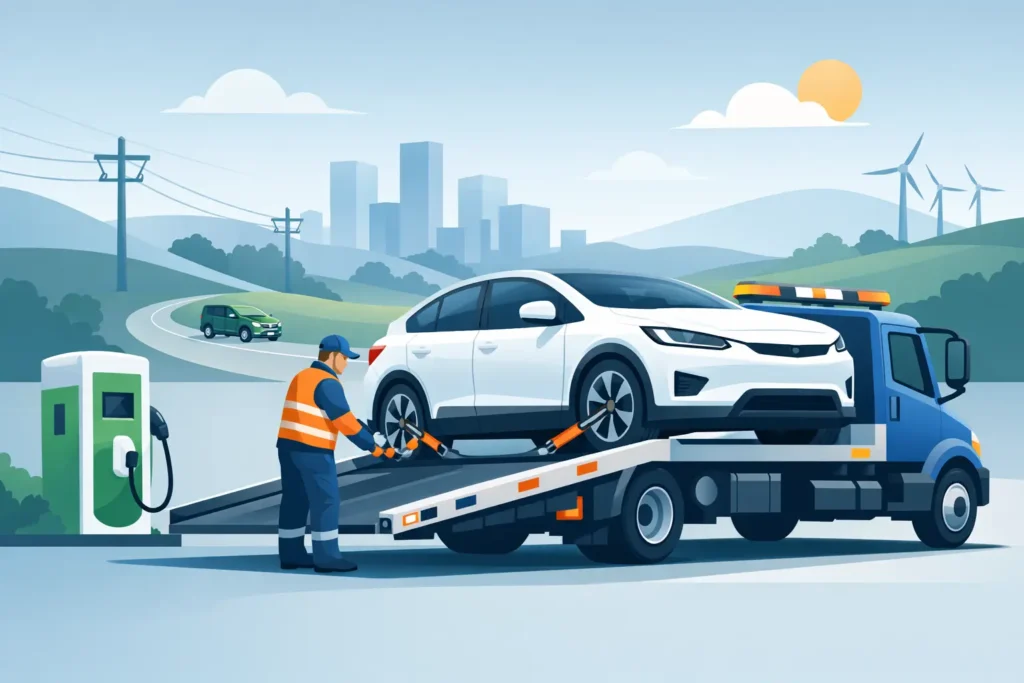
In most real roadside situations, a flatbed is the proper choice for ev towing. It keeps all four wheels off the road, protects low-clearance front ends, and gives the operator better control during loading.
That matters when the vehicle will not shift properly, has a suspension issue, is stuck in a parking deck, or has been involved in an accident. It also matters when the battery is fully discharged and the car will not respond normally. In those cases, trying to improvise can waste time and make the situation worse.
A flatbed also helps reduce risk for vehicles with sensitive underbody panels or battery protection covers. Loading has to be slow, even, and deliberate. Approach angle matters. Winching matters. Tie-down placement matters.
Low clearance and battery placement
A lot of EVs sit lower than drivers realize, especially at the front. Add a steep rollback angle or rough loading surface, and the risk goes up. Scraping a bumper cover is bad enough. Contact underneath the vehicle is a bigger concern.
Battery placement is one reason experienced towing matters here. The battery pack is often the heaviest and most expensive part of the vehicle. Safe loading means watching clearances, using the right angle, and securing the vehicle without putting pressure where it does not belong.
Not every disabled EV acts the same
This is where it depends. Different makes and models have different transport procedures. A Tesla may behave one way. Another EV may require a different sequence to place the vehicle in neutral or transport mode. If the 12-volt system is down, that can change the process again.
From the driver side, the safest move is not to force anything. If the vehicle will not shift, will not release the parking brake, or shows warning messages, tell the tow operator exactly what happened. That information helps the job get done safely.
Common situations that require EV towing
Most EV tows are not dramatic. They are everyday roadside problems with a vehicle that needs more careful handling.
A full battery drain is one example. Some drivers assume the car just needs a quick recharge where it sits, but that depends on location and safety. If the vehicle is blocking traffic, stopped on a shoulder, or parked somewhere it cannot stay, towing it to a charger or repair facility may be the practical move.
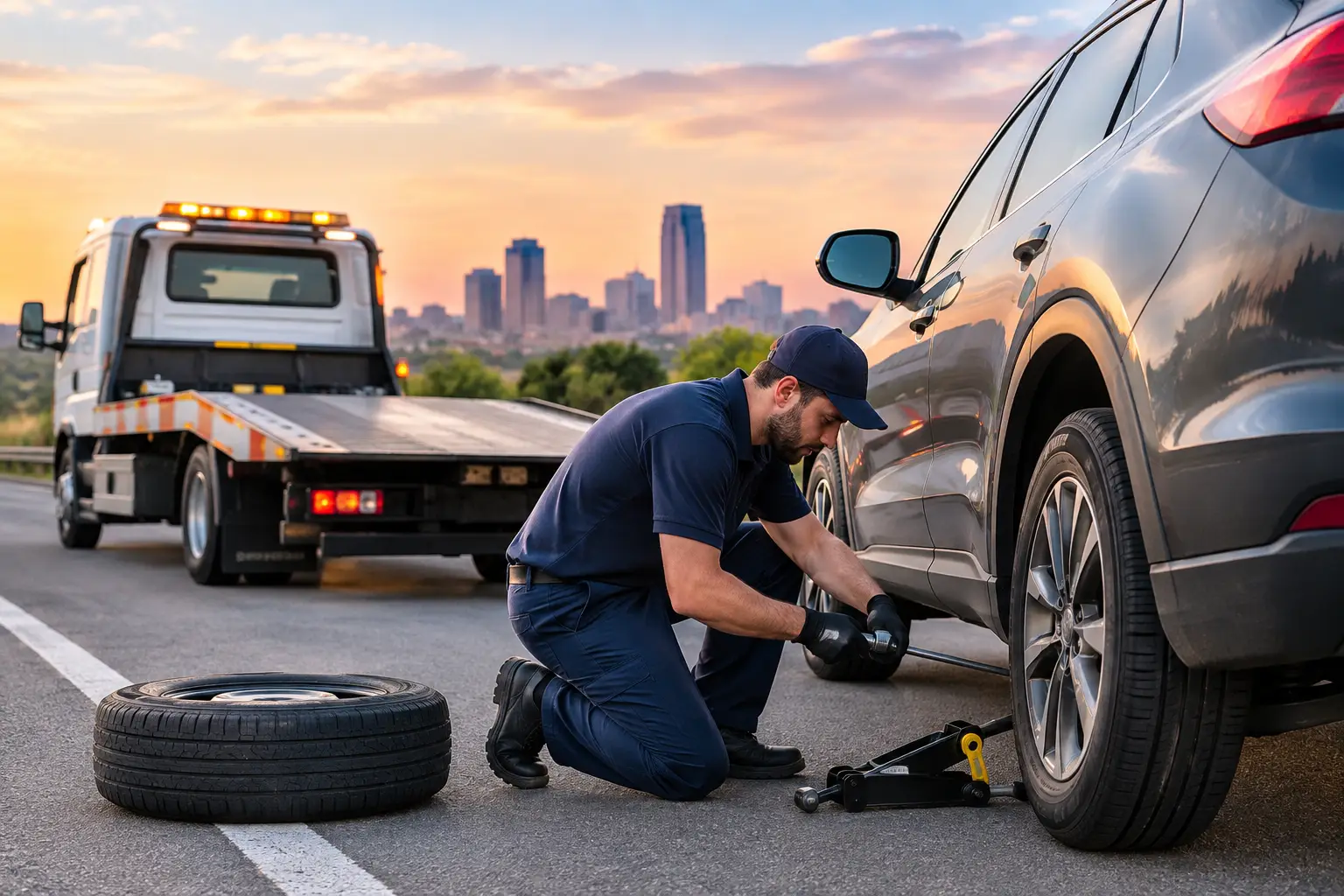
Flat tires are another common call. If the tire damage happened in a dangerous spot or the vehicle does not include a spare, towing may be safer than trying to patch the problem on site.
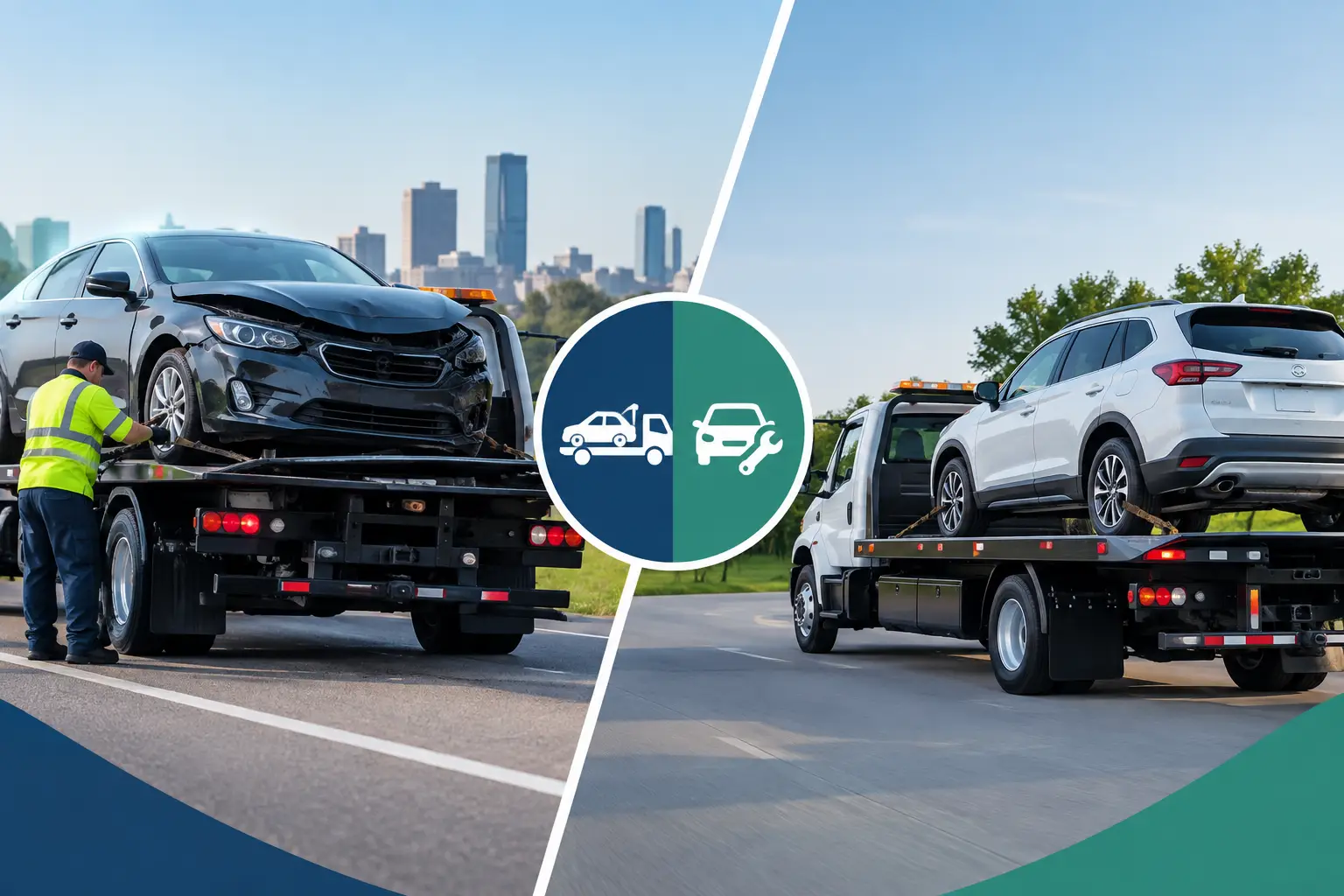
Accidents also change everything. Even when body damage looks minor, the vehicle may not be safe to drive. If there is possible suspension damage, wheel damage, or any concern around the battery area, the tow should be handled carefully and taken where the customer wants it to go.
What drivers should do before the tow truck arrives
If your EV is disabled, the first priority is safety. Move as far out of traffic as possible if the vehicle still rolls and it is safe to do so. Turn on your hazards. If you are in a dangerous area, stay clear of traffic and wait somewhere safer nearby.
Then gather a few details for the dispatcher. The exact location matters, especially on busy roads, parking garages, apartment lots, and shopping centers. The make and model matter too. If the car is fully dead, stuck in park, or showing a drivetrain warning, say that up front.
It also helps to mention whether the vehicle is in a tight spot, facing downhill, or blocked in. Those details affect what equipment is needed and how the operator approaches the load.
If the battery is fully dead
A fully dead EV can be more complicated than people expect. In some cases, the car cannot be shifted normally. Door handles may not present, screens may stay dark, and the parking brake may not release.
That does not mean the vehicle cannot be towed. It means the operator may need to use a more careful loading process. The less the driver forces switches, buttons, or manual releases without knowing the procedure, the better.
What can go wrong with the wrong tow method
The biggest risk is wheel-lift towing or dragging a vehicle that should be fully lifted. That can damage drive components, tires, or underbody parts. It can also create problems that do not show up until later.
Another issue is bad tie-down placement. EVs often require extra awareness around underbody structures and trim. Rushed securement can bend parts, scrape panels, or stress areas that should not take load.
There is also the simple problem of bad communication. If the driver thinks the vehicle only needs a short move but the operator is not told the battery is dead, stuck in park, or damaged from an impact, the tow can take longer and become more complicated on scene.
EV towing in real Tulsa conditions
Local roads matter more than people think. A disabled EV on Memorial during traffic, in a downtown garage, or on the shoulder near Highway 169 is not the same as a car sitting flat in a wide open lot. Access, slope, traffic flow, and loading space all change the job.
That is where local experience helps. Tight apartment complexes, retail parking areas, and busy corridor shoulders require more than basic towing knowledge. The operator needs to know how to position the truck, manage traffic exposure, and load the vehicle without turning a breakdown into more damage.
For drivers in Tulsa, Jenks, Bixby, or Broken Arrow, that usually means asking a simple question when you call: do you handle electric vehicles on a flatbed? If the answer is clear and confident, that is a good start.
Choosing the right help for EV towing
You do not need a long speech from a towing company when your vehicle is disabled. You need to know they understand EV handling, use proper equipment, and can explain what happens next.
A good call should feel straightforward. You give the location, vehicle type, and problem. They explain whether it is a roadside fix or a tow. If it needs transport, they tell you how the vehicle will be loaded and where it can be taken.
That is the approach Tulsa Towing is built around. Clear communication, proper flatbed equipment, and damage-free handling for vehicles that cannot be treated like a basic tow.
If you drive an EV, the main thing to remember is simple. When something goes wrong, do not let urgency push you into the wrong tow method. A careful pickup usually saves time, stress, and a much bigger repair bill later.