A vehicle that will not move safely should not be treated like a simple pull-and-go job. When comparing flatbed towing versus dolly towing, the right choice depends on the vehicle, the reason it is disabled, and whether its wheels, suspension, or drivetrain may already be damaged. For many Tulsa-area breakdowns and accident calls, a flatbed is the safer answer because the entire vehicle rides off the road.
Flatbed Towing Versus Dolly Towing: The Basic Difference
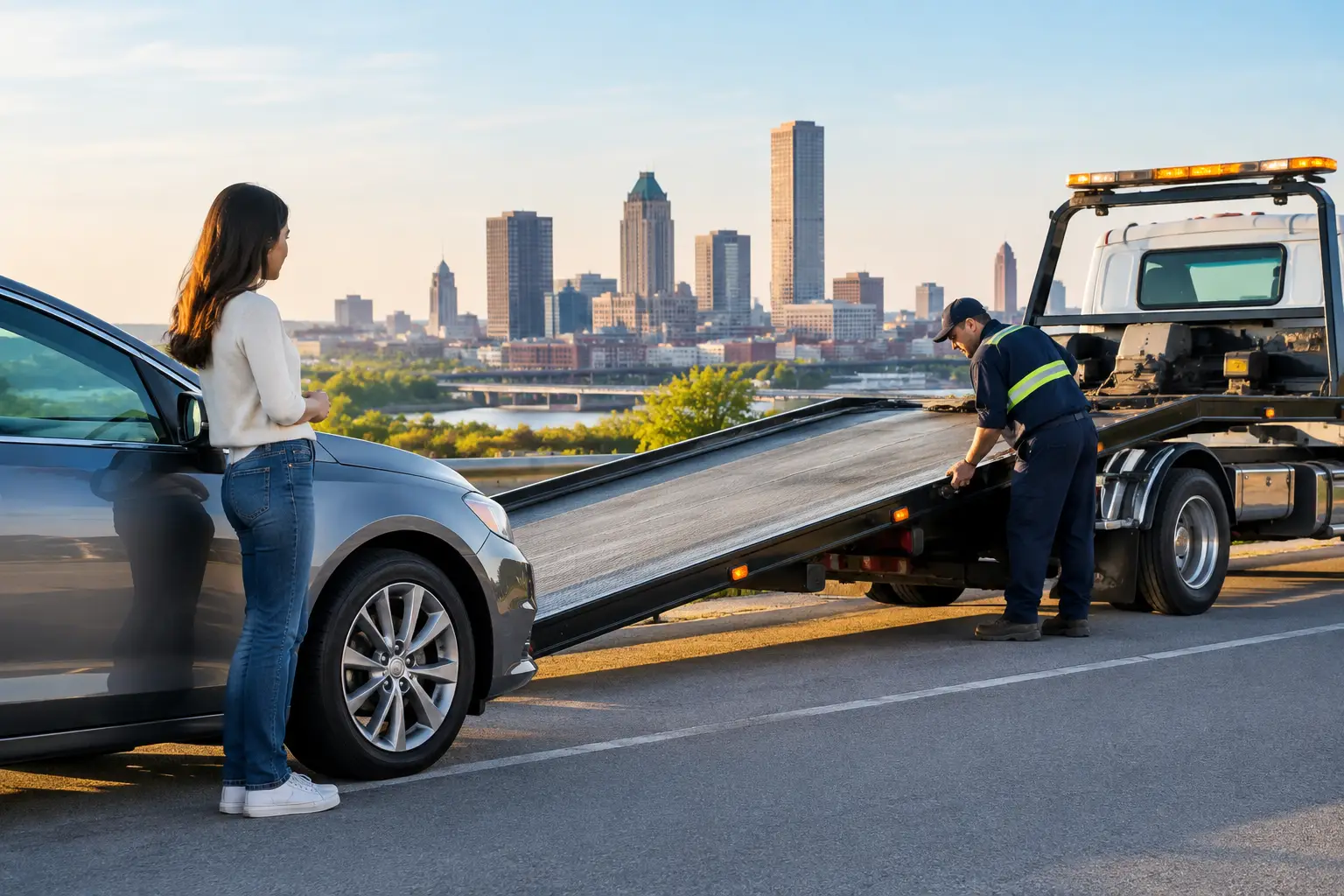
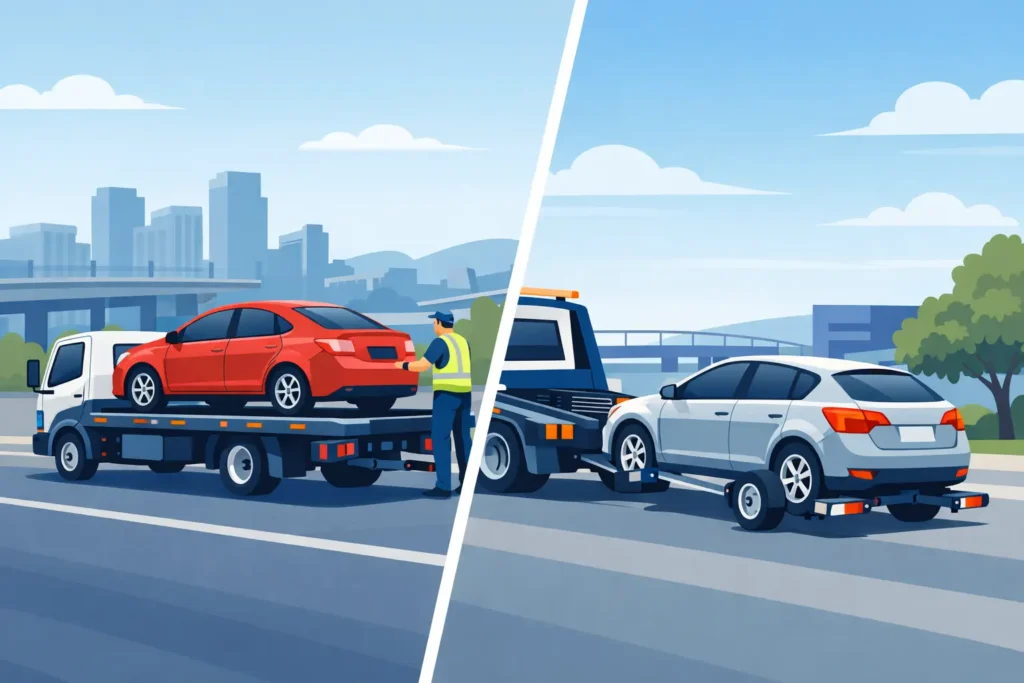
A flatbed tow truck carries the whole vehicle on a level hydraulic bed. The truck is loaded, secured at proper tie-down points, and transported with all four tires off the pavement. Nothing on the disabled vehicle needs to roll during the tow.
A tow dolly lifts one end of the vehicle while the other two tires remain on the road. Most often, the front wheels ride on the dolly and the rear wheels roll behind it. Dollies can be useful in the right situation, but they require more attention to drivetrain layout, steering position, tire condition, clearance, and the condition of the vehicle after a breakdown or collision.
That difference matters when a car has a locked wheel, a damaged axle, a flat tire, or an unknown mechanical problem. The faster-looking option is not always the safer one.
Why Flatbed Towing Is Usually the Safer Choice
Flatbed towing removes the biggest question from the job: whether the vehicle can safely roll. Once loaded, all four wheels are off the ground. That protects the drivetrain from being turned during transport and avoids adding miles, heat, or stress to tires and suspension parts that may already be compromised.
This is especially useful after an accident. A bumper may look like the only damaged part, but a wheel can be pushed out of alignment, a control arm can be bent, or a tire can be rubbing against an inner panel. Letting those wheels roll down I-44, US 75, or city streets can turn a repairable issue into more damage.
Flatbeds also give the operator more control over low-clearance vehicles. Many modern cars sit lower than they appear, and loading them carelessly can scrape a front bumper, splitter, undertray, or exhaust. Proper loading angles, ramps, and securement make a real difference. The same goes for heavier pickups, where vehicle weight and wheelbase need to be handled correctly.
For the driver, flatbed towing is usually simpler as well. The vehicle is loaded, secured, and delivered without asking it to do anything it cannot safely do.
Better protection for all-wheel drive and four-wheel drive
All-wheel-drive and four-wheel-drive vehicles are a major reason to choose a flatbed. Their drivetrains are designed to distribute power between front and rear wheels. If only one end is lifted and the other end rolls, internal drivetrain components can be forced to rotate in ways the manufacturer does not allow.
Some vehicles have a neutral setting or a specific procedure that permits certain types of towing. Many do not. It is not worth guessing based on the badge on the back of the vehicle. A flatbed avoids that uncertainty by keeping every wheel off the road.
The right approach for electric vehicles
Electric vehicles need careful towing. A Tesla and many other EVs should be transported with all four wheels off the ground unless the manufacturer provides a very specific alternative procedure. Their electric motors, drive units, battery systems, low ground clearance, and weight distribution call for the right equipment and a careful loading plan.
An EV that cannot be shifted, has a damaged wheel, or has been involved in a collision is not a situation for shortcuts. Flatbed transport gives the operator the best ability to load it without dragging, rolling the drive wheels, or creating extra risk to the underbody.
When Dolly Towing Can Make Sense
Dolly towing is not automatically wrong. It can be a practical option for a short tow involving a two-wheel-drive vehicle when the correct end is lifted and the remaining wheels can roll freely. A front-wheel-drive car, for example, may be suitable for a tow dolly with its front wheels lifted, provided the rear tires, wheel bearings, suspension, and steering are in good shape.
It can also be useful where access is limited or when a vehicle needs to be moved from a tight location. But the setup still has to be correct. The vehicle must be loaded in the proper direction, secured properly, and checked before transport. A car with damage at the rolling end, a flat rear tire, a seized brake, or a bent wheel is not a good candidate.
There is also the question of distance and route. A short move from a parking lot to a nearby repair shop is different from transporting a disabled vehicle across busy traffic corridors or several neighborhoods away. The more unknowns there are, the more sense it makes to put the whole vehicle on a flatbed.
Situations Where a Flatbed Is the Clear Call
Some towing calls leave very little room for debate. A flatbed should be the first choice when the vehicle has been in an accident, has all-wheel drive or four-wheel drive, is electric, has a damaged or flat tire, has a locked wheel, or cannot be put into neutral safely.
It is also the better method when the vehicle sits low, has custom wheels, has a transmission problem, or has been parked for a long time and may have stuck brakes or deteriorated tires. In those situations, rolling the vehicle can cause damage that was not there when the tow started.
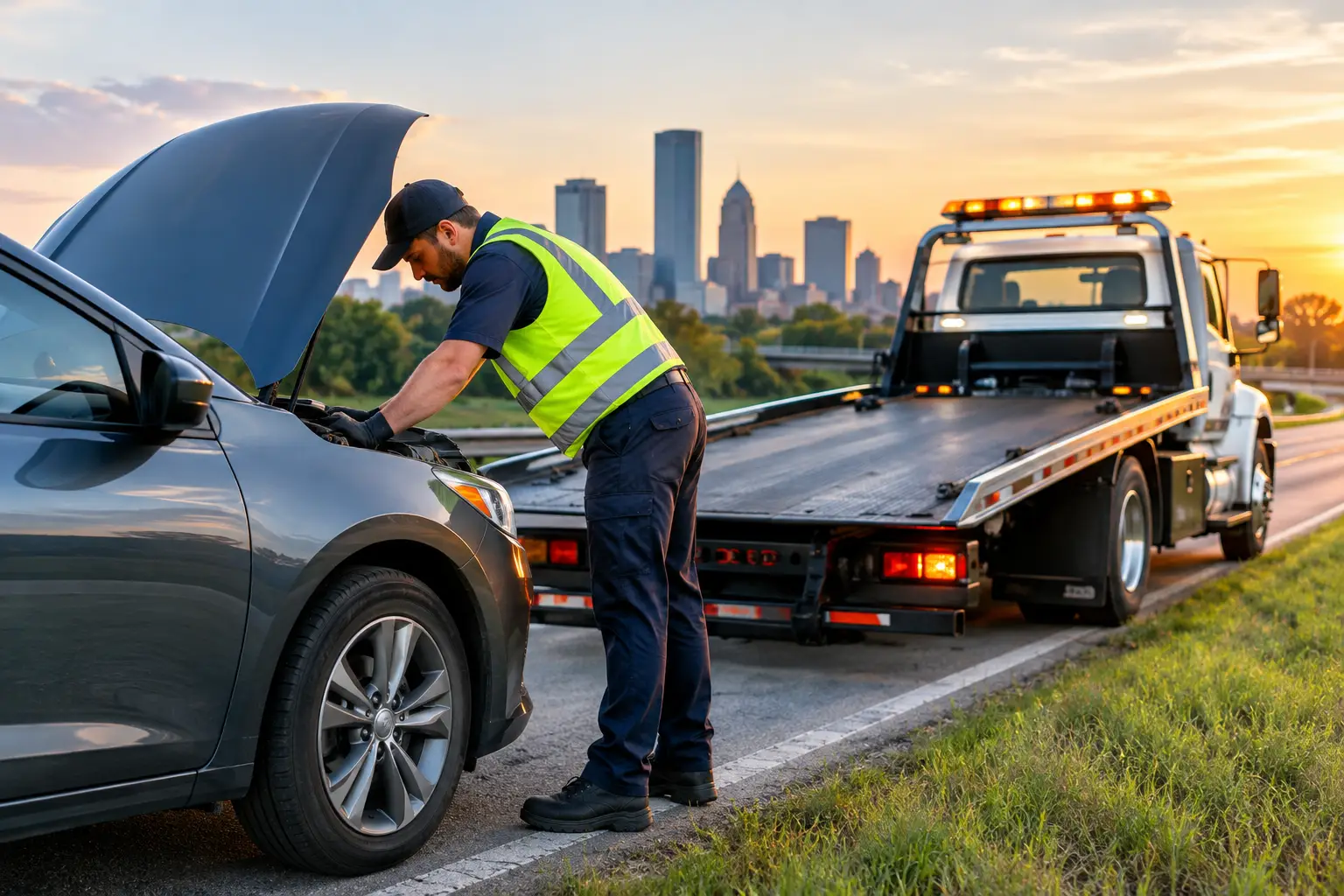
A flatbed is also useful when the driver does not know what failed. If a car quit on Riverside Drive or will not move out of a garage in Midtown, the problem could be a dead battery, transmission issue, brake problem, axle failure, or something else entirely. Until the vehicle is inspected, treating it as non-rolling is often the careful choice.
What a Tow Operator Needs to Know Before Loading
Good towing starts before the truck arrives. The details a driver shares during dispatch help determine what equipment and approach make sense. The important facts are the vehicle year, make, model, whether it is front-wheel drive, rear-wheel drive, all-wheel drive, or four-wheel drive, and whether it is electric or hybrid.
It also helps to explain why the vehicle needs a tow. Say whether it was in a collision, has a flat or blown tire, will not shift into neutral, has a wheel turned sideways, is stuck, or is parked in a garage. If the car is in a tight space, mention low clearance, steep entrances, or obstacles around it.
These details are not paperwork. They help avoid sending the wrong equipment or arriving with a plan that does not fit the vehicle. Clear communication saves time and helps protect the car from the first step of loading through delivery.
Cost Is Only One Part of the Decision
Drivers understandably ask whether a dolly tow costs less than a flatbed tow. It can, depending on the distance, equipment needed, vehicle condition, and access to the pickup location. But the lowest initial towing price is not a real savings if the wrong method damages a drivetrain, bumper, wheel, or suspension component.
The better question is whether the vehicle can safely roll on two wheels for the full trip. If the answer is uncertain, a flatbed is usually the safer investment. That is particularly true for newer vehicles with complex drivetrains and low front-end clearance.
Tulsa Towing, powered by Neptune Towing, focuses on proper flatbed equipment because most disabled-vehicle situations are better handled without leaving any part of the vehicle rolling behind the truck.
Choose the Method That Protects the Vehicle
Dolly towing has a place for certain two-wheel-drive vehicles in good rolling condition. Flatbed towing is the more protective choice for accidents, EVs, all-wheel-drive vehicles, low cars, unknown mechanical failures, and anything with wheel or suspension damage.
When you are stranded, you do not need to know every towing rule before asking for help. Give an honest description of what happened, where the vehicle is located, and whether it will move. The right operator can make the call from there and get your vehicle to the repair shop, dealership, or home without adding another problem to the day.