A breakdown on I-44, US 75, or Highway 169 can turn dangerous faster than most drivers expect. Highway breakdown safety starts with one decision: get yourself out of moving traffic if you can do it safely. The vehicle can be repaired or transported. Your job is to avoid becoming part of the next crash.
A dead battery, flat tire, overheating warning, or sudden loss of power feels urgent. That does not mean every problem should be handled where the car stopped. Traffic moves quickly around Tulsa, especially during rush hour near Midtown, South Tulsa, the Broken Arrow Expressway, and the Riverside area. Take a breath, assess where you are, and make the safest move available.
Highway breakdown safety: Get out of the travel lane
If the vehicle still has enough control and power to move, use your turn signal and ease toward the right shoulder. Do not make a sharp move across lanes, even if the engine is overheating or the tire is going down. A controlled pull-off is safer than an abrupt lane change.
Aim for a wide shoulder, an exit ramp, a parking lot, or another location away from high-speed traffic. An off-ramp is often a better place to wait than the narrow shoulder beside a highway. If you can reach a well-lit business, gas station, or side street without forcing the vehicle, that may be the better choice.
Once you are as far right as possible, turn on your hazard lights. Keep your wheels pointed away from traffic if you are on a shoulder. Set the parking brake after the vehicle is fully stopped.
Sometimes the vehicle will not move, or there is no safe shoulder. If you are stopped in an active lane, keep your seat belt on, switch on the hazards, and call 911. Tell the dispatcher your direction of travel, the highway, the nearest exit or landmark, and the lane you are in. A disabled vehicle in a travel lane is a traffic hazard that needs immediate attention.
Decide whether to stay in the vehicle or get out
There is no one rule that fits every highway breakdown. Staying inside is usually the safest option when your vehicle is fully off the roadway, the shoulder is narrow, or traffic is moving fast. Keep the doors locked, wear your seat belt, and wait on the side farthest from traffic if you need to communicate through a partially opened window.
Getting out may make sense when the vehicle is at risk of being hit, there is smoke, fire, a fuel smell, or a dangerous location that cannot be cleared. If you must exit, use the passenger-side door whenever possible. Move well away from the road, preferably behind a guardrail if one is available. Do not stand directly in front of or behind the vehicle.
Never assume a shoulder is a safe work area. It is only a place to get farther from moving traffic. Changing a tire beside I-44 or US 75 can put you within a few feet of vehicles traveling at highway speed. Even an experienced person with the right tools may be better off calling for roadside help or a tow instead of working beside traffic.
Make your vehicle visible without creating another hazard
Hazard lights are the first step, but they are not magic. In daylight, other drivers can still miss a disabled vehicle until the last second. At night, rain, fog, and glare from headlights make visibility worse.
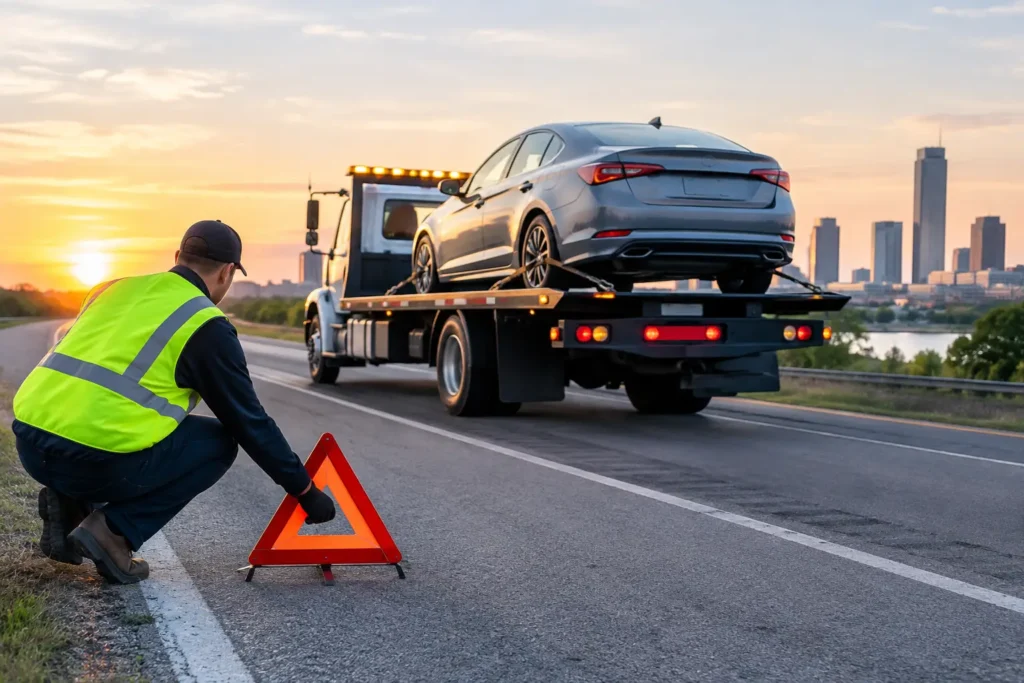
If you have reflective triangles, place them only when you can do so without walking near live traffic. Do not cross lanes or walk along the highway to set them out. Flares can help in some situations, but they are not appropriate around a fuel leak, dry grass, or any sign of fire risk.
Your phone flashlight is useful for being seen when you are outside the vehicle, but do not rely on it to direct traffic. Do not stand in the road waving at drivers. Law enforcement and roadside professionals have the equipment and training to manage a traffic hazard. Your priority is staying clear of the lane.
Call for help with the details that matter
When calling a tow truck or roadside service, clear information helps the right equipment get dispatched. Start with your exact location. “On I-44 near Tulsa” is a large area. A better description is the direction you are traveling, the nearest exit, mile marker, cross street, or recognizable landmark.
Also explain what happened. Say whether the vehicle has a flat tire, will not start, is overheating, has been in a collision, or cannot be moved safely. Mention if it is an all-wheel-drive vehicle, a low-clearance car, a heavy-duty pickup, or an electric vehicle. Those details affect how the vehicle should be handled and whether roadside assistance is practical or a flatbed tow is the safer answer.
If you are in a location with poor visibility, tell the dispatcher that too. A vehicle on the shoulder near a curve, bridge, or construction zone may require a more careful approach. In Tulsa, traffic conditions around Downtown, Memorial Drive, and Tulsa Hills can change quickly, so accurate location details save time and reduce confusion.
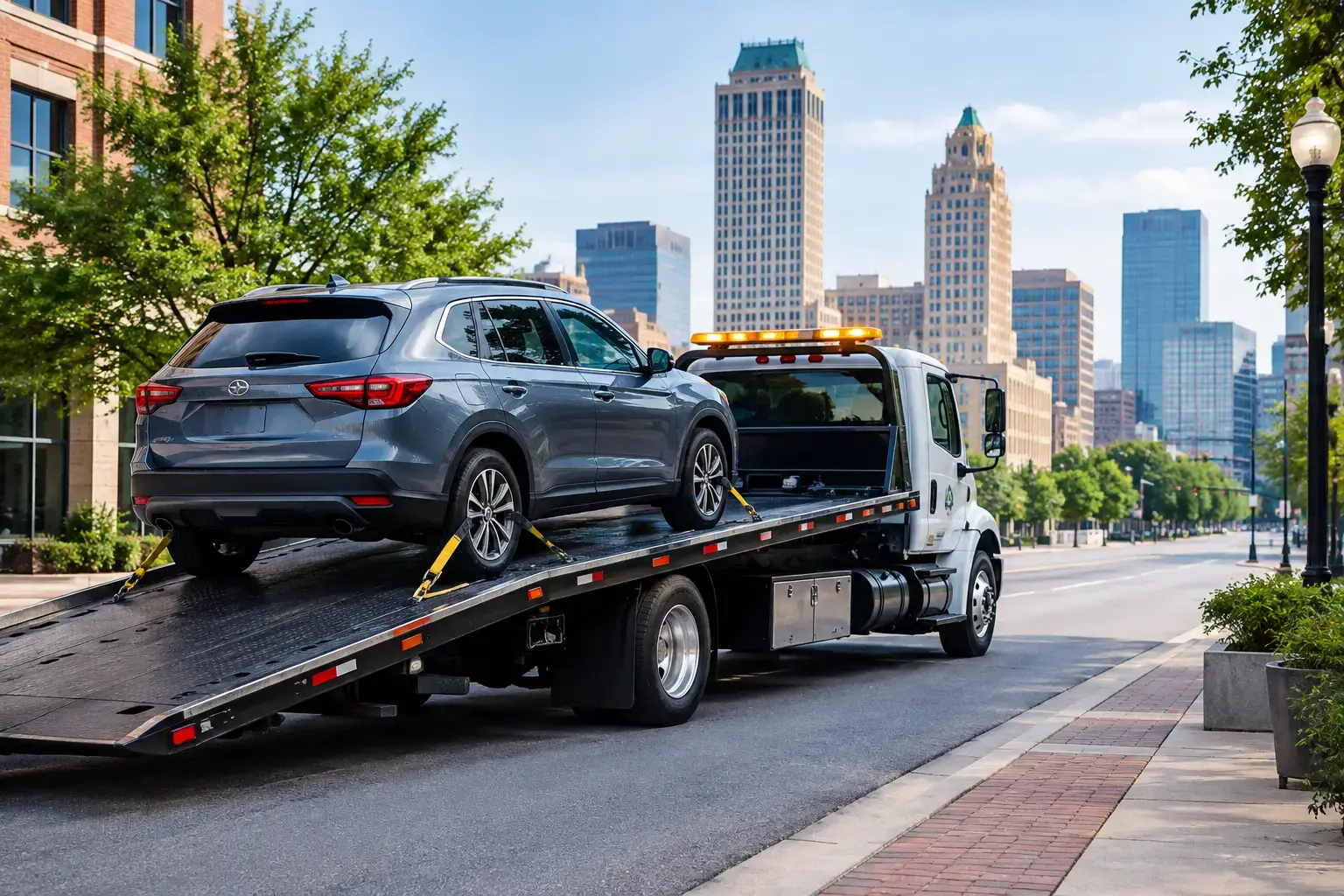
Tulsa Towing uses a city-focused dispatch model for situations like these, with damage-free flatbed transport for vehicles that should not be driven or repaired on the highway shoulder.
What not to do after a highway breakdown
Stress causes people to make rushed decisions. Avoid these common mistakes:
- Do not crawl under the vehicle or inspect a problem from the traffic side.
- Do not accept help from an unknown person if the situation feels unsafe. Stay in a secure position and wait for the service you called.
- Do not leave your vehicle and walk along the highway to find help unless there is an immediate threat, such as fire.
- Do not keep driving on a severely flat tire, overheating engine, or vehicle with a major warning light just to reach the next exit. More damage can turn a tow into a larger repair.
A short drive on a damaged tire can ruin the wheel. Continuing with an overheating engine can cause serious engine damage. The trade-off is real: pulling over sooner may be inconvenient, but it is often less expensive and much safer than pushing a failing vehicle farther down the road.
Prepare before the next problem happens
Most breakdowns do not give much warning, but a few basic items make waiting safer. Keep your phone charged when possible, and carry a car charger that works in your vehicle. A reflective vest, flashlight, bottled water, and a small first-aid kit are useful, especially during Oklahoma summer heat or a cold, windy night.
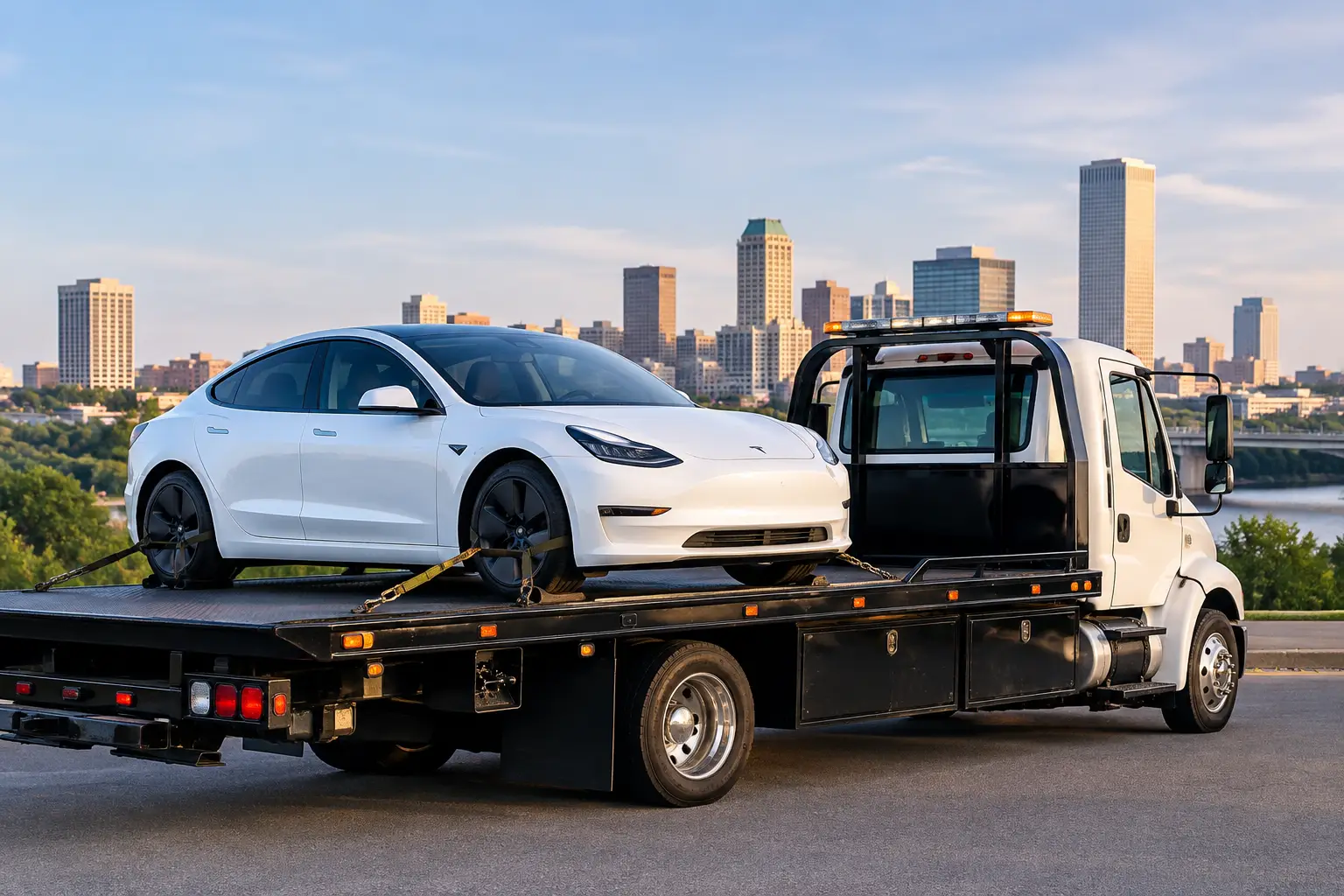
It also helps to know how your vehicle is supposed to be transported. Many modern vehicles, especially EVs and all-wheel-drive models, should not be pulled with two wheels on the ground. If you drive a Tesla or another electric vehicle, tell the towing provider at the start of the call. Proper loading and securement protect the battery area, body panels, and drivetrain.
You do not need to diagnose the entire problem on the shoulder. You only need enough information to make a safe choice. Watch the warning lights, note any smoke or unusual noise, and tell the person helping you what you observed. Then let the vehicle be handled with the right equipment.
When the safest repair is a tow
A jumpstart, lockout service, or tire change can get some drivers moving again. But highway conditions change the calculation. A simple repair that would be reasonable in a quiet parking lot may not be worth the risk on a narrow shoulder with traffic passing close by.
If the vehicle is disabled in a dangerous location, has accident damage, overheats, loses steering response, or cannot be moved reliably, towing it to a repair shop or home is usually the safer call. A flatbed keeps the vehicle off the road during transport and avoids adding miles or damage to a vehicle that is already having trouble.
When you are waiting beside a highway, the best next step is usually the simple one: stay visible, stay out of traffic, give clear location details, and let trained help come to you. The delay is temporary. Protecting yourself is the part that cannot be redone.