A stalled vehicle on 15th Street, a dead battery outside a Cherry Street restaurant, or a flat tire near Utica Square can turn an ordinary Midtown Tulsa drive into a problem fast. Navigating roadside trouble in Midtown starts with one priority: get yourself and everyone in the vehicle out of immediate danger before worrying about where the car needs to go.
Midtown has narrow streets, busy intersections, construction zones, parking lots with limited room, and steady traffic around hospitals, shops, and neighborhoods. That changes how a roadside call should be handled. A vehicle that is manageable in a quiet residential driveway can become a safety issue when it is stopped close to traffic on Lewis, Peoria, 11th Street, or the Broken Arrow Expressway.
First, make the vehicle as safe and visible as possible
If your vehicle is still moving, do not stop in the first available spot just because something feels wrong. If the car will safely travel a short distance, look for a parking lot, side street, wide shoulder, or other area away from moving traffic. Avoid driving farther if you have a blown tire, overheating engine, major warning light, steering problem, smoke, or a sound that suggests a serious mechanical issue. A short move is one thing. Turning a small problem into engine damage or a loss of control is another.
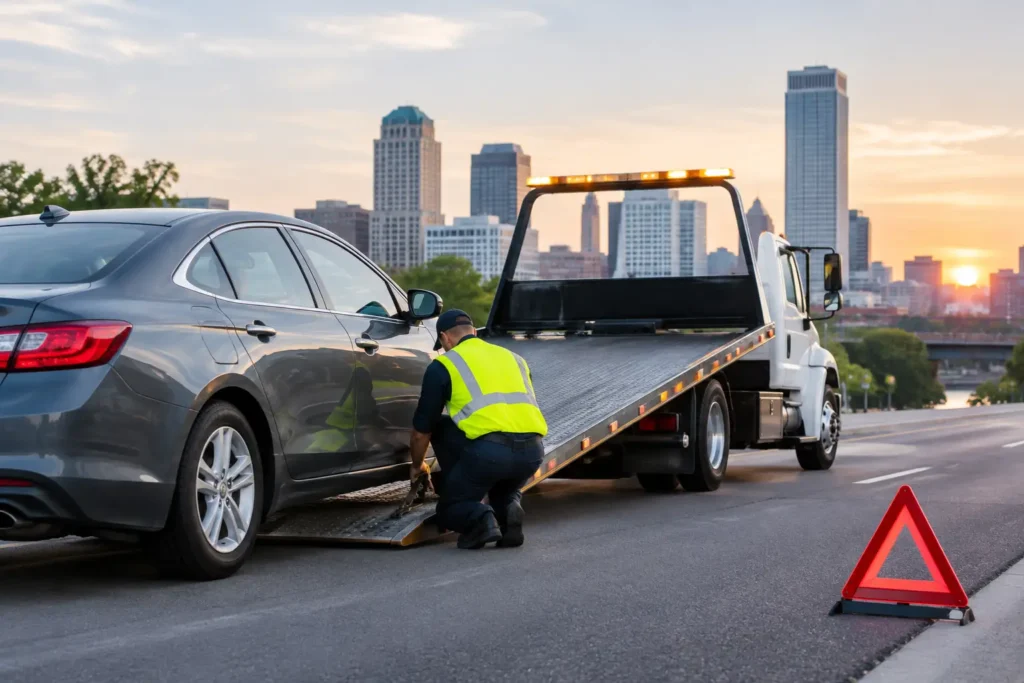
Once stopped, turn on your hazard lights. At night or during rain, visibility matters even more. Keep the doors locked if traffic is close, and stay in the vehicle when it is safer than standing outside. On a busy Midtown street, walking around the car to inspect a problem can put you directly in the path of passing vehicles.
If you cannot safely remain where you are, move away from traffic only when there is a clear, safe path. For an accident with injuries, a fire risk, blocked travel lanes, or an immediate danger, call emergency services first. A tow truck solves the vehicle problem. It does not replace emergency response when people are hurt or traffic conditions are unsafe.
What to do for common Midtown roadside problems
The right next step depends on why the vehicle stopped and where it is sitting. Clear information helps the towing operator send the appropriate equipment instead of guessing after arrival.
Dead battery or no-start condition
A dead battery is common after a long workday, a short trip, or leaving an accessory on. If the vehicle only clicks, has dim lights, or will not crank, a jumpstart may be enough. But not every no-start is a battery problem. A bad alternator, loose battery connection, starter issue, key or fob issue, and some electric vehicle faults can look similar from the driver’s seat.
Tell the dispatcher what the vehicle does when you turn the key or press the start button. Mention whether the dash lights come on and whether you have already tried a jumpstart. If it starts but the battery warning light remains on, do not assume the problem is over. The charging system may not be keeping the vehicle running, and a tow to a repair shop could be the safer call.
Flat tire or damaged wheel
A flat tire in a Midtown parking lot may be a straightforward roadside tire change if you have a usable spare and the wheel is not damaged. It depends on the location and the vehicle. Changing a tire next to active traffic, on uneven ground, or in a tight parking area is not a good risk.
Do not drive on a fully flat tire just to reach a shop. Doing so can damage the wheel, tire pressure sensor, and suspension components. If the tire blew out at speed, the wheel is bent, the spare is missing, or your vehicle uses tires without a practical spare, a flatbed tow may be the better option.
Overheating, smoke, or fluid leaks
If the temperature gauge is high, steam is coming from under the hood, or you see a significant fluid leak, pull over safely and shut the engine off. Do not remove the radiator cap on a hot engine. Pressurized coolant can cause serious burns.
Give the engine time to cool, but understand that cooling off does not fix the reason it overheated. A failed hose, cooling fan, water pump, or coolant leak can leave you stranded again within minutes. In this situation, vehicle transport is usually more practical than trying to drive it farther through Tulsa traffic.
Lockout
A lockout is frustrating, especially when the keys are visible in the seat and you are running late. Avoid forcing a door, using a coat hanger, or prying at the window frame. Modern door seals, airbags, weather stripping, and electronic locks can be damaged easily.
A professional lockout service uses the right tools and works carefully around the vehicle. Let the dispatcher know the vehicle year, make, model, and whether the keys are inside the cabin, trunk, or cargo area. That information can matter with newer vehicles and certain keyless systems.
Vehicle stuck or unable to move
Mud, soft shoulders, steep driveways, curbs, and parking barriers can leave a vehicle stuck even when it has no mechanical failure. Spinning the tires repeatedly often makes the situation worse. It can dig the vehicle in, overheat components, or cause further damage.
A winch-out may be appropriate when the vehicle can be recovered safely from its position. The setup matters. A vehicle resting on a curb, sitting in a ditch, or wedged in a tight access area needs a careful assessment before anyone pulls on it. The goal is to recover the vehicle without adding body, bumper, or undercarriage damage.
Tell the dispatcher what matters before the truck rolls
When you need a tow truck near you, a few accurate details make the response smoother. Start with your exact location. A nearby business, cross street, apartment entrance, parking garage level, or direction of travel is often more useful than a broad neighborhood name. Midtown covers a lot of ground, and a vehicle near Saint Francis Hospital is not in the same access situation as one behind a Brookside business.
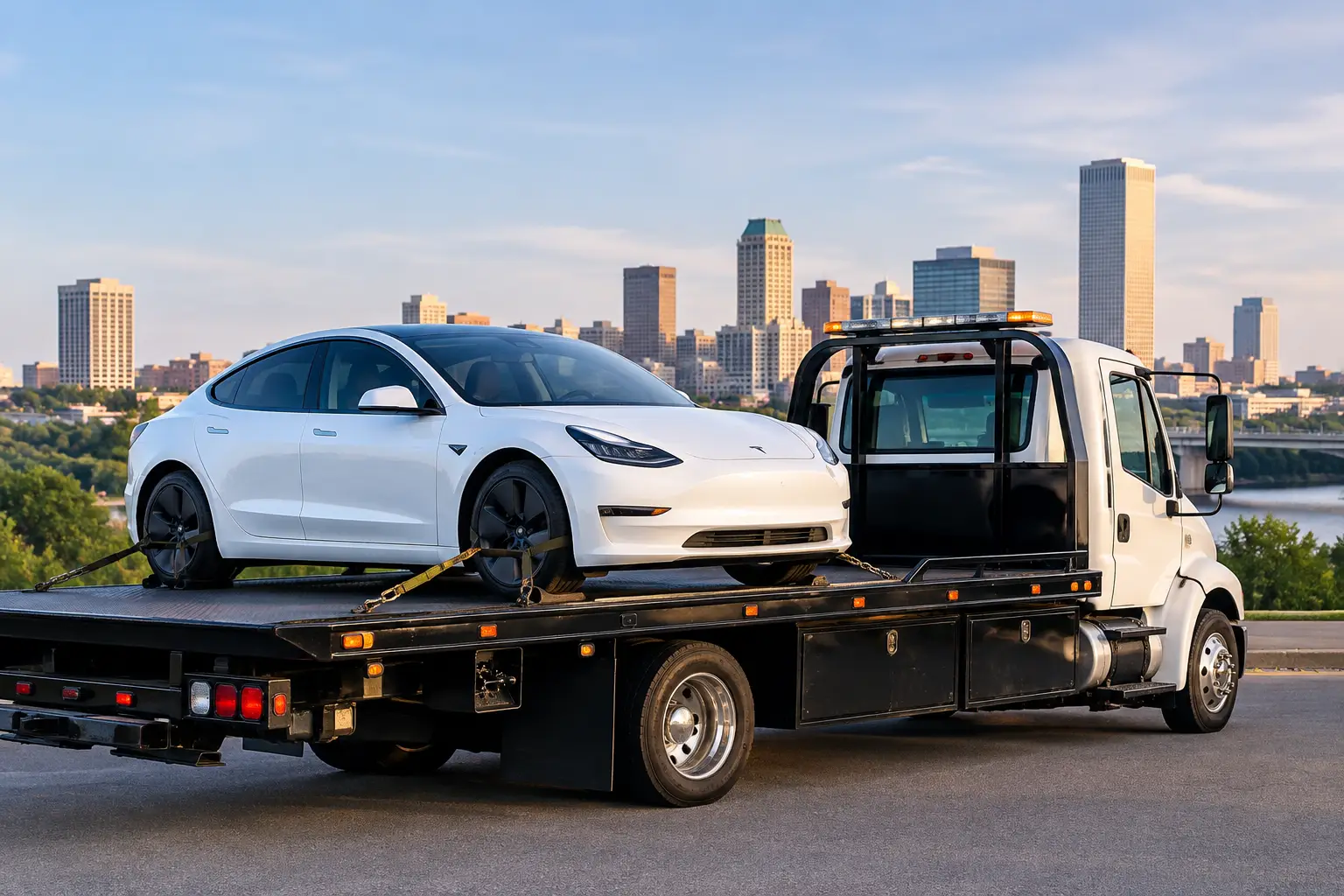
Explain the vehicle type, whether it can roll and steer, and what happened. Include details that affect loading, such as a low front bumper, all-wheel drive, a locked wheel, a missing tire, or an electric vehicle. If you drive a Tesla or another EV, say so upfront. Proper transport matters because EVs have specific handling considerations and are generally best moved on a flatbed.
Also say where you want the vehicle delivered. That may be your home, a trusted repair shop, or a dealership. Tulsa Towing focuses on getting disabled vehicles where the driver needs them to go, without adding the complications of storage or unrelated services.
Why flatbed towing often makes sense in Midtown
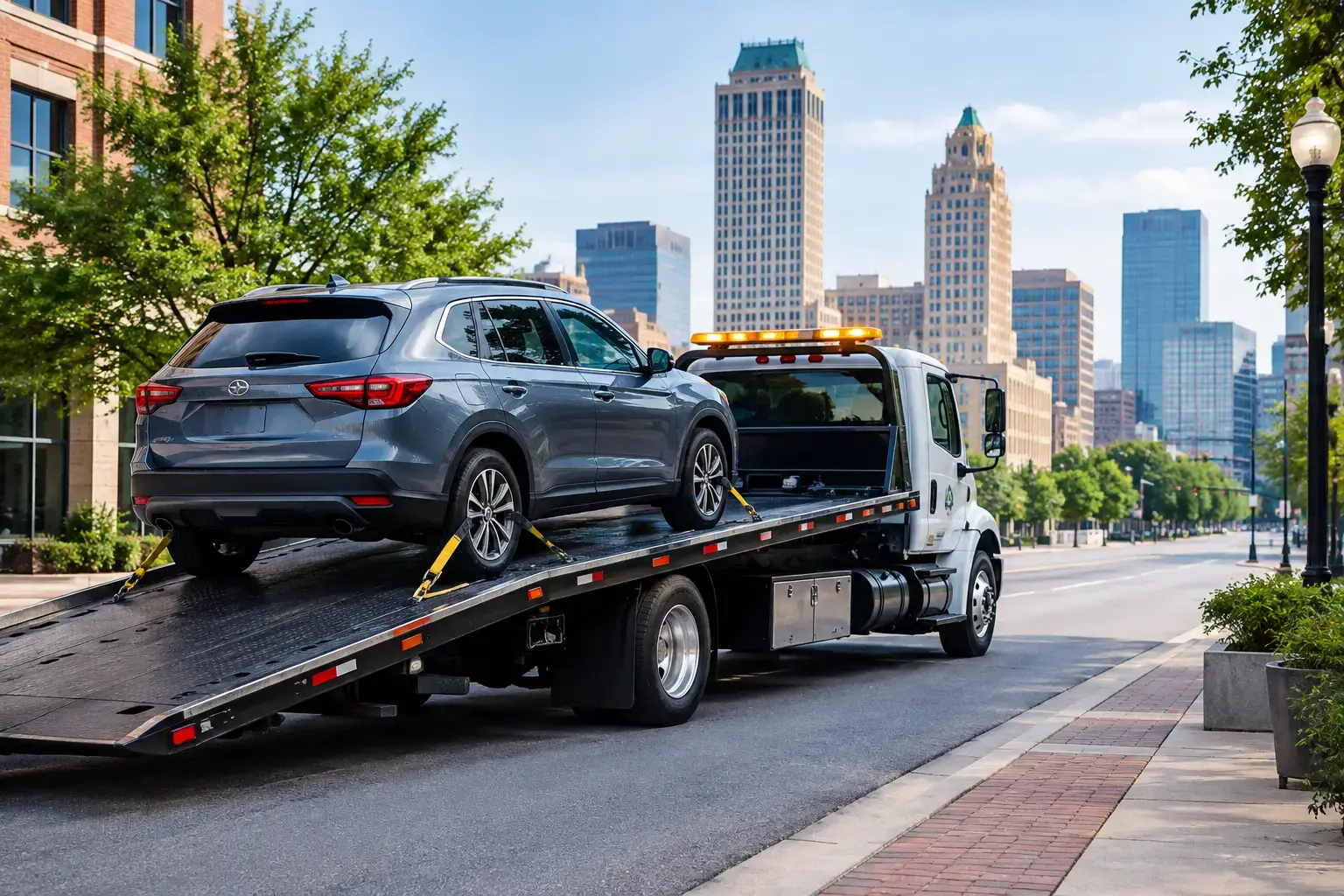
A flatbed keeps all four wheels off the ground during transport. That is a strong option for all-wheel-drive vehicles, EVs, low-clearance cars, accident-damaged vehicles, and cars with tire, steering, or drivetrain issues. It also helps when the destination is only a short distance away. A short city tow still deserves careful loading and securement.
There are trade-offs. Tight garages, low overhead clearance, narrow alleys, and crowded parking lots can affect which truck can access the vehicle and how it must be loaded. That is why an honest description of the location matters. Proper equipment and a clear plan prevent rushed decisions once the truck arrives.
While you wait, keep the situation simple
Stay alert to traffic, keep hazards on, and watch for the truck only when it is safe to do so. If your location changes, your vehicle becomes less accessible, or police direct you to move, update the dispatcher right away. Have your destination and payment method ready, but do not feel pressured to make a repair decision at the roadside.
Roadside trouble is stressful because it interrupts everything else you had planned. In Midtown, the safest answer is usually the simplest one: protect the people first, provide clear information, and let the vehicle be handled with the right equipment instead of taking chances in traffic.