A stalled car on I-44, US 75, or a busy stretch of Memorial can turn stressful fast. Knowing how to leave a disabled vehicle safely comes down to one question: are you safer inside the vehicle or away from it? The answer depends on traffic, your location, weather, and whether you can get the vehicle out of the travel lane.
Your first job is not to diagnose the problem. It is to protect yourself, your passengers, and everyone else around you. Once you are in a safe place, a tow truck can handle the vehicle.
How to Leave a Disabled Vehicle Without Taking More Risk
If the vehicle is still moving, steer it as far from traffic as you safely can. Aim for a shoulder, parking lot, side street, or wide driveway. Do not stop at the bottom of a hill, just beyond a curve, or in a place where other drivers will not see you until the last second. If the car will not move, turn on your hazard lights immediately and keep the wheels pointed away from traffic when possible.
On a lower-speed street in Midtown, Brookside, or South Tulsa, getting out may be reasonable if you can exit on the side away from traffic and walk to a safe area. On a high-speed highway, the decision is different. Traffic moves quickly, shoulders can be narrow, and stepping out on the driver’s side can put you directly in harm’s way.
If your vehicle is safely on a wide shoulder and there is no immediate danger, staying inside with your seat belt fastened is often the safer choice. Keep the doors locked, call for help, and avoid standing beside the vehicle. A stopped car can be struck by another driver, especially at night or during rain.
If the vehicle is stopped in an active lane, smoke is coming from under the hood, you smell fuel, or the location is clearly unsafe, get out only when traffic allows it. Exit from the side away from traffic if possible. Move well away from the roadway, preferably behind a guardrail or another solid barrier. Do not stand directly in front of or behind the vehicle.
Call emergency services first when danger is immediate
Call 911 before arranging a tow if your vehicle is blocking traffic, you have been in a crash with injuries, there is fire or smoke, or you are stranded in a dangerous highway position. Emergency responders can help protect the scene and address hazards that a tow truck alone cannot manage.
For a mechanical breakdown on a safe shoulder or in a parking area, call a local towing service once everyone is out of danger. Give the dispatcher your exact location, direction of travel, vehicle type, and what happened. Saying you are “near Riverside” is helpful, but an exit number, nearby intersection, business name, or GPS location makes dispatch much easier.
Make Your Vehicle Easier to See
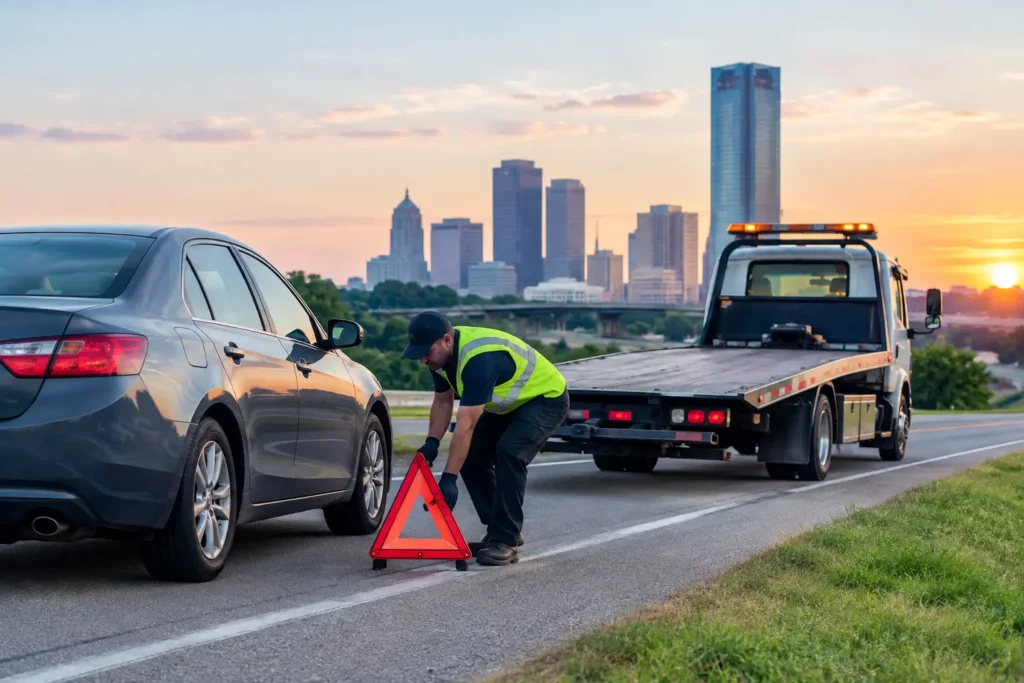
Hazard lights should stay on as long as the battery allows. At night, turn on interior lights only if they help responders locate you without creating a distraction. If you have reflective triangles or road flares and can place them without walking into traffic, use them. Do not take risks just to set out warning devices.
If you are in a dark area, use your phone flashlight to signal only from a protected location. Do not stand in the shoulder waving a light at passing cars. Drivers may not react in time, and some may drift toward the light.
Bad weather changes the situation. Tulsa rain can make pavement slick quickly, and fog, heavy rain, or ice reduces visibility even more. In those conditions, a car that is technically on the shoulder may still be exposed to traffic. Put more distance between yourself and the road if you need to exit.
What to Take When You Leave the Vehicle
Do not spend ten minutes unloading the car on the roadside. Take the essentials and leave the rest secured inside. Bring your phone, identification, keys, needed medication, and a warm layer if conditions call for it. If children or pets are with you, keep them close and move them to the same protected area.
Do not leave your keys in the vehicle unless a towing operator specifically tells you to do so. A tow driver will need a way to access the vehicle, but that can be arranged when they arrive. Keeping the keys with you prevents confusion and helps keep the vehicle secure.
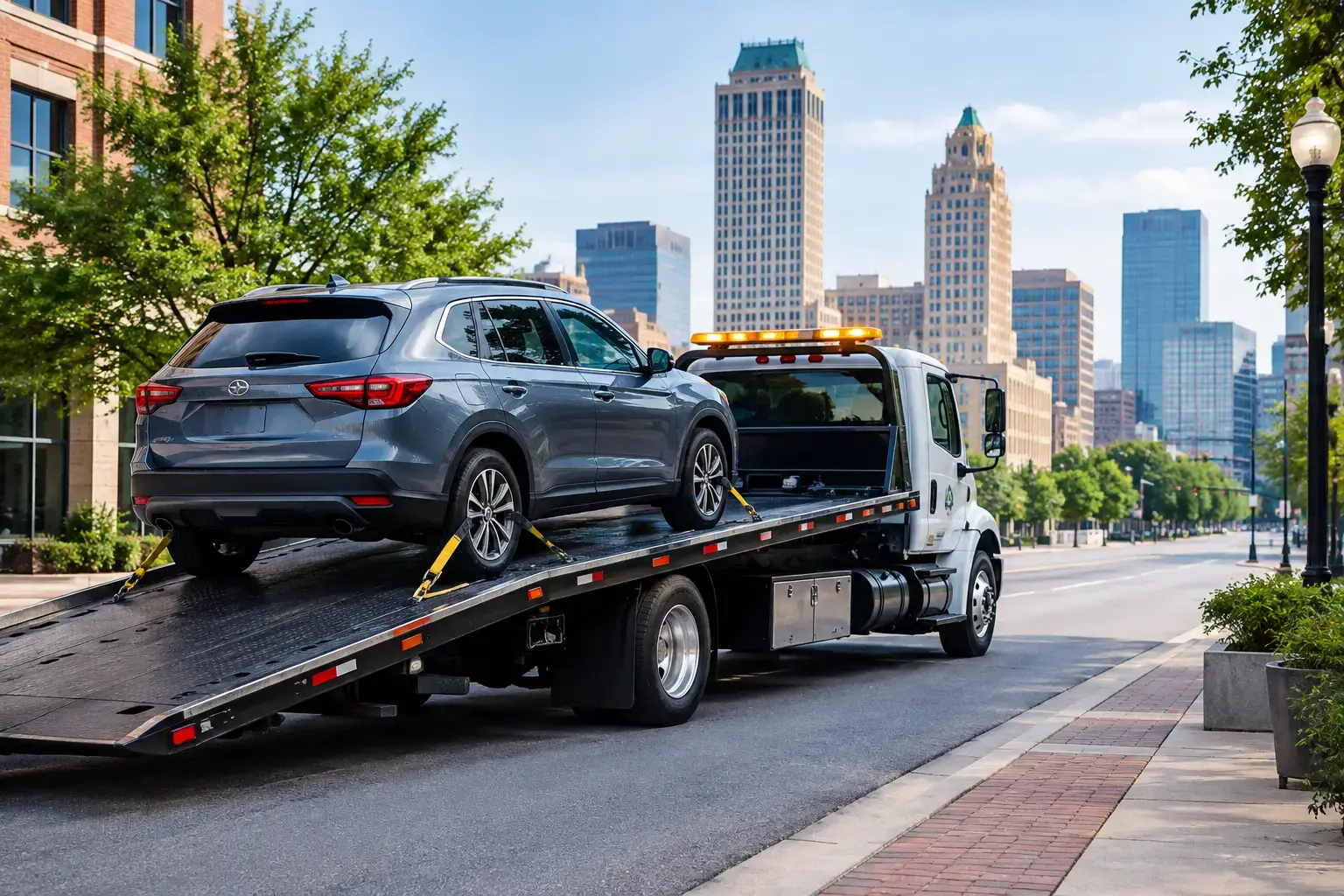
If the car is in a parking garage, apartment complex, or a tight Downtown Tulsa lot, tell the dispatcher before the truck arrives. Clearance, access angles, and vehicle position matter. A flatbed may still be the right option, but the operator needs the full picture to bring the proper equipment and plan a safe load.
Do Not Try to Fix a Dangerous Roadside Problem
A flat tire, dead battery, or overheating warning can feel like something you should handle yourself. Sometimes it is. But the setting matters more than the repair. Changing a tire beside fast-moving traffic, crawling under a vehicle on a shoulder, or opening a steaming hood can turn a manageable breakdown into an injury.
Never remove a radiator cap from an overheating vehicle. Do not keep restarting a car that is smoking, making loud mechanical noises, or showing a serious warning message. If you have a flat on a narrow shoulder, calling for tire help or a tow is usually the safer call.
The same applies to a vehicle stuck in mud, a ditch, or soft ground. Spinning the tires can dig the vehicle in deeper and can damage the transmission or drivetrain. A proper winch-out is safer than pulling with a strap from another personal vehicle, especially near a ditch, embankment, or busy road.
Special Considerations for Electric Vehicles
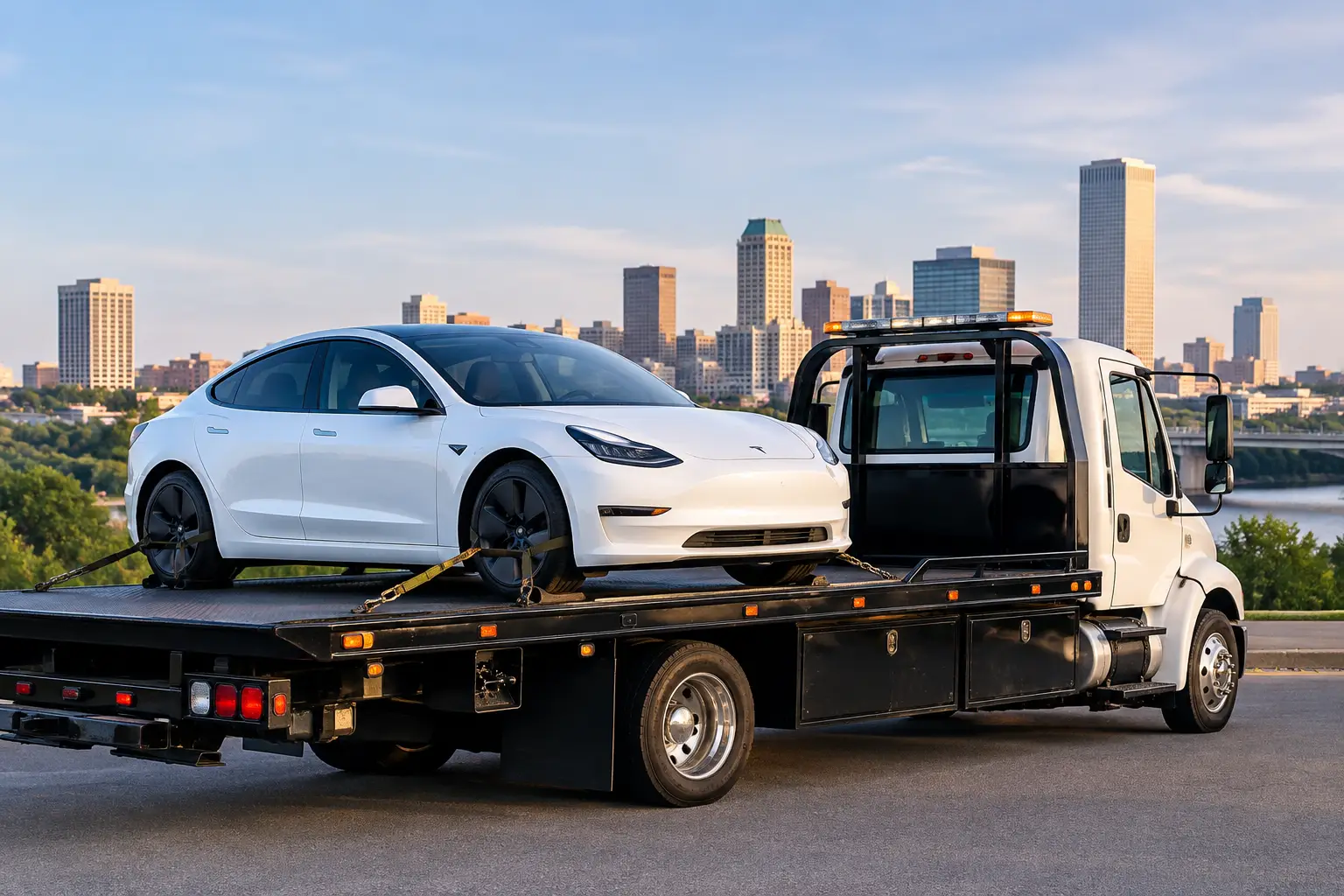
Electric vehicles need careful handling after a breakdown or accident. If your Tesla or other EV has a warning related to the battery, charging system, or reduced power, avoid guessing at a fix on the roadside. Do not tow an EV with the drive wheels rolling on the ground unless the manufacturer’s instructions specifically allow it.
A flatbed is the right transport method for many EV situations because it keeps the vehicle fully off the road during transport. Tell the towing company the vehicle is electric, whether it can roll, and whether it was involved in a collision. That information helps the operator prepare for the correct loading procedure.
If there is smoke, unusual heat, popping sounds, or a burning odor after an EV accident, move away from the vehicle and call 911. Do not return to collect belongings until responders say it is safe.
Prepare for the Tow Before the Truck Arrives
Once help is on the way, stay reachable. Keep your phone volume up, but save battery by closing unnecessary apps and avoiding long calls. If you need to move to a safer spot, tell the dispatcher exactly where you will be waiting.
Clear personal items from the front seats and cargo area only if you can do so safely. Let the tow operator know about low ground clearance, all-wheel drive, a locked steering wheel, a parking brake issue, or a vehicle that will not shift into neutral. These details affect how the vehicle is loaded and help prevent avoidable damage.
Be clear about the destination. Whether the vehicle is going to your home, a repair shop, or a dealership, confirm the address before loading begins. For drivers in Tulsa, Jenks, Bixby, or Broken Arrow, local route knowledge can make a difference when traffic is heavy or access to the destination is tight.
Tulsa Towing, powered by Neptune Towing, handles disabled vehicle transport with flatbed equipment and a straightforward approach: assess the situation, load the vehicle properly, and get it where it needs to go without adding confusion to an already bad day.
A Safer Way to Wait for Help
The biggest mistake after a breakdown is treating the roadside like a normal parking space. It is not. Passing drivers may be distracted, visibility may be poor, and your vehicle may be harder to see than you think.
Get yourself out of the immediate danger zone first, communicate your location clearly, and let the right equipment handle the vehicle. The repair can wait a few minutes. Your safety cannot.