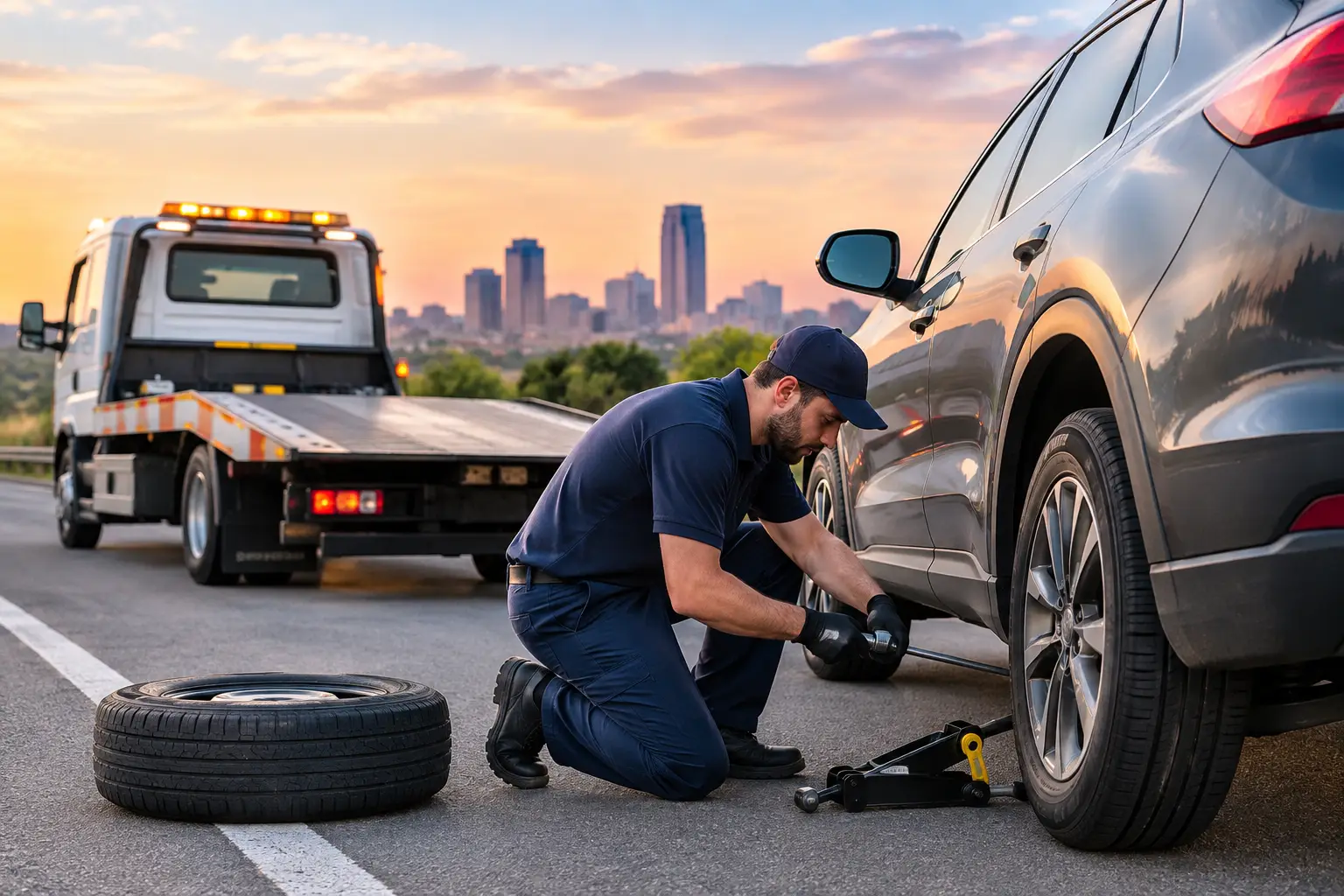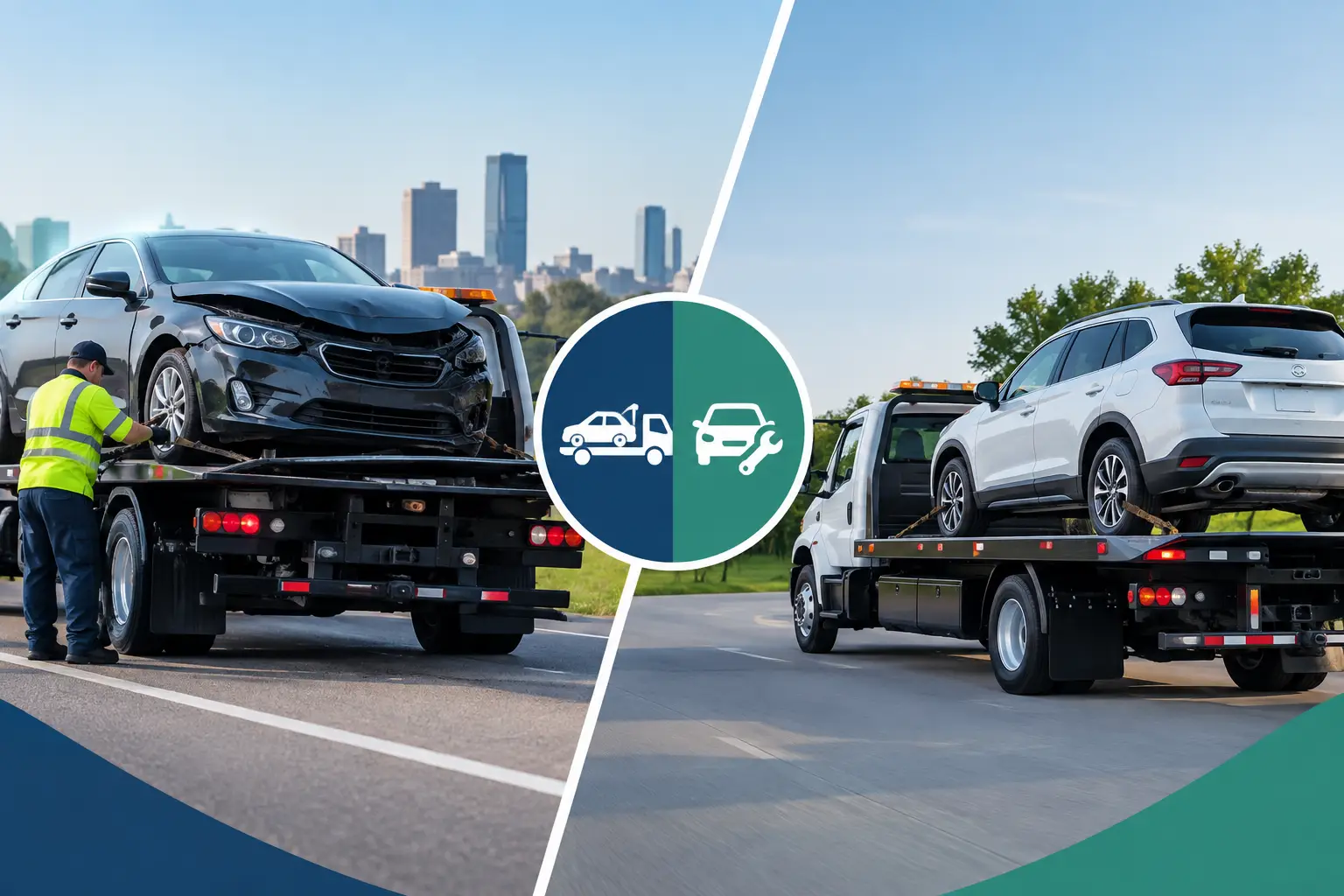
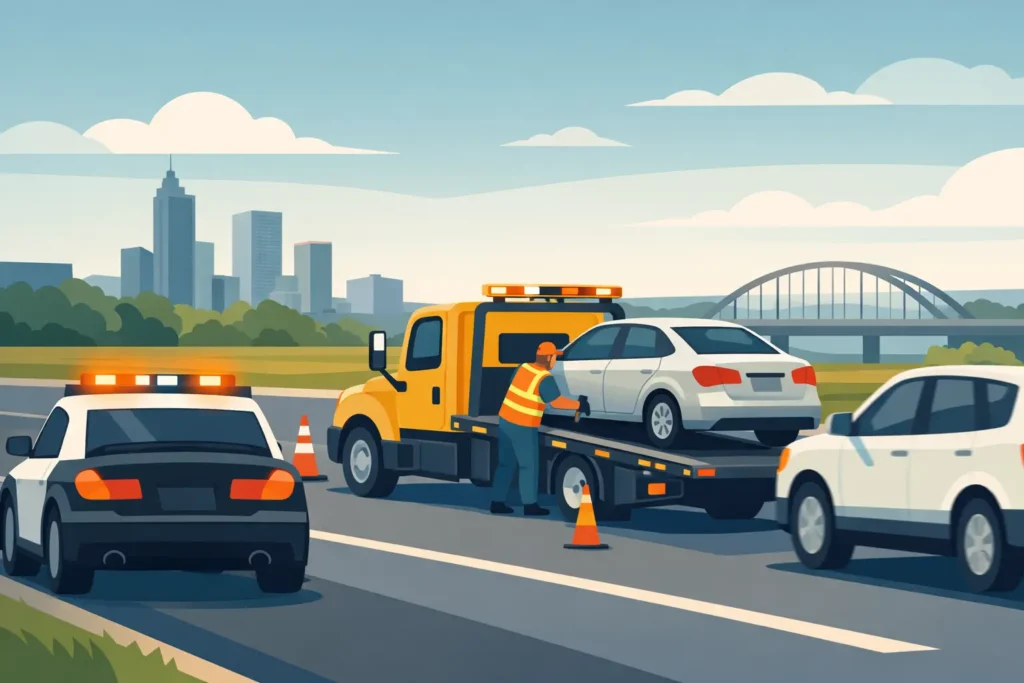
A tow truck operator is loading a disabled car on the shoulder. Traffic is still moving at highway speed. One driver gives space and slows down. Another stays in the same lane and flies past. That gap between those two choices is exactly why slow down move over laws matter.
For drivers in Tulsa, this is not just a rule you hear about in driver education and forget later. It comes up on I-44, US 75, Highway 169, Riverside, Memorial, and city streets where police, fire, EMS, utility crews, and tow trucks work inches away from passing traffic. When a vehicle is broken down or wrecked, the roadside becomes a job site fast. It is also one of the most dangerous places to stand.
What slow down move over means
The basic idea is simple. If you see an emergency vehicle, tow truck, or service vehicle stopped on the side of the road with flashing lights on, you are expected to move over to a non-adjacent lane if it is safe to do so. If you cannot move over safely because of traffic, road design, or weather, you need to slow down.
That sounds straightforward, but in real traffic it is where drivers make mistakes. Some people brake hard at the last second. Some drift over without checking the next lane. Others keep speed because they think the shoulder is wide enough. It often is not. A few feet matters when someone is outside a vehicle hooking up a winch line, lowering a flatbed, changing a tire, or helping a driver who is shaken up after a crash.
Why slow down move over matters for tow trucks
Most people understand why they should move over for police or ambulances. Tow trucks sometimes get less attention, even though the risk is the same. In many roadside calls, the tow operator is the one standing closest to moving traffic for the longest amount of time.
A normal tow is not just backing up, lifting a car, and leaving. There may be debris in the road. The disabled vehicle may be stuck at an angle. A driver may be stranded with kids in the car. On a flatbed job, the operator may need room to position the truck, line up the vehicle correctly, and secure it without rushing. When drivers do not move over or slow down, they force that whole process into a tighter and more dangerous space.
That is one reason careful towing takes time and proper positioning. Rushed roadside work leads to mistakes, and mistakes around traffic can get people hurt.
What drivers should actually do when lights are ahead
When you see flashing lights on the shoulder, do not wait until you are right next to them. Check mirrors early. Look at the lane beside you. Signal, then move over if there is a safe opening. Early movement is smoother and safer than a sudden lane change.
If traffic is boxed in and you cannot move over, reduce speed and pass carefully. Not a light tap on the brakes and then back to full speed. Actually slow down enough to create a safer buffer for the people on the shoulder.
It also helps to avoid the common habit of staring at the scene. Drivers who look too long at a tow or accident scene usually drift in the direction they are looking. Keep your eyes moving, stay in your lane, and give the roadside crew space to work.
When moving over is not safe
There are situations where changing lanes would create a bigger risk than staying put. Heavy traffic, a car already in your blind spot, narrow construction zones, or a vehicle approaching fast in the next lane all change the decision.
That is where the second half of the rule matters. Slow down. The law is not asking drivers to force a dangerous lane change. It is asking drivers to respond to a roadside hazard in a way that reduces risk. Sometimes that means moving over. Sometimes it means controlling speed and passing with caution.
What counts as a roadside work zone
A lot of drivers think only police stops or ambulance calls count. In real life, roadside hazards cover more than that. A tow truck loading a disabled pickup, a roadside assistance truck helping with a flat tire, a utility vehicle stopped with flashing lights, or emergency crews blocking part of a lane all create the same basic problem. Someone is outside a vehicle near moving traffic.
If lights are flashing and people are working on the shoulder or edge of the roadway, treat it seriously.
What stranded drivers should know
If your car breaks down, the move over law protects you too. The tow operator is exposed, but so are you and anyone else standing nearby. That matters on busy roads around Tulsa where traffic can stay fast even when conditions are bad.
If your vehicle is disabled, try to get as far onto the shoulder as possible without creating another hazard. Turn on your hazard lights. If you can safely exit the vehicle and get away from traffic, do that. If getting out puts you closer to moving lanes, it may be safer to stay inside with your seat belt on until help arrives. It depends on the location, traffic flow, and whether the vehicle is stable.
When the tow truck arrives, follow instructions. A good operator will position the truck to create as much protection as possible, but there is only so much room on some shoulders. Clear communication helps the job go faster and safer.
Why this matters on Tulsa roads specifically
This issue shows up everywhere, but certain roads make it worse. On highways and major corridors, traffic volume and speed leave very little margin for error. A disabled car on US 75 during rush hour is different from a quiet side street in a neighborhood. The same goes for narrow shoulders, entrance ramps, and curves where drivers do not see a stopped vehicle until they are already close.
That local reality is why experienced towing matters. A truck operator working in Tulsa regularly understands where breakdowns tend to happen, how traffic stacks up, and how to position equipment to reduce exposure. Tulsa Towing handles these calls with flatbed equipment and a simple approach – get there, communicate clearly, load the vehicle safely, and get out of the danger zone as efficiently as possible.
Common mistakes drivers make
The biggest mistake is treating the shoulder like it is fully separate from traffic. It is not. Wind push from large trucks, distracted driving, tight lanes, and sudden swerves all make the shoulder a high-risk area.
Another common mistake is waiting too long to react. By the time you are directly beside flashing lights, your options are limited. Early awareness gives you room to change lanes or reduce speed without creating a new problem.
The last one is assuming the worker on the shoulder sees you and can adjust. A tow operator may be focused on a hook point, a wheel strap, a winch line, or a stranded driver. The burden is on passing traffic to create space.
The real point of slow down move over
This law is not about making traffic slower for no reason. It is about recognizing that a roadside stop turns ordinary pavement into a dangerous work area. Tow truck drivers, first responders, utility crews, and stranded motorists all depend on passing drivers to do one basic thing – notice the hazard and respond like it matters.
If you are the driver passing by, move over when you can. Slow down when you cannot. If you are the one stuck on the shoulder waiting for help, know that space from traffic is one of the most important protections anyone can give you.
The next time you see flashing lights ahead, do not treat it like someone else’s problem. A few seconds of attention and a little extra space can keep a bad day from turning into something worse.