A tow truck on the shoulder changes traffic fast. One minute you are moving with the flow, and the next you are coming up on flashing lights, a disabled car, and a narrow space where one mistake can put someone in the hospital. That is exactly why the move over law matters.
Most drivers have heard the phrase, but in real traffic, a lot of people still are not sure what it actually requires. Some think it only applies to police. Some assume slowing down is enough every time. Others do not react until they are already beside the scene. On busy roads around Tulsa, that kind of hesitation is a problem.
What the move over law means
Oklahoma’s move over law is there to protect people working or standing on the side of the road. That includes law enforcement, emergency responders, and in many situations roadside service and tow truck operators dealing with disabled vehicles and crash scenes.
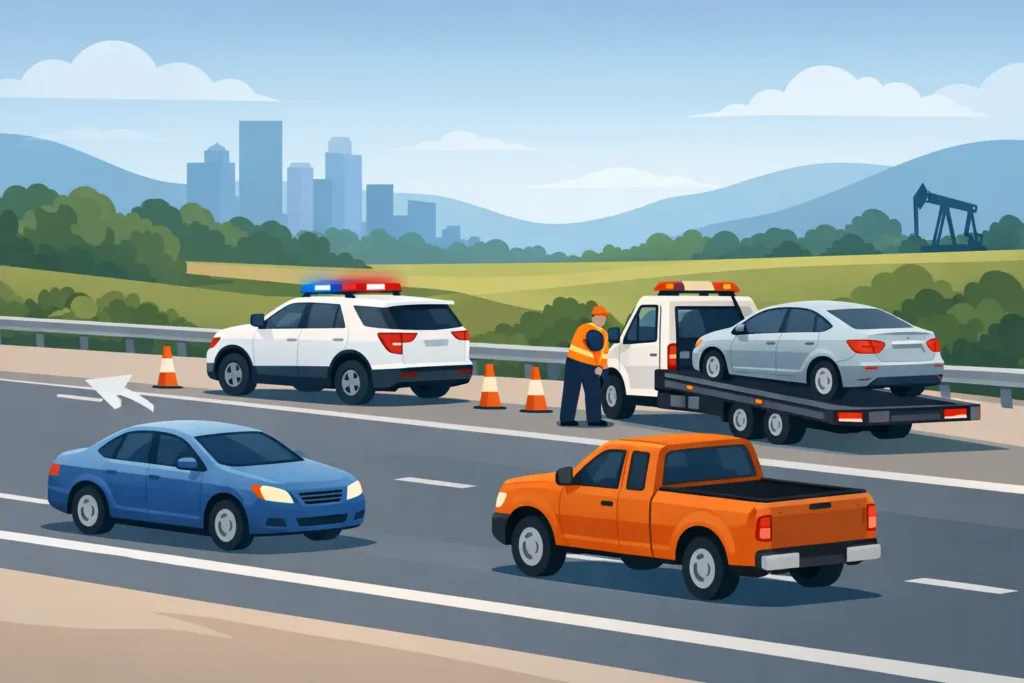
The basic idea is simple. If you are approaching a stopped emergency or service vehicle with flashing lights, you should move over to a non-adjacent lane when it is safe to do so. If traffic or road conditions do not let you change lanes safely, you need to slow down and proceed with caution.
That sounds straightforward, but the real issue is timing. Waiting too long to react is where drivers get into trouble. By the time you are right on top of the scene, the safe option may already be gone. Good driving here means looking ahead early, checking your mirrors, signaling, and making the lane change with enough room to do it safely.
Why the move over law matters for tow trucks
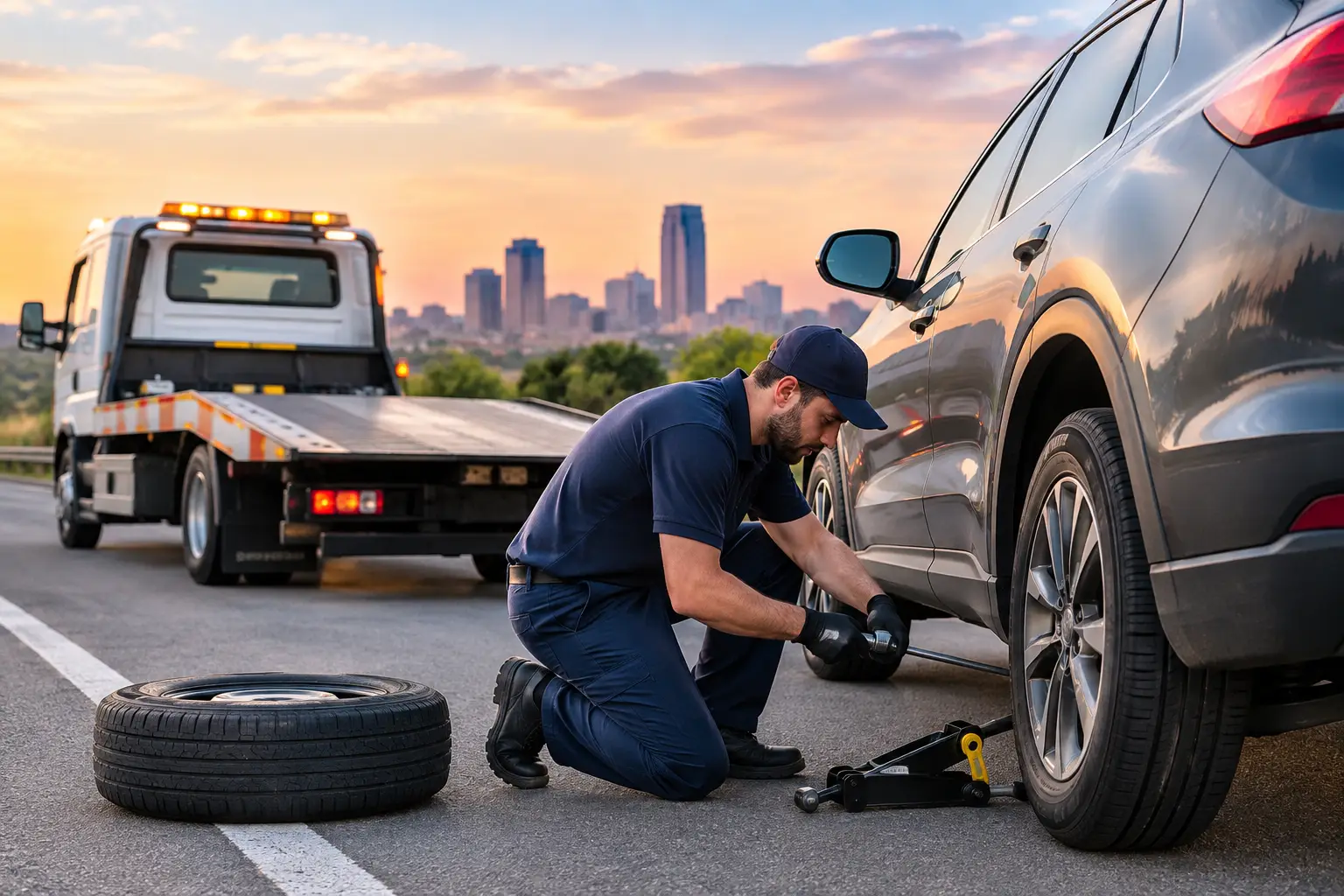
A roadside tow is not done from a protected work zone. It happens a few feet from live traffic, sometimes on a shoulder that is barely wide enough for the truck and the disabled vehicle. The operator may be setting skates under a locked wheel, hooking up a vehicle after a crash, loading a low-clearance car onto a flatbed, or helping a driver who is stuck in a dangerous spot.
Every passing vehicle matters. Wind push from a speeding truck, a distracted driver drifting onto the shoulder, or someone trying to squeeze past without moving over can turn a routine call into a serious incident.
That is why the move over law is not just a rule on paper. It is a safety buffer. It gives the people outside their vehicles a better chance to finish the job and clear the road without getting hit.
Move over law situations drivers see every day
Most people do not think about this until they come across flashing lights in real traffic. Then it gets practical very quickly.
On I-44 or US 75, for example, traffic can be moving at highway speed one minute and stacking up the next. If a tow truck is loading a disabled SUV on the shoulder, the safest move is usually an early lane change. If the lane beside you is occupied and you cannot merge safely, slowing down becomes the next step. The key is controlled reaction, not panic braking.
On city streets, the situation can be tighter. A disabled car near Memorial, Riverside, or Tulsa Hills may leave very little room between the stopped vehicle and passing traffic. Drivers sometimes think lower speed roads make the law less serious, but roadside workers are often even closer to moving vehicles there. Space is limited, and one driver cutting too close can create a second problem instantly.
Parking lots, entrance ramps, and narrow shoulders add another layer. Sometimes there is technically another lane, but it may not be safe to jump into it because of traffic volume, short merge areas, or vehicles in your blind spot. That is where caution matters more than assumption. The law is not asking for reckless lane changes. It is asking drivers to give space when they can and reduce risk when they cannot.
What to do when you see flashing lights ahead
The best response starts before you reach the scene. Scan ahead. If you see emergency lights, hazard lights, or a flatbed already positioned on the shoulder, start planning immediately.
Check traffic around you first. If there is a safe opening, signal and move over with enough distance to avoid abrupt steering. If there is no safe path to another lane, reduce speed and stay alert. Keep your vehicle steady, leave room around you, and watch for people outside the stopped vehicles.
One common mistake is focusing only on the truck with the lights. The real hazard may be the customer standing near the guardrail, debris in the lane, a door opening, or the tow operator moving between the vehicle and the bed. Slow, predictable driving helps everyone there.
Another mistake is speeding back up the second you pass the first flashing light. Some scenes stretch farther than drivers expect. There may be a disabled vehicle, a tow truck, and another responder a short distance ahead. Keep paying attention until you are fully clear.
Common misunderstandings about the move over law
A lot of drivers think moving over is optional if they feel confident in their lane position. It is not about confidence. It is about margin for error. Even a careful driver can get pushed by traffic, glance down for a second, or misjudge shoulder width.
Another misunderstanding is that slowing down alone always satisfies the move over law. It depends on whether a lane change is safe and available. If you can move over safely, that is usually the better choice. Slowing down is not a substitute for giving space when space is available.
Some drivers also assume this only matters on highways. In reality, roadside incidents happen everywhere. A battery service call in Midtown, a flat tire near a shopping center, or a disabled truck on a city street can put workers and drivers in a tight space just as quickly as a highway breakdown.
Why clear roadside habits make a difference
From a towing standpoint, the goal is always to get in, secure the vehicle properly, and clear the area safely. Proper flatbed loading, careful positioning, and good communication all matter, but traffic behavior matters too.
When drivers move over early or slow down appropriately, the whole job gets safer. The operator can focus on loading the vehicle correctly instead of worrying about being clipped by passing traffic. The disabled driver has less stress. The road gets cleared with fewer delays.
When drivers ignore the move over law, everything gets harder. The work slows down because safety has to come first. The risk goes up for everyone on the shoulder. In some cases, what should have been a straightforward roadside service call turns into a much more dangerous situation.
The move over law and real-world judgment
Like a lot of traffic rules, this one sounds simple until you are in a crowded lane with cars all around you. That is where judgment matters.
If you have room, move over. If you do not, slow down and pass carefully. Do not force a lane change that causes another crash. Do not lock up your brakes at the last second either. A calm early response is usually the right one.
For everyday drivers, that means keeping enough following distance to see what is ahead and react without panic. For anyone coming up on a roadside scene, it means thinking one step earlier than you normally would.
That is especially true in busy local traffic where space closes up quickly. Roads around Tulsa can shift from open to crowded in seconds, and a tow or roadside stop often appears just past a curve, an overpass, or a traffic backup. The drivers who handle it best are usually the ones who are already scanning and adjusting before they get there.
If you remember one thing about the move over law, make it this: those flashing lights mean someone is working in a space that is too small and too exposed. Give them the lane if you can. Give them your speed reduction if you cannot. A little space on the road can prevent a very bad day.