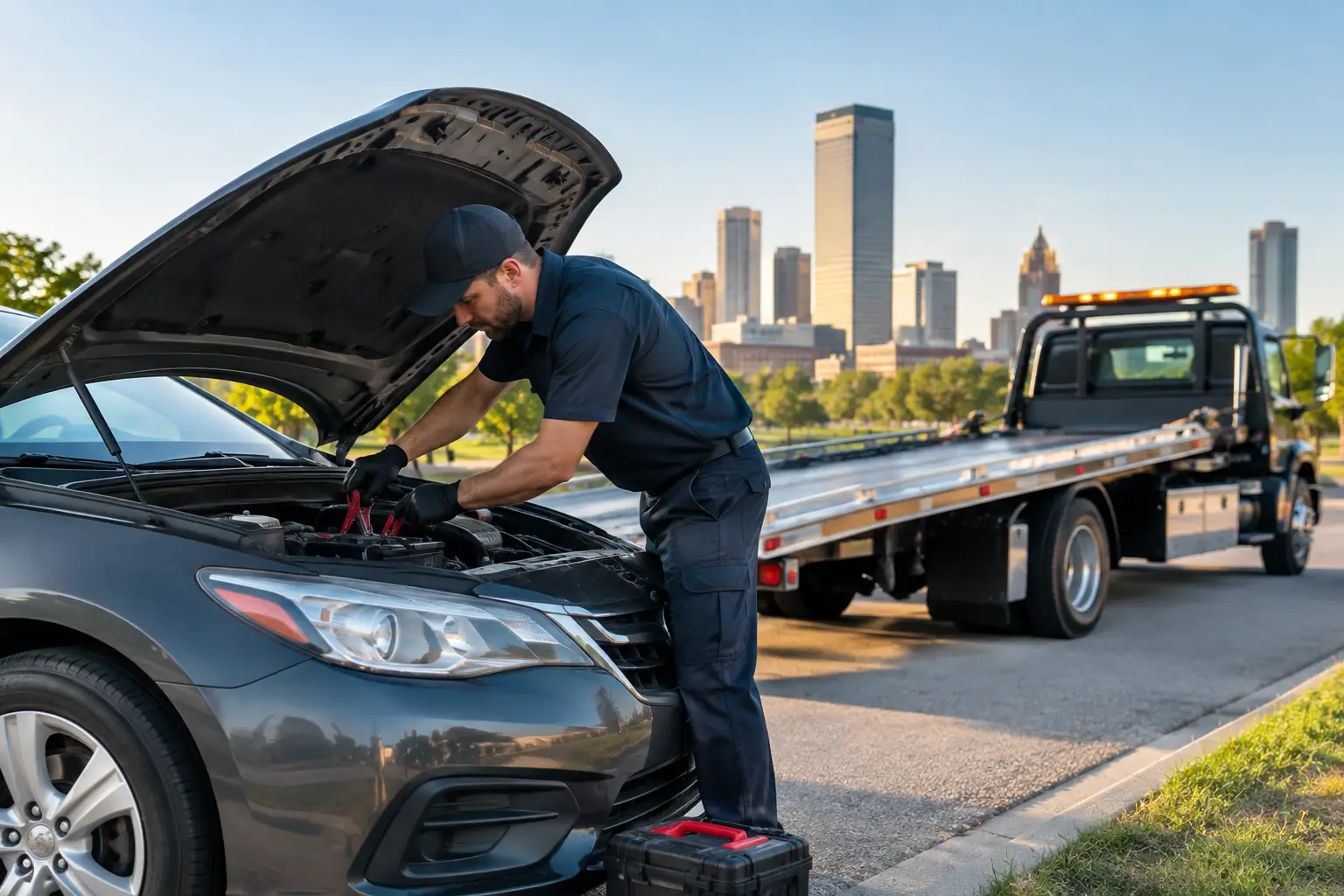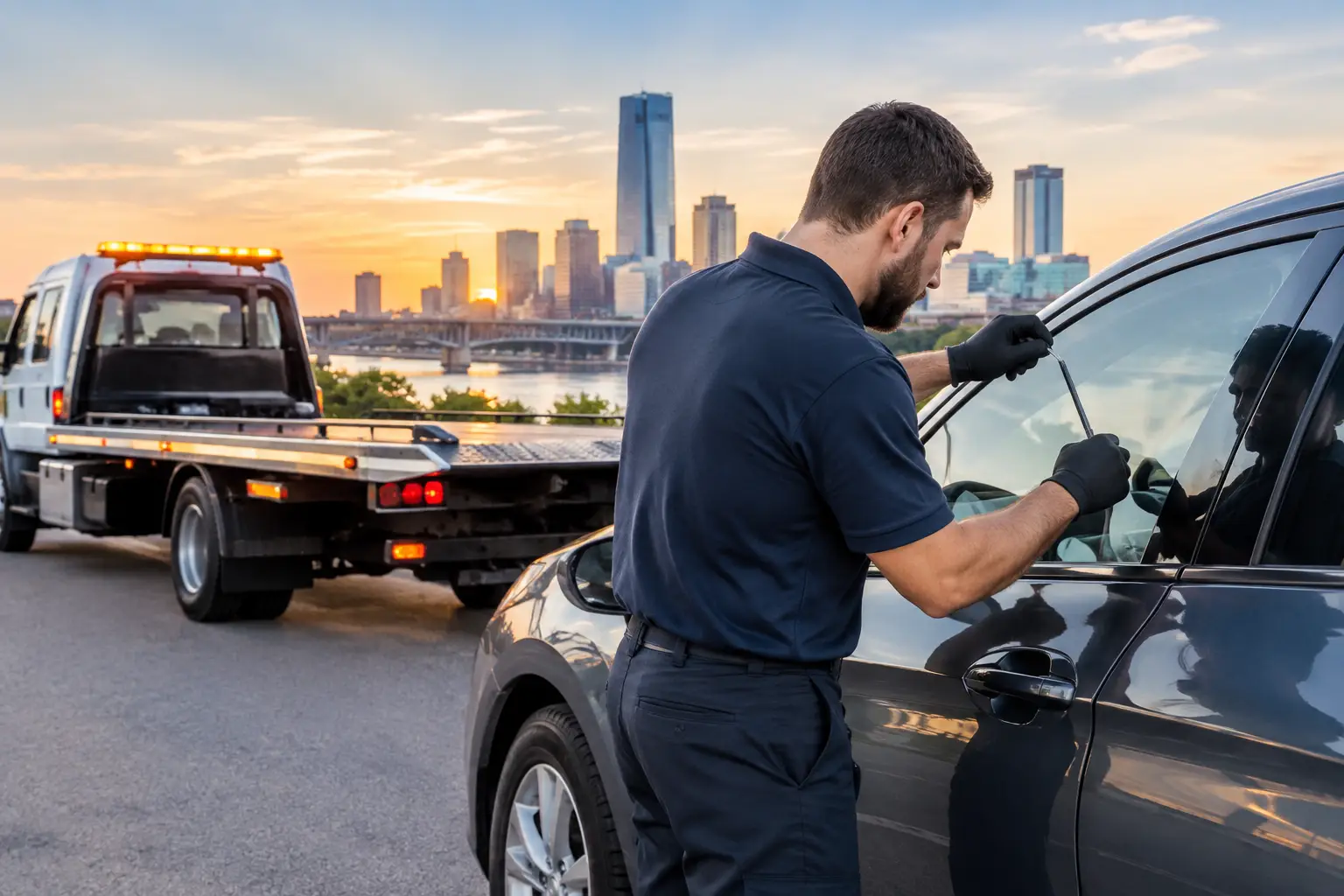
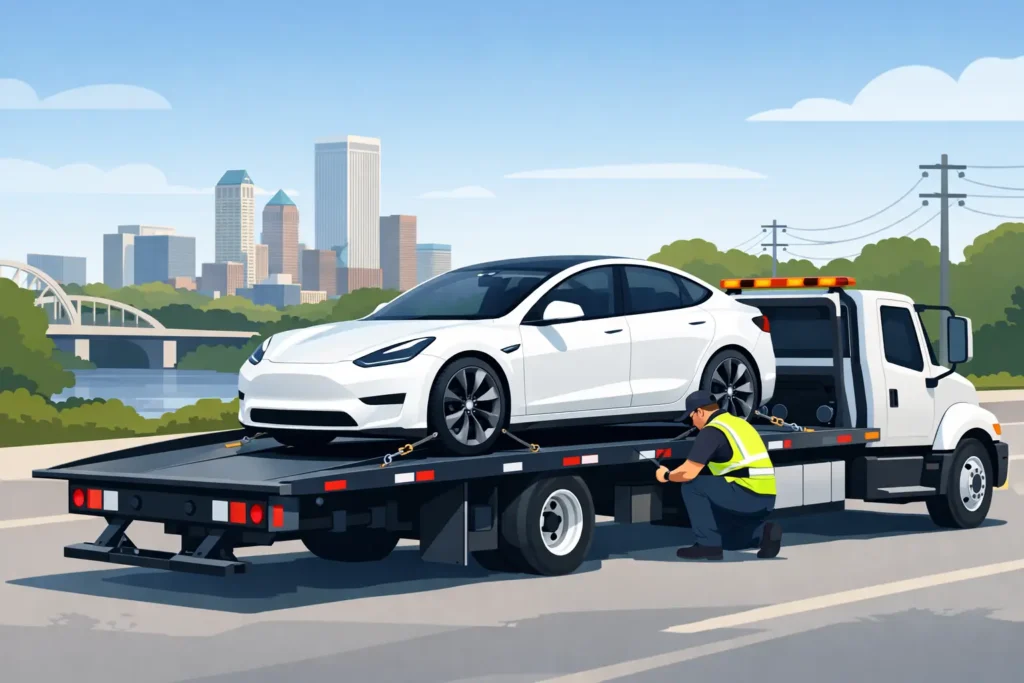
A Tesla that will not move needs more than a quick hook-up and a pull down the road. This example flatbed transport for Tesla drivers shows what careful handling looks like when an EV is disabled in a driveway, parking lot, apartment garage, or along a Tulsa roadway. The goal is simple: load the vehicle without adding damage, keep it secure in transit, and deliver it exactly where the driver needs it.
A flatbed is usually the right answer for a Tesla. It keeps all four wheels off the ground and avoids the problems that can come from dragging, improperly dollied, or incorrectly securing an electric vehicle. When the car is already stressful enough, the tow should not create another repair bill.
An Example Flatbed Transport for Tesla
Picture a Model 3 that will not shift into Drive after sitting at an office near Memorial Drive. The owner has checked the screen, tried the normal restart steps, and arranged for service, but the vehicle still cannot be driven. It may need to go to a repair facility, a Tesla-approved body shop after an accident, or back home until the next appointment.
The first step is getting clear details before the truck arrives. The driver should tell dispatch the Tesla model, whether it is in Park, whether it rolls, whether there is visible collision damage, and where it is sitting. A vehicle parked nose-in between cars, sitting in a low-clearance garage, or stopped on the shoulder of I-44 can require a different loading approach than one in an open lot.
Once on scene, the tow operator checks the area around the vehicle before setting up. That includes traffic, slope, clearance, wheel position, and any obstacles that could affect the ramp angle. Teslas sit relatively low, so a rushed loading job can put a front bumper, lower valance, or underbody too close to the bed or ramps.
The flatbed is positioned to create the straightest, safest path onto the deck. If the vehicle can roll and be placed in Tow Mode, that makes loading more straightforward. If it cannot be placed in Tow Mode or cannot roll freely, the operator may need wheel dollies, skates, or another controlled method to move it without forcing the wheels or dragging the car. The correct choice depends on the condition of the Tesla and the space available.
After the vehicle is on the bed, it is secured at appropriate tire locations using equipment designed to hold the vehicle steady during transport. The focus is on the wheels and tires, not on taking shortcuts with suspension parts or other areas that should not be used as attachment points. Before leaving, the operator checks that the vehicle is centered, the straps are properly tensioned, and nothing can shift during braking, turning, or rough pavement.
That is the basic example, but the details matter. A straightforward tow from a South Tulsa parking lot is different from recovering a disabled Tesla near US 75 during heavy traffic or moving one from a tight downtown garage. Flatbed transport gives the operator room to handle those conditions without treating the vehicle like an ordinary rolling car.
Why Tesla Flatbed Towing Requires Care
Tesla vehicles have a heavy battery pack mounted low in the chassis. That low center of gravity is good for driving, but it also means improper towing can create expensive risk underneath the car. The battery area, suspension, bumper clearance, and wheel movement all deserve attention before the vehicle is moved.
A Tesla should not simply be pulled by whatever point is easiest to reach. If the car is stuck, damaged, or locked in Park, the operator needs to assess the situation instead of forcing it. Sometimes the right move is a controlled winch pull onto the flatbed. In other cases, extra equipment is needed to move the vehicle while protecting the tires, wheels, and drivetrain.
Tow Mode is useful when the vehicle is operational enough to activate it. It releases the parking brake for controlled loading and allows the Tesla to roll as needed. But a driver should not assume Tow Mode will always be available. A dead low-voltage battery, screen issue, collision damage, or system fault can prevent normal operation. That is why the towing plan should be based on what the vehicle can actually do at the scene.
There is also a difference between a Tesla that has a flat tire and one that has been in a collision. A flat tire may leave the rest of the car fully functional, while accident damage can affect the wheels, steering, underbody, or ability to roll. The tow operator needs that information upfront so the right equipment arrives and the loading process is not improvised in a busy lane or cramped lot.
What to Tell the Tow Operator Before Arrival
Clear information saves time and helps prevent surprises. When calling for a Tesla tow, explain the model and the immediate reason it cannot be driven. Mention whether the car is in a garage, on a busy street, in a parking space, or at home. If the vehicle is in a difficult position, a quick description of the surrounding space is often more useful than trying to diagnose the mechanical issue.
Let the operator know if any of these conditions apply: the vehicle is in Park and will not release, the wheels are damaged, the suspension looks low, there is underbody damage, or the car was involved in an accident. These details affect how the vehicle is loaded.
It also helps to have the destination ready. A tow may be going to a local repair shop, a collision center, a dealership, or the owner’s home. If the destination has limited access, such as a narrow driveway or a crowded shop lot, say so before transport begins. A good tow is not just getting the Tesla onto the truck. It is getting it off safely at the right place.
What Tesla Owners Can Do at the Scene
If the area is safe, move personal items out of the vehicle and keep your phone available for the tow operator. Have the Tesla key card, phone key, or key fob ready in case access is needed to shift the vehicle or activate Tow Mode. Do not try to push a disabled Tesla out of traffic by yourself, especially on a hill or near fast-moving vehicles.
If the car is on the shoulder, prioritize your safety over the vehicle. Move away from traffic when possible and wait in a safe location. On major Tulsa routes, conditions can change quickly, especially after dark or during rain. The towing operator can work around a difficult position more effectively when the customer is safe and able to explain what happened.
Avoid attaching a chain, strap, or another vehicle to the Tesla unless a qualified operator has assessed the correct recovery point and method. A well-meant attempt to pull the car a few feet can cause damage or create a dangerous situation if the vehicle suddenly rolls.
Flatbed Transport Is Not Always One-Size-Fits-All
Most Tesla transport calls are best handled on a flatbed, but the loading method still depends on the scene. A fully operational Tesla with a mechanical warning may roll onto the bed easily. A vehicle with locked wheels, crash damage, or a dead battery may require additional equipment and more time.
This is where real towing experience matters. The right approach is not always the fastest-looking one. Taking a few extra minutes to position the truck, reduce the ramp angle, or use controlled loading equipment can protect a vehicle that is already disabled. For an EV owner, that is usually time well spent.
Tulsa Towing handles Tesla transport with flatbed equipment and a practical, damage-conscious approach. Whether the vehicle is stranded in Tulsa, Jenks, Bixby, or Broken Arrow, the important details are the same: assess the condition, load it correctly, secure it properly, and communicate clearly about where it is going.
When your Tesla cannot move, the best next step is to keep the situation simple. Share the vehicle condition and location, use a flatbed, and let the loading method match the real conditions at the scene.