A vehicle problem on US-75 can turn serious quickly. Traffic moves fast, shoulders are narrow in places, and drivers may not see a stopped car until they are already close. This US-75 roadside emergency guide is for Tulsa-area drivers who need to make the safest decision possible while waiting for roadside help or a tow truck.
The first goal is not diagnosing the vehicle. It is getting yourself and your passengers out of danger without making the situation worse.
Get Your Vehicle as Far Off US-75 as Possible
If the vehicle is still moving, do not stop in a live lane unless it will not go any farther. Turn on your hazard lights immediately and ease toward the right shoulder, an exit ramp, a frontage road, or a parking lot if one is within safe reach. A flat tire, overheating warning, strange noise, or low-power issue may give you enough time to get clear of the main traffic lanes.
Do not keep driving just because the next exit is close if the car is pulling hard, the steering feels unsafe, smoke is coming from under the hood, or a tire has come apart. A few extra minutes of driving can turn a repairable problem into major vehicle damage. It can also leave you stranded in a worse location.
Once you are stopped, point the wheels away from traffic if the shoulder has enough room. Set the parking brake if the vehicle is stable. Keep your hazard lights on, even during daylight hours.
Decide Whether to Stay Inside or Move Away
There is no one answer for every US-75 breakdown. It depends on where the vehicle stopped, how close traffic is, weather conditions, and whether the car is safely off the roadway.
If you are fully on a wide shoulder with a barrier or plenty of space between your vehicle and traffic, staying buckled inside with the doors locked may be the safer choice. Keep passengers calm and avoid standing beside the vehicle near passing traffic.
If the vehicle is partly in a travel lane, on a blind curve, near an interchange, or in a spot where traffic is moving close to the door, get out only if it is safe to do so. Exit from the side away from traffic and move well away from the roadway. Do not stand directly in front of or behind the vehicle. A stopped vehicle can be struck or pushed without warning.
Children, older passengers, and pets should not be left to wander near the shoulder. Keep everyone together in a safe location, preferably behind a guardrail when one is available.
If You Have Been in a Crash
Call 911 first when there are injuries, blocked lanes, fire, leaking fluids, or a vehicle that cannot be moved safely. If the vehicle can be driven out of traffic without creating more risk, move it to a safe nearby area. Take photos and exchange information once everyone is out of danger.
Do not attempt to direct highway traffic yourself. Let law enforcement handle lane control and the scene.
What to Tell Roadside Help
A clear location saves time. “I am on US-75” is a start, but it is not enough for a driver trying to find you quickly.
Give the direction you are traveling, the nearest exit, cross street, mile marker, landmark, or visible business. Let the dispatcher know whether you are on the main highway, an entrance ramp, an exit ramp, or a service road. Southbound near 71st Street is very different from northbound near I-44, even though both are on the same corridor.
Also explain what happened and whether the vehicle is safely off the road. Mention if you need a jumpstart, flat tire help, lockout service, winch-out, or a tow. If the car is low to the ground, all-wheel drive, a heavy-duty truck, or an electric vehicle, say so upfront. The right equipment and loading method matter.
For a tow, have a destination ready if possible. That may be your home, a local repair shop, dealership, or another safe location. Clear details at the start keep the job moving once the truck arrives.
Do Not Attempt a Risky Roadside Repair
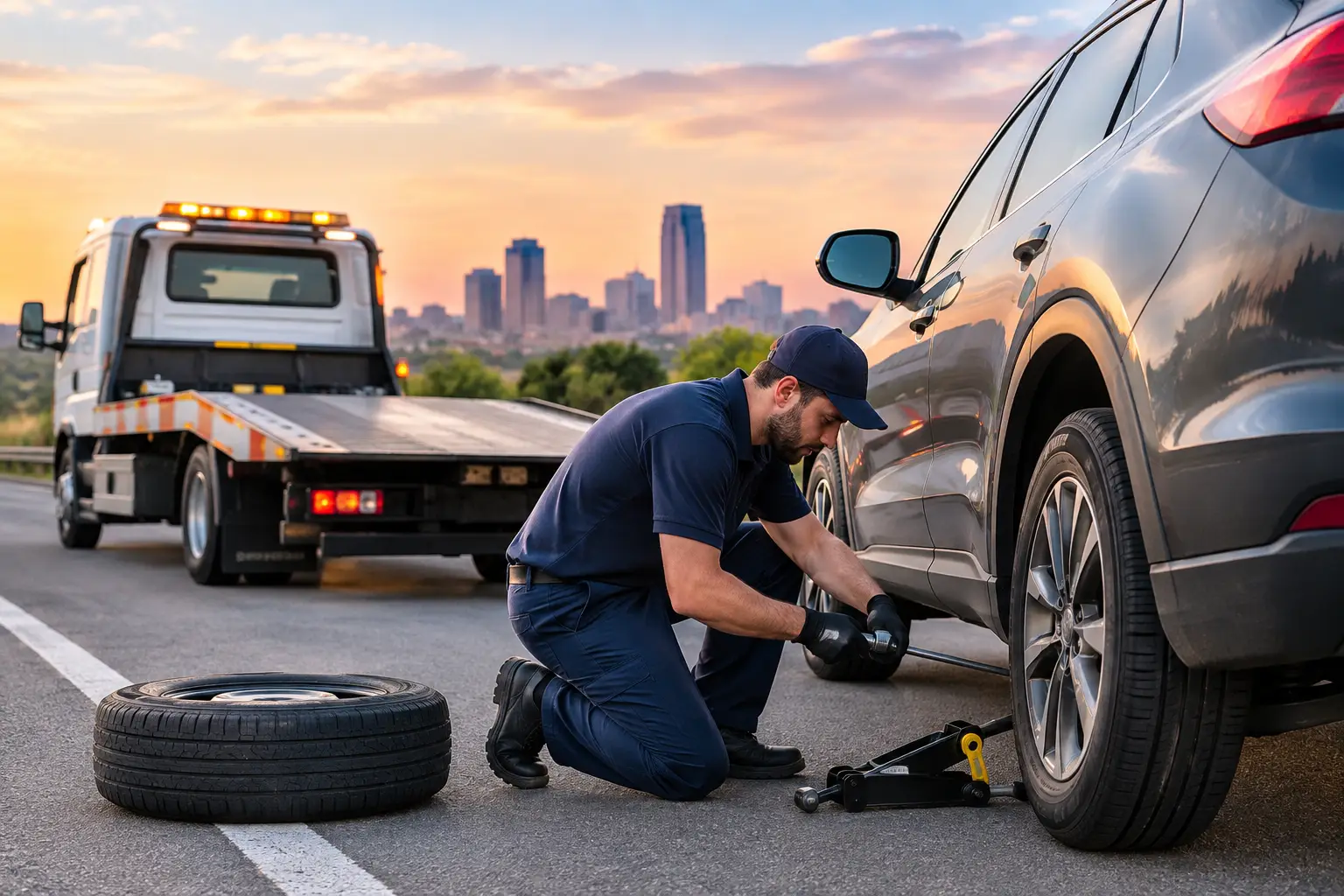
A flat tire on a quiet neighborhood street is one thing. Changing it beside fast-moving highway traffic is another. Even if you know how to use a jack, the shoulder may be sloped, soft, cramped, or too close to traffic for the job to be safe.
The same goes for checking under the hood. Steam, smoke, or a hot engine can cause burns. If the temperature gauge is high, shut the vehicle off and do not remove the radiator cap. If you smell fuel, see a fluid leak, or notice smoke, move away from the vehicle and call for help.
A dead battery may look simple, but jumpstarting on a busy shoulder still puts you close to traffic. A loose connection, wrong cable placement, or a battery that has failed internally can add another problem. If the vehicle is in an unsafe spot, roadside assistance is usually the better call.
Keep Your Vehicle Visible While You Wait
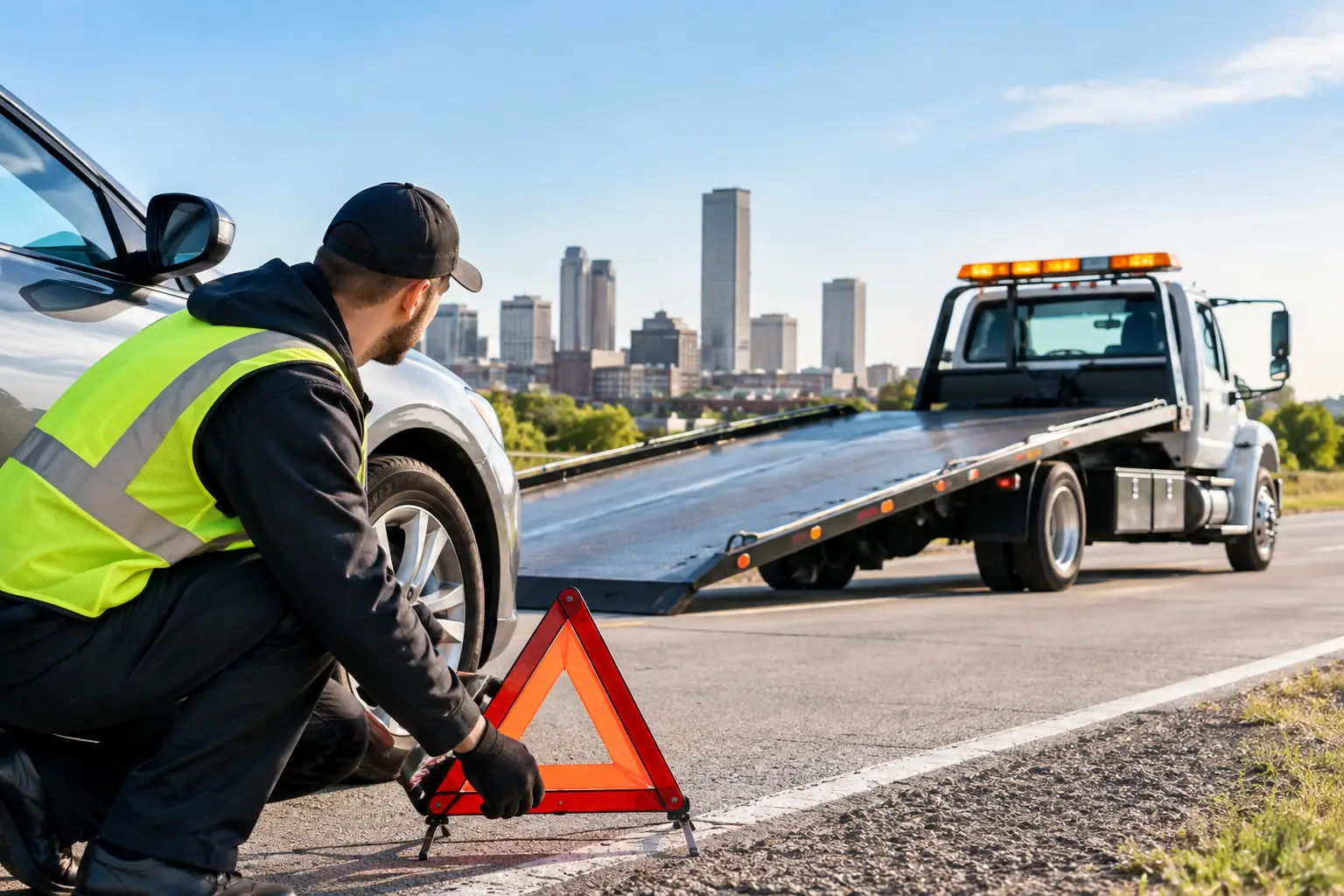
Hazard lights are the first step, but visibility can still be poor during rain, fog, nighttime, or heavy traffic. If you have reflective triangles or road flares and can place them without walking into danger, they can help approaching drivers see your vehicle sooner.
Do not walk far along US-75 to place warning devices. Your safety matters more than setting them at a perfect distance. If placing them means stepping into traffic or crossing lanes, skip it.
At night, keep your phone charged when possible and use the interior light carefully. Bright interior lights can make it harder to see outside the vehicle. If you are waiting in the car, stay alert for the tow truck and be ready to confirm your location when the driver calls.
How to Handle Common US-75 Breakdowns
Flat Tire or Blowout
If a tire blows out while moving, hold the steering wheel firmly and avoid slamming the brakes. Let the vehicle slow down gradually, then steer toward a safe shoulder or exit. Once stopped, do not drive on a damaged tire unless moving a very short distance is necessary to get out of immediate danger.
Dead Battery
If the vehicle will not start in a parking area near US-75, a jumpstart may be all you need. If it dies on the highway or the electrical system is acting erratically while driving, the cause may be more than the battery. A tow to a repair facility is often the safer choice.
Overheating or Warning Lights
A temperature warning, smoke, or loss of coolant requires you to stop as soon as it is safe. Continuing to drive an overheating engine can cause expensive internal damage. Shut it down and let it cool. Do not pour cold water into a hot engine.
Vehicle Will Not Move
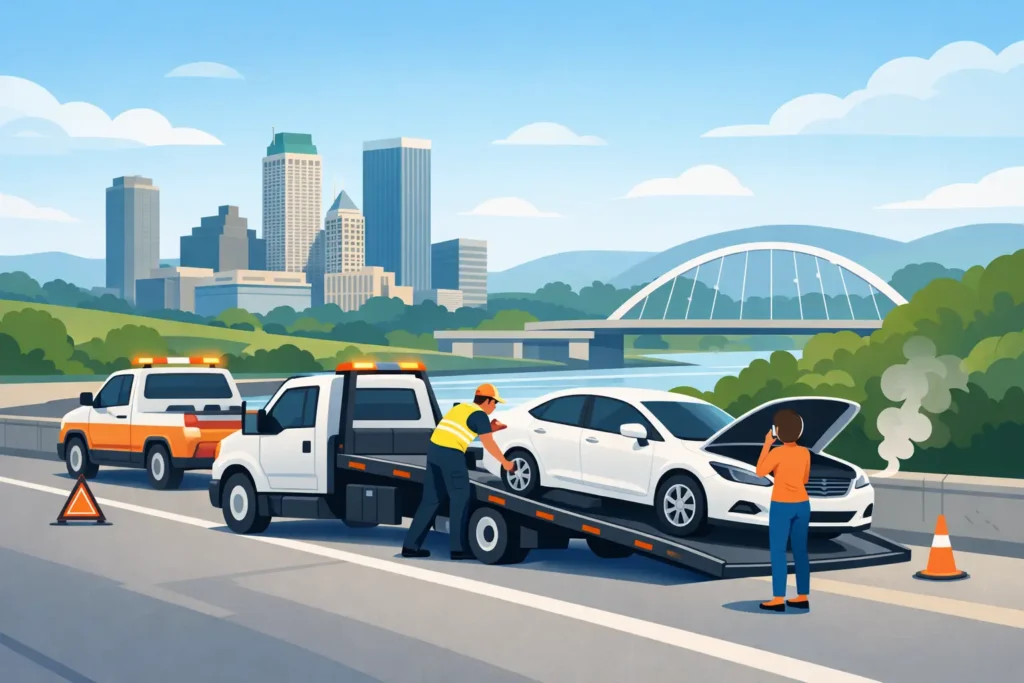
A transmission issue, broken axle, accident damage, or electrical failure can leave a vehicle unable to move under its own power. This is where proper towing matters most. A flatbed keeps the vehicle off the road during transport and is especially useful for all-wheel-drive vehicles, low-clearance cars, and EVs that should not be dragged or towed carelessly.
Preparing Before an Emergency Happens
You do not need a trunk full of tools to be better prepared. Keep a charged phone, car charger, flashlight, basic first-aid supplies, water, and a reflective vest or warning triangles in the vehicle. During Oklahoma storms or winter weather, add a blanket and keep the fuel level from getting too low.
It also helps to know your vehicle’s towing requirements before you are stranded. Many electric vehicles and all-wheel-drive vehicles need specific handling. Telling the tow operator what you drive prevents guesswork at the roadside.
For drivers in Tulsa, Jenks, Bixby, Broken Arrow, and nearby areas, US-75 problems often happen during commutes, storms, or late-night travel when traffic conditions change fast. Save a local roadside assistance number before you need it, and make sure family members know what information to share if they are stuck.
When a Tow Is the Right Call
Roadside assistance can solve a lockout, simple flat tire, or drained battery. But a tow is the better option when the vehicle has collision damage, overheats, will not shift, has a severe tire failure, or cannot be made safe at the roadside.
Tulsa Towing handles emergency towing with flatbed equipment for vehicles that need to be moved without adding damage. The goal is straightforward: get the vehicle loaded safely, keep you informed, and take it where you need it to go.
A breakdown on US-75 is stressful, but you do not have to solve the mechanical problem from the shoulder. Get to the safest spot available, make yourself visible, share a precise location, and let trained roadside help handle the vehicle from there.