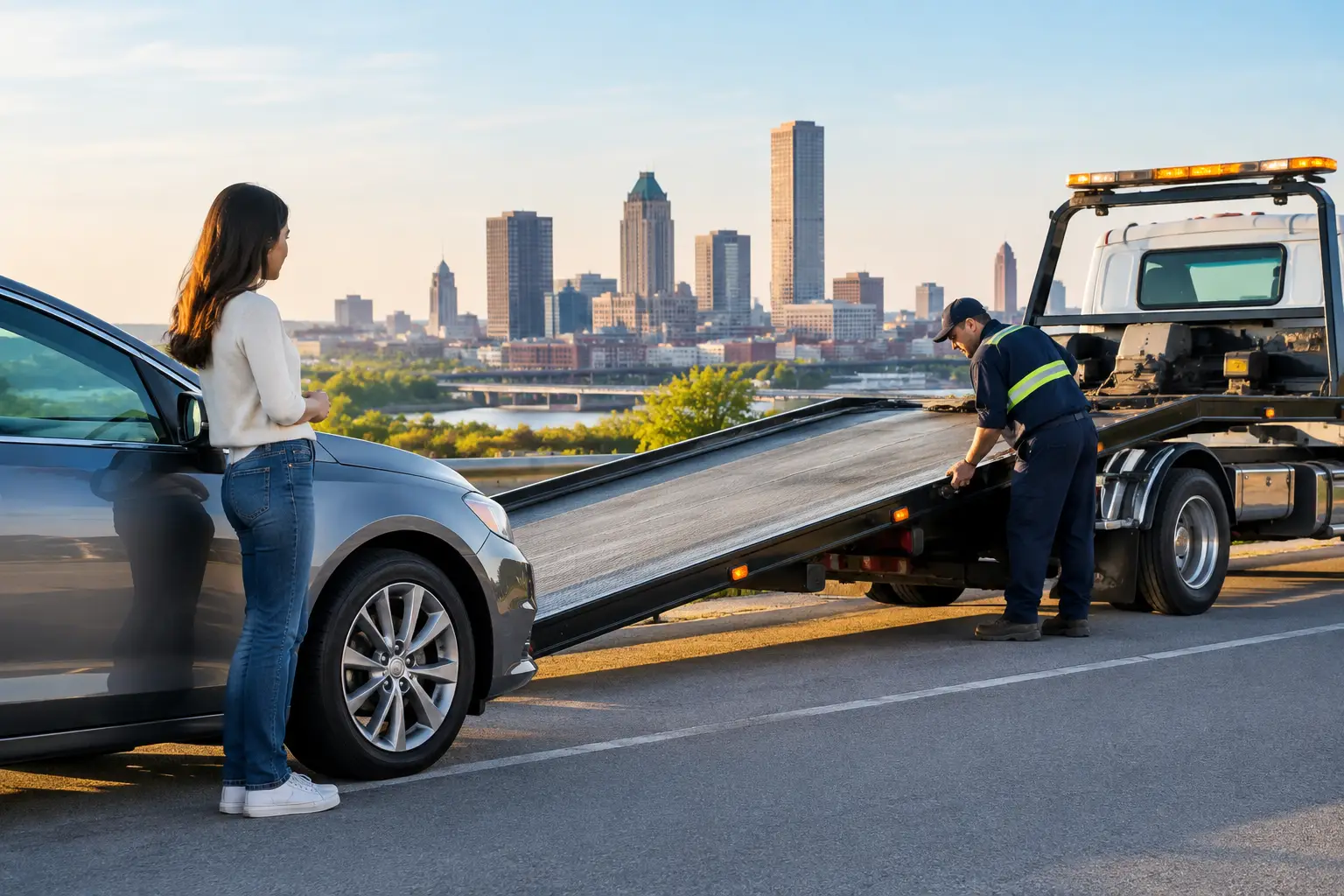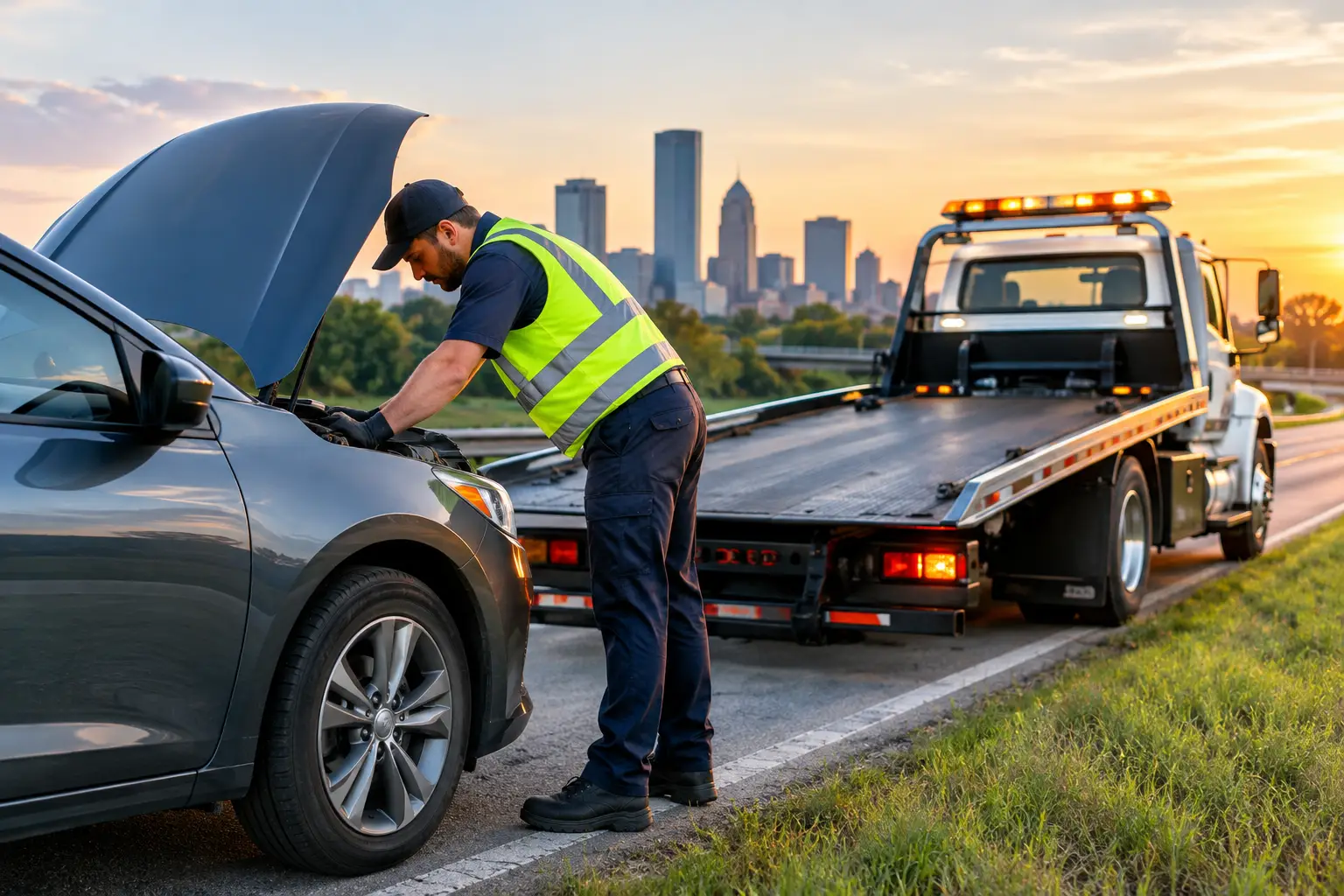
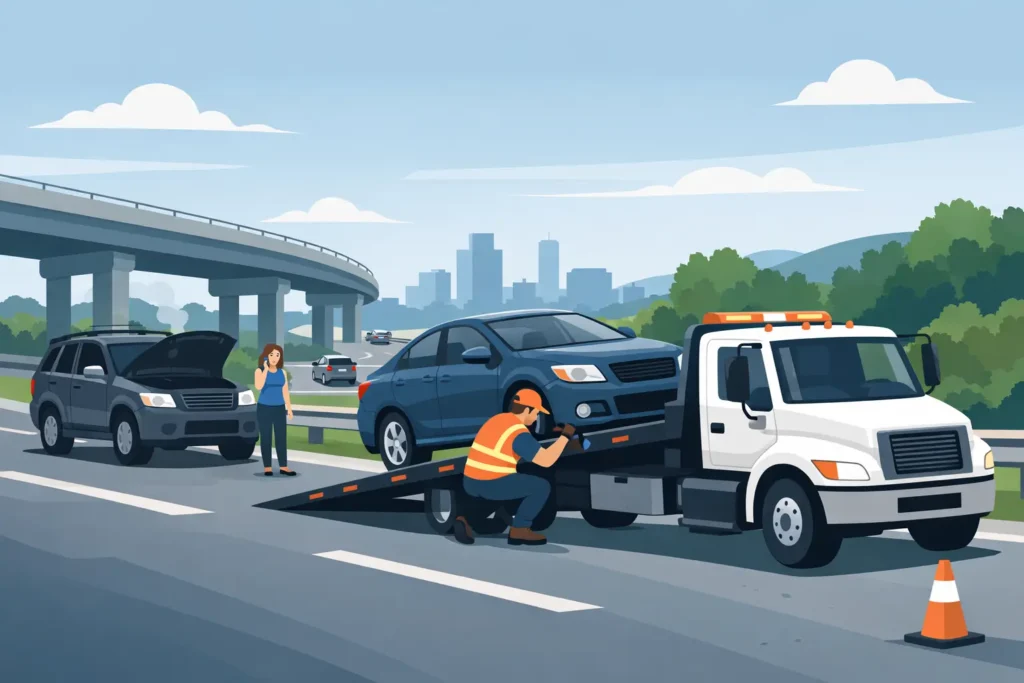
A search for “I 44 breakdown towing help” usually means something has already gone wrong. Maybe the engine quit near a busy exit, a tire came apart in traffic, or your vehicle will not restart after you pulled onto the shoulder. On I-44, the first job is not figuring out the whole repair. It is getting yourself and your vehicle out of an unsafe situation.
I-44 Breakdown Towing Help Starts With a Safe Stop
I-44 carries fast traffic through Tulsa, especially around the US 75 interchange, Memorial, Peoria, and the Tulsa Hills area. A disabled vehicle on the shoulder can become a bigger problem quickly. If your vehicle is still moving, take the nearest safe exit when possible. A parking lot, fuel station, or side street is a much better place to wait than a narrow highway shoulder.
If you cannot make it off the highway, steer as far right as conditions allow. Turn on your hazard lights. Keep your wheels pointed straight, set the parking brake, and stay aware of traffic around you. At night or during rain, visibility gets worse for everyone, so do not assume approaching drivers see you right away.
Whether you should stay inside the vehicle depends on the exact spot. If you are safely on a wide shoulder and can remain in the vehicle with your seat belt on, that is often the safer choice. If smoke, fire, or another immediate hazard is present, move away from the vehicle and traffic if you can do so safely. Do not stand beside the driver’s door or between your vehicle and the roadway.
What to Tell the Tow Truck Dispatcher
Clear information helps get the right truck headed your way and avoids wasted time on a busy roadway. You do not need to know the mechanical diagnosis. You do need to provide enough detail for safe loading and a direct route to your location.
Start with your direction of travel and the closest exit, mile marker, or visible landmark. “Eastbound I-44 near the Riverside exit” is more useful than simply saying you are on I-44. If your phone map is working, verify the direction before calling. Being on the opposite side of the highway can change the approach route considerably.
Then explain the vehicle and the problem in plain terms. Let the dispatcher know whether it is a car, pickup, SUV, EV, or motorcycle. Mention a flat tire, no-start condition, accident damage, locked wheels, or anything hanging beneath the vehicle. If the vehicle is in a parking garage, stuck in mud, or sitting in a tight spot, say so upfront.
Also decide where you want the vehicle taken. That might be your home, a repair shop, or a dealership. If the shop is closed, it helps to know whether you want the vehicle dropped there or brought somewhere else for the night. A towing service focused on transport should make that part straightforward, not add confusion when you are already dealing with a breakdown.
When Roadside Help May Be Enough
Not every I-44 problem requires a tow. A jumpstart may get a vehicle running if the battery is weak, and a lockout can be handled on site if the vehicle is otherwise safe to drive. A flat tire may be changed if you have a usable spare, the wheel is not damaged, and the location allows the work to be done safely.
The highway setting matters. Even a simple roadside fix is not always the right call on a narrow shoulder with traffic moving at interstate speed. If there is limited room to work, poor visibility, or damage beyond a basic tire change, moving the vehicle on a flatbed is usually the safer choice.
A dead battery can also be more than a dead battery. If a jumpstart gets the engine going but warning lights remain on, the vehicle stalls again, or you suspect an alternator problem, a tow prevents you from ending up stranded a second time. The goal is not to force a temporary fix. It is to get the vehicle where it can be checked properly.
Why Flatbed Towing Matters After a Breakdown
A breakdown does not always leave a vehicle in easy towing condition. The transmission may be stuck in park, a tire may be flat, the steering could be locked, or accident damage may have made the vehicle unsafe to roll. Proper flatbed equipment lets the vehicle be loaded and transported without putting unnecessary stress on the drivetrain or damaged components.
This is especially relevant for all-wheel-drive vehicles, low-clearance cars, and electric vehicles. Many EVs, including Tesla models, have specific towing requirements. Pulling them incorrectly can damage the drive system or underside. The same goes for lowered cars and vehicles with front-end damage. Loading angles, wheel placement, and securement all matter.
A heavy-duty pickup can require a different approach from a compact sedan. Weight, wheelbase, and clearance affect how it is loaded. The right tow is not just a truck arriving at the scene. It is a driver assessing the vehicle, using the proper equipment, and taking the time to secure it correctly before moving.
What Happens Once the Tow Truck Arrives
When help arrives, the driver should confirm the destination, look over the vehicle, and explain what needs to happen before loading begins. If there is damage from an accident or a mechanical issue that affects how the vehicle rolls, that changes the loading plan. Clear communication is part of careful towing, particularly when you are stopped in a stressful location.
You may need to move personal items, provide keys, or release the parking brake if the vehicle allows it. If you have a wheel lock key, specialty lug key, or important information for the repair shop, keep it with you rather than leaving it loose in the vehicle.
Once the vehicle is secured, you can usually ride separately or arrange your own transportation depending on the situation and local operating conditions. Ask before assuming there is room in the tow truck. The priority is moving the disabled vehicle safely, and passenger arrangements can vary.
Choosing a Drop-Off Location in Tulsa
For an I-44 breakdown, a nearby repair shop is not always the best destination. It depends on the issue, the shop’s hours, your warranty coverage, and whether the vehicle needs a dealer or specialty technician. If you drive an EV or a vehicle with a specific warranty concern, the dealership may be the practical choice. For a common no-start or tire issue, a trusted local repair shop may be closer and easier.
If it is late and no shop is open, taking the vehicle home can save you from leaving it unattended in a lot. That decision may add time to the repair process the next day, but it gives you control over where the vehicle sits. There is no one right answer. The best drop-off point is the one that makes sense for your vehicle and your next step.
Tulsa Towing, powered by Neptune Towing, handles local breakdown transport with flatbed equipment and a city-focused approach. That local familiarity matters when traffic backs up near I-44, when an exit is difficult to reach, or when a vehicle needs to be moved from a tight area without adding damage.
A Breakdown Is Stressful, But the Next Step Can Be Simple
You do not need to solve a mechanical problem from the shoulder of I-44. Get to the safest location available, share your exact location and vehicle details, and choose whether a roadside fix or careful tow makes the most sense. A calm call and the right equipment can turn a bad stop on the highway into a manageable repair plan.