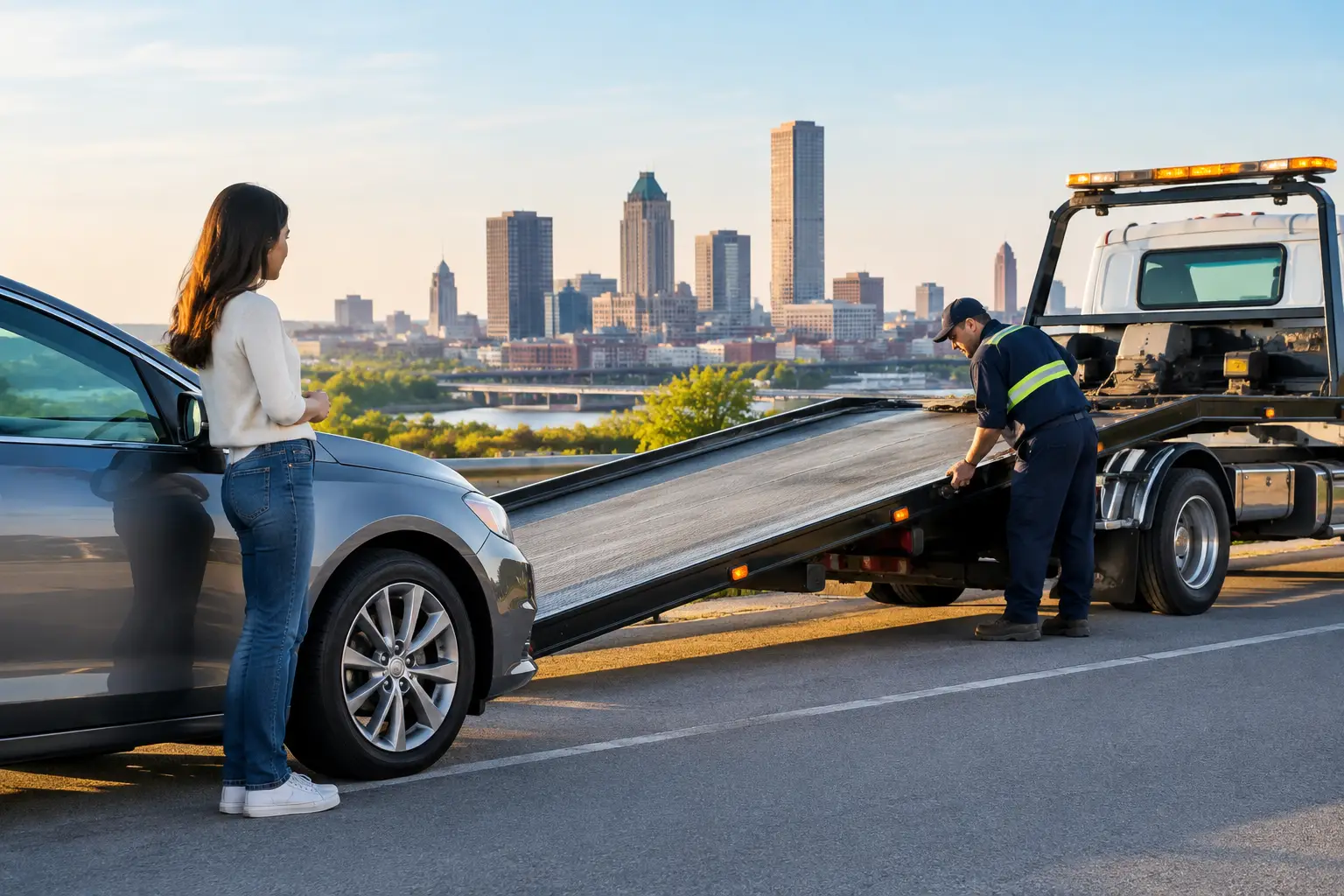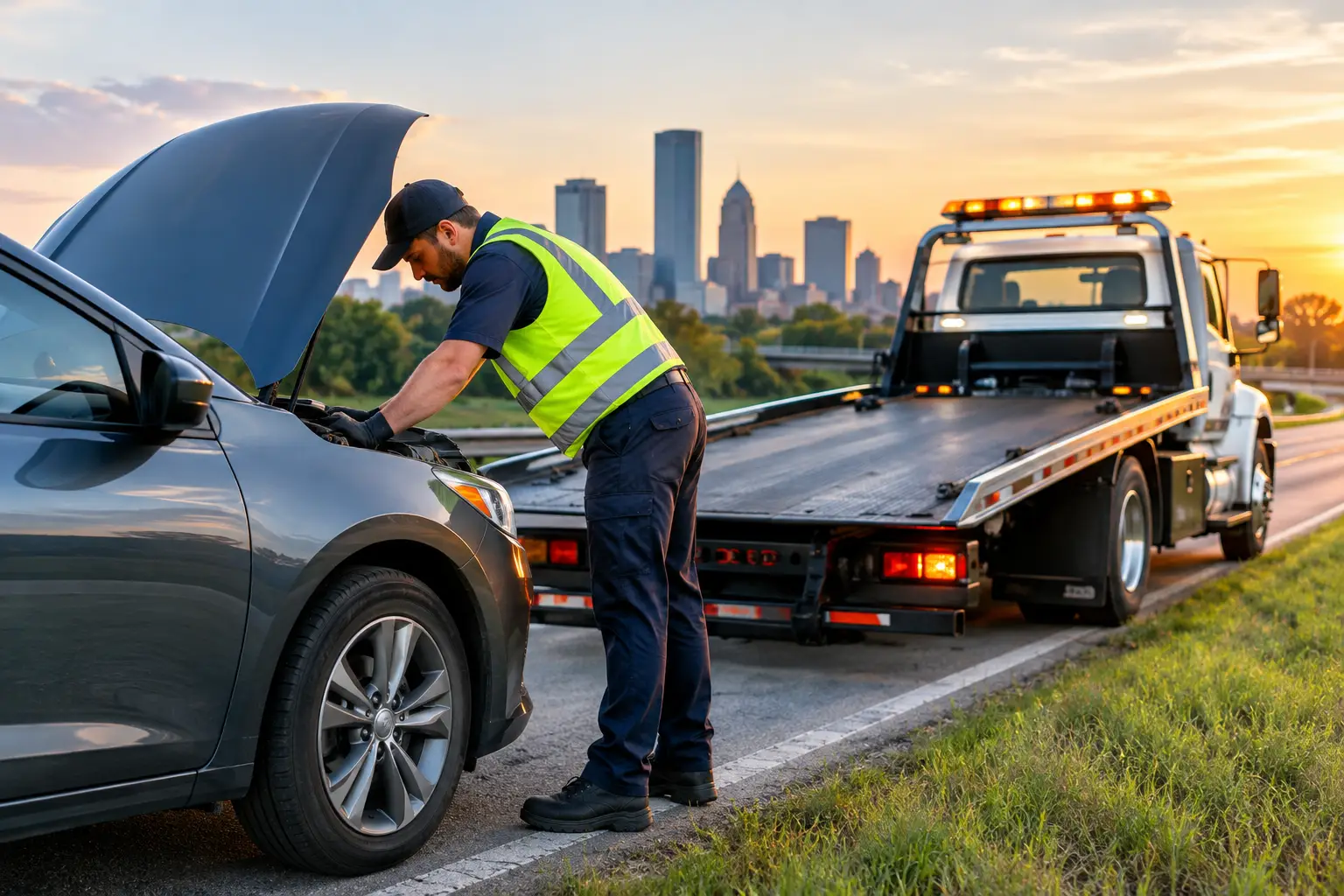
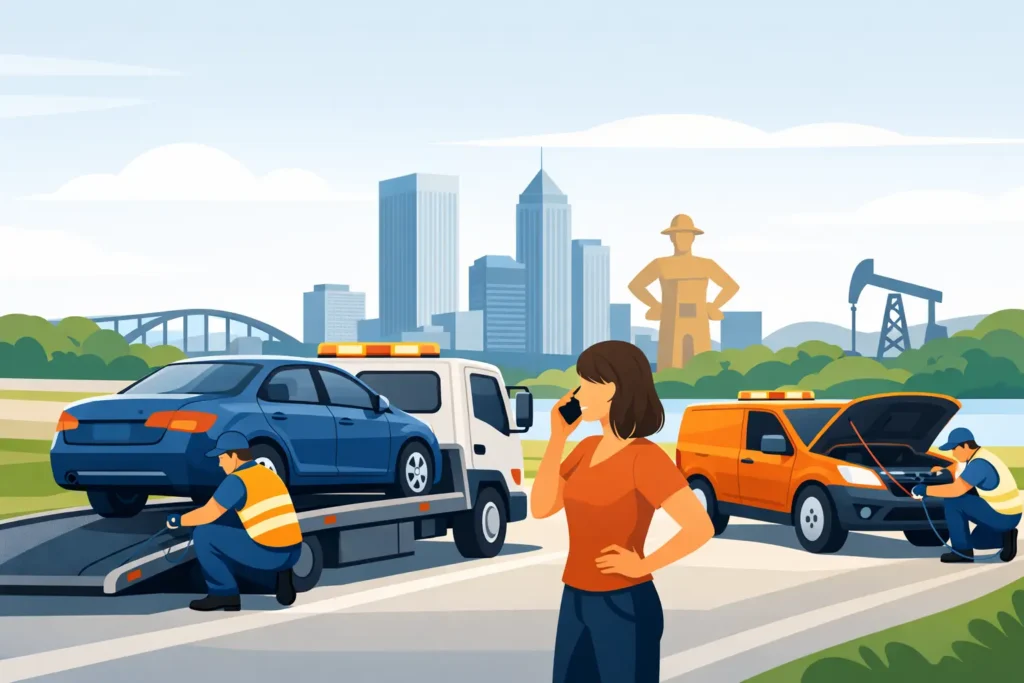
A stalled car on I-44, US 75, or a busy stretch of Memorial can turn a normal drive into a safety problem fast. The best roadside services for stalled cars are not always the same service for every situation. Sometimes a quick jumpstart gets you moving. Other times, trying to restart or drive the vehicle can make a small problem worse, and a flatbed tow is the safer call.
The first priority is getting out of traffic when possible and figuring out whether the vehicle can be handled safely on site. A good roadside provider should ask clear questions, dispatch the right equipment, and tell you what is likely to happen before the truck arrives.
Start With Safety, Not the Diagnosis
If your car loses power in traffic, turn on the hazard lights immediately. Move to the shoulder, a parking lot, or another safe area if the vehicle will still roll or coast without creating more risk. On high-speed roads, stay well away from moving traffic. If you cannot safely leave the vehicle, follow the situation around you and contact emergency services when there is an immediate danger.
Once you are in a safer spot, take a quick look at the basics. Is there a warning light on? Did the engine crank slowly before it stopped? Is a tire visibly flat? Did the car overheat, make a loud noise, or lose steering or braking response? Those details help determine whether roadside assistance is appropriate or whether the vehicle needs to be towed without delay.
Do not keep turning the key or pressing the start button over and over. A dead battery may respond to a proper jumpstart, but repeated attempts will not fix a failed alternator, an overheating engine, or a mechanical problem. In some cases, they can drain the battery further or create additional wear.
Best Roadside Services for Stalled Cars: Match the Fix
The right service depends on why the car stopped and where it is sitting. Roadside help works well when there is a straightforward problem that can be handled safely where the vehicle is parked. Towing makes more sense when the cause is uncertain, the car will not operate normally, or the location leaves no room to work safely.
Jumpstarts for dead batteries
A jumpstart is the practical answer when the battery is weak or dead. Common signs include interior lights that come on but an engine that cranks slowly, clicks, or does nothing when you try to start it. Leaving a dome light on, cold weather, an aging battery, or a charging-system issue can all cause the same symptom.
A jumpstart can get the engine running, but it does not automatically mean the car is fixed. If the vehicle dies again soon after starting, the battery may not be holding a charge or the alternator may not be charging it. In that case, it is usually smarter to arrange a tow to a repair shop than risk another stall in traffic.
Flat tire assistance
A flat tire can leave a car safely parked but unable to travel. Roadside tire help can involve installing the spare when the spare is usable, properly inflated, and accessible. This is often enough to get a driver from a parking lot or residential street to a tire shop.
There are limits. A damaged wheel, missing wheel-lock key, seized lug nuts, or an unusable spare changes the plan. Many newer vehicles do not carry a spare at all. If there is no safe temporary option, a flatbed tow prevents tire and wheel damage from driving on a flat.
Vehicle lockout service
A lockout is frustrating, especially when the vehicle is running or a child or pet is inside. Professional lockout service is intended to regain access without damaging the door, glass, weather stripping, or electronic lock system.
This is not a good situation for improvised tools. Modern door frames, side airbags, keyless-entry systems, and electronic locks are easy to damage when someone tries to force entry. A careful unlock is usually quicker and far less expensive than repairing a bent frame or broken window.
Winch-out service when the car is stuck
A vehicle can stall because it is physically stuck, not because the engine failed. Mud, a ditch, loose gravel, a slick driveway, or a curb can leave the car unable to move under its own power. A winch-out can recover it if there is a safe pull path and proper attachment point.
The terrain matters here. Spinning the tires can dig the vehicle in deeper, damage the underside, or throw debris. The safest recovery method depends on the vehicle’s position, ground conditions, and whether it can be pulled without putting people or nearby property at risk.
Flatbed towing for problems that should not be driven
Flatbed towing is the better choice when the engine will not start after a jump, the transmission is acting up, the car is overheating, or a warning light is paired with poor drivability. It is also the right option after an accident, when a wheel is damaged, or when the vehicle is low clearance, all-wheel drive, electric, or otherwise not suited to being pulled with the wheels on the ground.
A flatbed keeps the vehicle fully off the road during transport. That matters for cars with low front bumpers, performance suspensions, Teslas and other EVs, and vehicles with unknown damage. Proper loading equipment and tie-down points are not a minor detail. They are what help prevent the towing process from adding damage to an already stressful day.
When a Tow Is Safer Than Trying to Get Home
Drivers often want to get the vehicle running long enough to make it home. That is understandable, but there are a few situations where driving is a poor gamble. An overheating engine can suffer serious damage. A car with a flashing check-engine light may be misfiring badly enough to damage the catalytic converter. Grinding, clunking, smoke, fuel smells, or major fluid leaks are all reasons to stop and arrange transport.
The same goes for steering, brake, or transmission trouble. If the car feels unpredictable, it does not belong in Tulsa traffic. A short tow to your preferred repair shop or dealership can be the simpler and safer option.
Electric vehicles need extra care. A low state of charge is different from a mechanical fault, but an EV should still be transported according to the manufacturer’s requirements. Many EVs should be loaded on a flatbed rather than pulled conventionally. The right equipment and handling approach protect the battery system, drivetrain, and low body panels.
What to Tell the Dispatcher
Clear information helps the right truck arrive the first time. Give the dispatcher your exact location, nearby cross streets or landmarks, the year, make, and model of the vehicle, and a short description of what happened. Mention whether you are in a garage, on a highway shoulder, in a parking lot, or stuck off pavement.
Also explain whether the car starts, rolls, shifts into neutral, has a flat tire, or has visible damage. If it is an EV, all-wheel-drive vehicle, heavy-duty pickup, or a low-clearance car, say so upfront. These details affect the equipment and loading plan.
You should also know where you want the vehicle taken if towing is needed. That may be your home, a local repair shop, or a dealership. A straightforward provider will explain the service being dispatched and communicate clearly if traffic, weather, or a difficult location affects arrival time.
Local Conditions Can Change the Right Call
In Tulsa, a stalled vehicle on a quiet neighborhood street is a very different job from a disabled car near Riverside, Tulsa Hills, or a crowded highway interchange. Traffic flow, narrow shoulders, wet pavement, parking-garage clearance, and the vehicle’s position all affect how roadside work is performed.
That is why the lowest-effort option is not always the right one. A jumpstart in a safe parking lot may be simple. A jumpstart on the edge of a fast-moving roadway may not be. In that situation, getting the vehicle loaded and moved out of harm’s way can be the more sensible service.
Tulsa Towing, powered by Neptune Towing, focuses on that practical distinction: handle the issue on site when it is safe and likely to solve the problem, or use proper flatbed equipment when transport is the better answer.
If your car has stalled, do not feel pressured to diagnose everything from the driver’s seat. Focus on your location, the vehicle’s symptoms, and whether it is safe to stay where you are. The right roadside service should make the next step clear and get your vehicle moving, or safely transported, without adding another problem to the day.