A vehicle may look fine from the outside and still be unsafe to drive. It may have a damaged wheel after a wreck, a transmission problem, a dead EV battery, or an engine issue that leaves it stranded on I-44 or in a Tulsa parking lot. Knowing how flatbed towing works helps take some uncertainty out of the situation: the entire vehicle rides on a level platform instead of being pulled down the road on two wheels.
For most disabled vehicles, that is the safest way to get from the roadside to a repair shop, dealership, or home. The goal is simple: load the vehicle carefully, secure it correctly, and unload it without adding damage.
How flatbed towing works from pickup to delivery
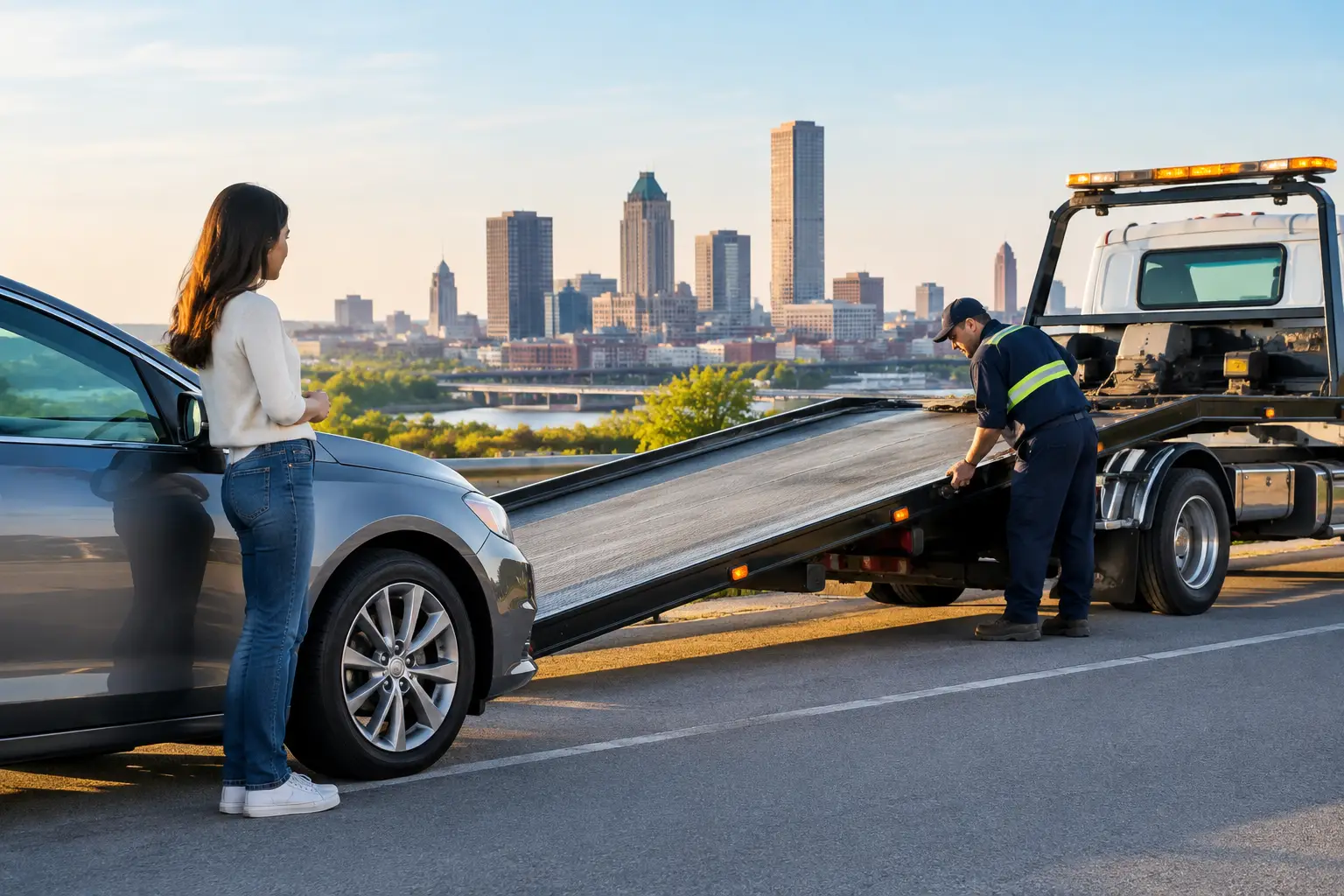
A flatbed tow truck has a long steel or aluminum bed that uses hydraulics to tilt and slide toward the ground. Once the driver has assessed the vehicle and the area around it, the bed is positioned to create a controlled path for loading.
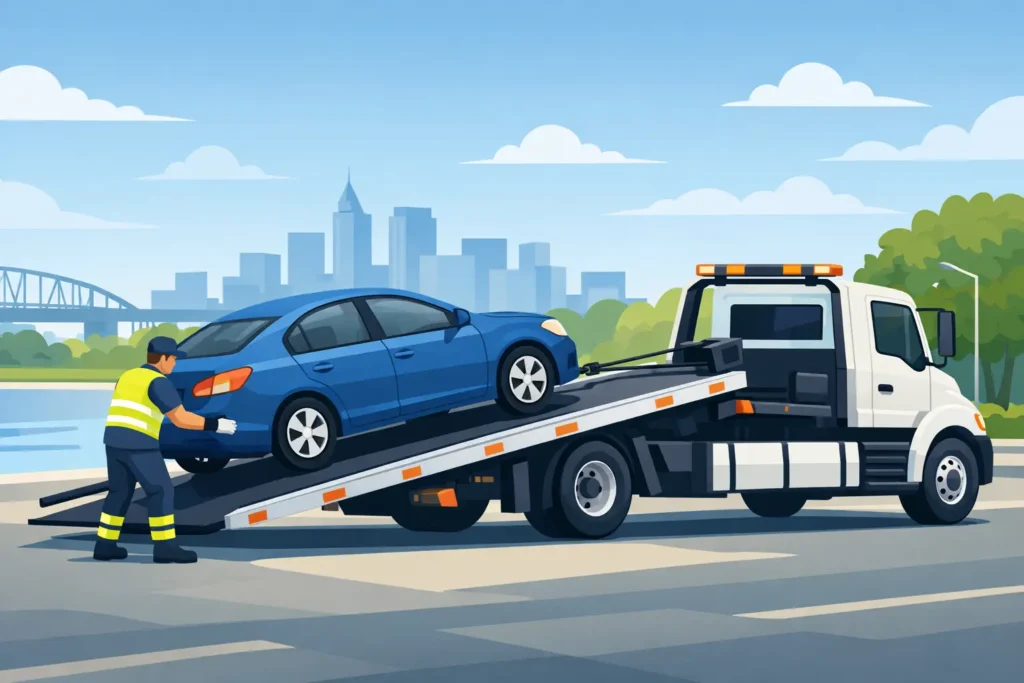
The vehicle is then brought onto the bed with a winch. A winch is a powered cable system mounted at the front of the flatbed. It allows the operator to pull a car, truck, or SUV onto the bed slowly, even when the vehicle will not start or cannot be driven safely.
If the vehicle can roll freely and conditions are safe, the driver may guide it onto the bed while using the winch. If it cannot roll, has collision damage, or has a locked wheel, the loading plan changes. The operator may need to adjust the bed angle, use loading aids, or reposition the truck to avoid scraping bumpers, undercarriage parts, suspension components, or damaged wheels.
Once the vehicle is fully on the bed, the bed returns to its level transport position. The vehicle is secured at the wheels with proper straps and tie-down equipment. It is not enough to get a car onto the truck. Securement is what keeps it from shifting during turns, braking, uneven pavement, and highway travel.
At the destination, the process is reversed. The truck is parked in a safe unloading position, the bed is lowered, the vehicle is released from its tie-downs, and the winch controls the descent as needed. A careful unload matters just as much as a careful pickup, especially at busy repair shops, tight driveways, and crowded dealership lots.
Why a flatbed is different from a wheel-lift tow
A wheel-lift tow raises one end of the vehicle while the other end rolls on the road. That method can be useful in certain situations, particularly when space is limited or a quick reposition is needed. But it is not always the right choice for a disabled vehicle that needs to travel any distance.
With flatbed towing, all four tires are off the ground. That reduces wear on tires and drivetrain components during transport and avoids asking a damaged vehicle to roll. It is often the better option for all-wheel-drive vehicles, low-clearance cars, vehicles with transmission trouble, and cars involved in accidents.
The trade-off is that a flatbed needs enough room to line up and lower the bed. In a narrow parking garage, a packed apartment lot, or a tight downtown street, loading may take more planning. An experienced operator looks at traffic, slope, clearance, and the vehicle’s condition before deciding how to set up the truck.
The loading process depends on the vehicle
There is no one-size-fits-all way to load every vehicle. A pickup with a broken ball joint, a sedan sitting low to the ground, and an EV that will not shift out of park each require a different approach.
Low-clearance cars need a shallow loading angle
Sports cars, lowered sedans, and some newer vehicles have limited clearance at the front bumper and underbody. If the bed angle is too steep, the bumper, air dam, or exhaust can scrape before the tires reach the deck.
To prevent that, the operator can use a lower loading angle and appropriate ramp extensions or blocks. The vehicle is moved slowly and watched closely as it transitions from the ground to the bed. Rushing this step is where avoidable damage can happen.
Accident vehicles may not roll normally
After a collision, a wheel may be bent, a tire may be flat, or steering and suspension parts may be damaged. Even if the vehicle starts, driving it onto a truck may not be safe.
The winch gives the operator control without relying on the vehicle’s engine or drivetrain. The truck can also be positioned to keep loading controlled and away from traffic when possible. On high-traffic roads around Memorial, US 75, or Highway 169, scene safety comes before speed.
Trucks and heavier vehicles require the right setup
A full-size pickup weighs far more than a compact car, and its length, wheelbase, and ground clearance affect how it loads. The tow truck must be rated for the vehicle’s weight, and the tie-down points must be set correctly.
Heavy-duty pickups can be moved safely on a flatbed, but the job requires proper equipment and room to work. The same applies to vehicles carrying tools, cargo, or equipment. Weight distribution matters, so the operator checks where the vehicle sits on the bed before transport.
Electric vehicles need careful handling
Electric vehicles, including Tesla models, are not vehicles to guess with. Their battery packs sit low in the chassis, and their towing or transport settings can differ from a gas-powered car. Some EVs may need a specific transport mode, while others may need loading procedures that account for a locked wheel or electronic parking brake.
A flatbed is commonly the right transport method because the vehicle does not need to roll behind the truck. The operator should follow the vehicle manufacturer’s transport guidance and avoid contact with the battery area or other sensitive components. If an EV has been in an accident, has visible underbody damage, or shows warning messages, tell the towing provider before loading begins.
What proper securement looks like
After the vehicle is on the deck, wheel straps are placed around the tires and tightened to hold the vehicle in position. This approach secures the vehicle through its wheels rather than putting unnecessary stress on body panels or suspension parts.
The driver checks the straps, winch line, bed position, and overall vehicle placement before leaving. On a short city tow, it can be tempting to treat those checks as unnecessary. They are not. A few minutes spent setting up correctly can prevent movement and damage on the way to the destination.
Proper securement also means considering the vehicle’s condition. A car with a damaged wheel, missing tire, or severe collision damage may need a different tie-down approach than a vehicle that simply has a dead battery. The right method depends on what is actually in front of the operator.
What to do while waiting for a flatbed
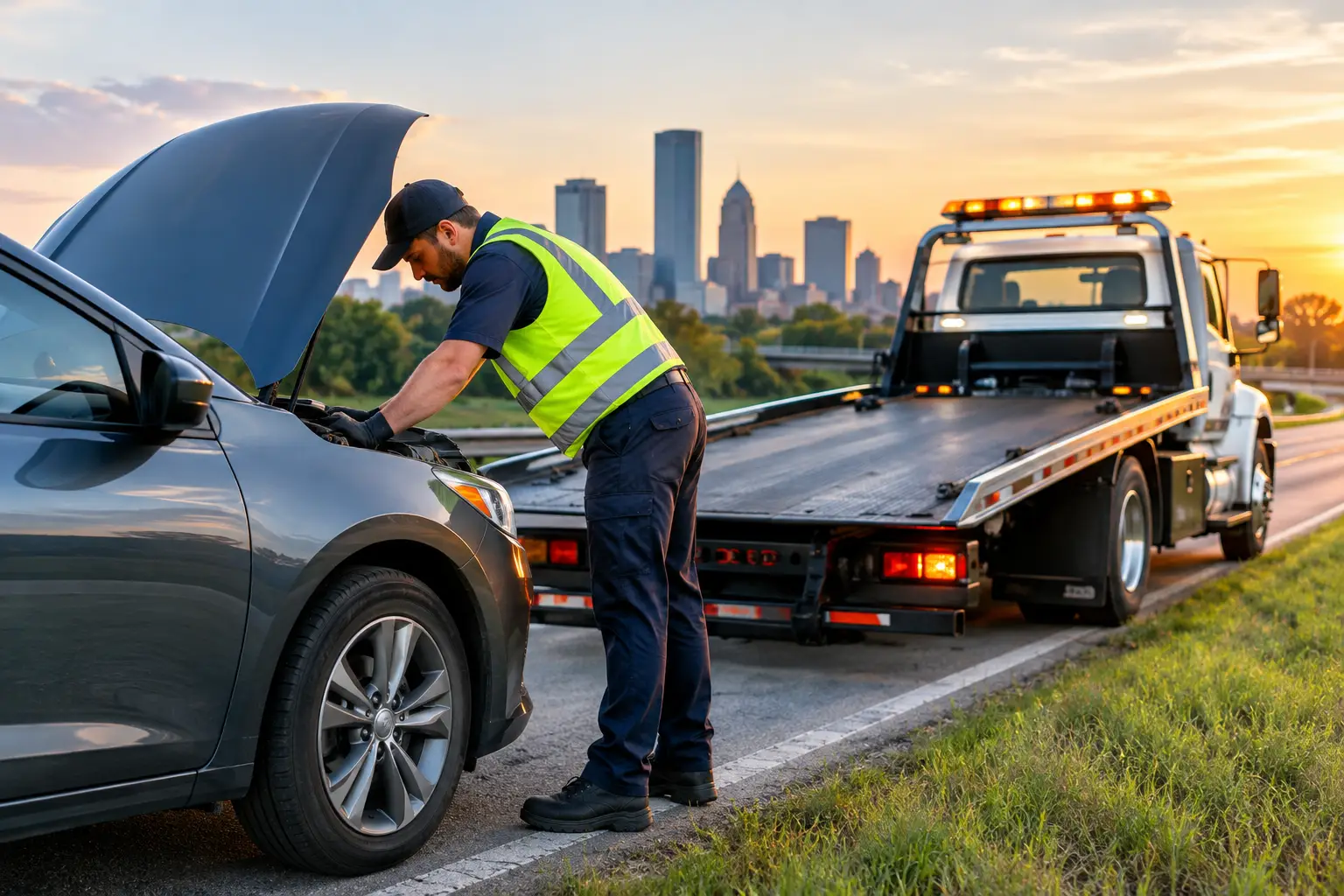
If your vehicle is in a safe spot, stay clear of traffic and gather the basic details a tow operator needs: the vehicle’s make and model, its exact location, what happened, and whether it can roll or steer. Mention low clearance, all-wheel drive, an EV, a flat tire, collision damage, or a parking garage. That information helps ensure the right truck and equipment are dispatched.
If you are on a shoulder near moving traffic, keep yourself away from the travel lane whenever it is safe to do so. Do not stand between your vehicle and the tow truck during setup. The operator may need room to lower the bed, run the winch cable, and work around the vehicle safely.
Tulsa Towing, powered by Neptune Towing, handles flatbed transport with the same practical focus on every call: assess the vehicle, use the right equipment, and get it where it needs to go without creating another problem. When your car cannot be driven, a careful flatbed load is often the cleanest next step.