A breakdown on I-44, US 75, or Highway 169 can turn dangerous in a matter of seconds. This Tulsa highway breakdown safety guide is built for the moment your car starts losing power, a tire goes flat, or a warning light tells you the vehicle is not going any farther. The first priority is not diagnosing the problem. It is getting yourself and your passengers out of the path of traffic.
Highway shoulders around Tulsa are not all the same. Some are wide and clear. Others narrow near ramps, construction zones, bridges, and busy merges. Drivers are moving quickly, and a disabled vehicle can be hard to see, especially after dark or in bad weather. Make the safe call early instead of trying to force the vehicle to the next exit.
Get Your Vehicle Out of the Travel Lane
If the vehicle is still moving, turn on your hazard lights immediately and reduce speed smoothly. Avoid hard braking unless you have no other choice. Look for the nearest shoulder, exit ramp, parking lot, or other area away from moving lanes. If you can reach an exit without pushing the vehicle beyond what it can safely do, that is usually better than stopping beside highway traffic.
Do not make sudden lane changes to reach the shoulder. Signal, check mirrors, and move over when there is room. On a highway like US 75 or I-44, a quick move across lanes can create a second emergency.
Once you are stopped, pull as far right as the shoulder safely allows. Keep enough space from traffic, but do not drive into soft ground, a ditch, or an unsafe slope just to get another foot away from the road. A vehicle stuck off the shoulder may need a winch-out instead of a standard tow.
Put the transmission in park, set the parking brake, and keep the hazard lights on. At night, turn on interior lights if it helps make the vehicle more visible without creating a distraction for passing drivers.
Decide Whether to Stay Inside or Exit
There is no single answer for every roadside breakdown. It depends on where the vehicle stopped, how close traffic is, the weather, and whether the car is secure.
If you are well off the road with a usable shoulder, the vehicle is often the safest place to wait. Keep seat belts on, lock the doors, and remain aware of traffic around you. This is especially true on high-speed roads, where standing near the vehicle exposes you to drivers who may not see you until the last second.
If your vehicle is disabled in a travel lane, at the edge of a narrow shoulder, or in a spot where it could be struck, getting out may be safer. Exit only from the side away from traffic, if possible. Move well away from the vehicle and behind a guardrail when one is available. Do not stand directly in front of or behind the car. A rear-end impact can push a disabled vehicle forward without warning.
If you have children, older passengers, or pets, keep the group together. Do not send someone down the shoulder to look for help. A call for roadside assistance is safer than trying to walk along I-44 or Highway 169.
Make the Vehicle Easier to See
Hazard lights are the starting point, not the whole plan. Visibility matters most when it is raining, dark, foggy, or during rush-hour traffic around Tulsa Hills, Memorial Drive, or Riverside connections.
If conditions allow and you can place them without standing in traffic, use the safety equipment you already carry. Four items are particularly useful:
- Hazard flashers, turned on as soon as trouble starts.
- Reflective triangles, placed only when there is a safe path away from traffic.
- A reflective vest or bright outer layer for anyone who must step outside.
- A flashlight, preferably one that does not require you to use your phone battery.
Do not walk into moving lanes to place warning devices. A triangle does not help if putting it out places you in danger. In many real highway situations, staying protected and waiting for professional help is the better choice.
Call for Help With the Right Details
When you need a tow truck or roadside help, give the dispatcher information that helps them find you and bring the right equipment. Highway locations can be confusing when you are stressed. “I’m on Highway 169” is a start, but it is not always enough.
State the direction of travel, the nearest exit or cross street, and any visible mile marker or landmark. Mention whether you are on the shoulder, an exit ramp, in a parking lot, or blocking a lane. If you are near a major location such as the Broken Arrow Expressway split, Tulsa Hills, or the US 75 and I-44 interchange, say so.
Also explain what the vehicle is doing. A flat tire may be handled on site if the location is safe and you have a usable spare. A dead battery may only need a jumpstart. But an overheating engine, damaged wheel, collision damage, transmission issue, or vehicle that will not move safely usually calls for a tow.
Tell the service provider the vehicle year, make, and model. This matters for low-clearance cars, all-wheel-drive vehicles, pickups, and electric vehicles. Proper flatbed equipment avoids unnecessary wear and prevents damage that can happen when the wrong recovery method is used.
Do Not Turn a Breakdown Into a Bigger Repair
A highway breakdown creates pressure to keep going. That pressure leads to costly decisions. Driving on a flat tire can damage the wheel and suspension. Continuing after the temperature gauge climbs can damage the engine. Trying to restart a vehicle repeatedly after it stalls may drain the battery or hide a more serious issue.
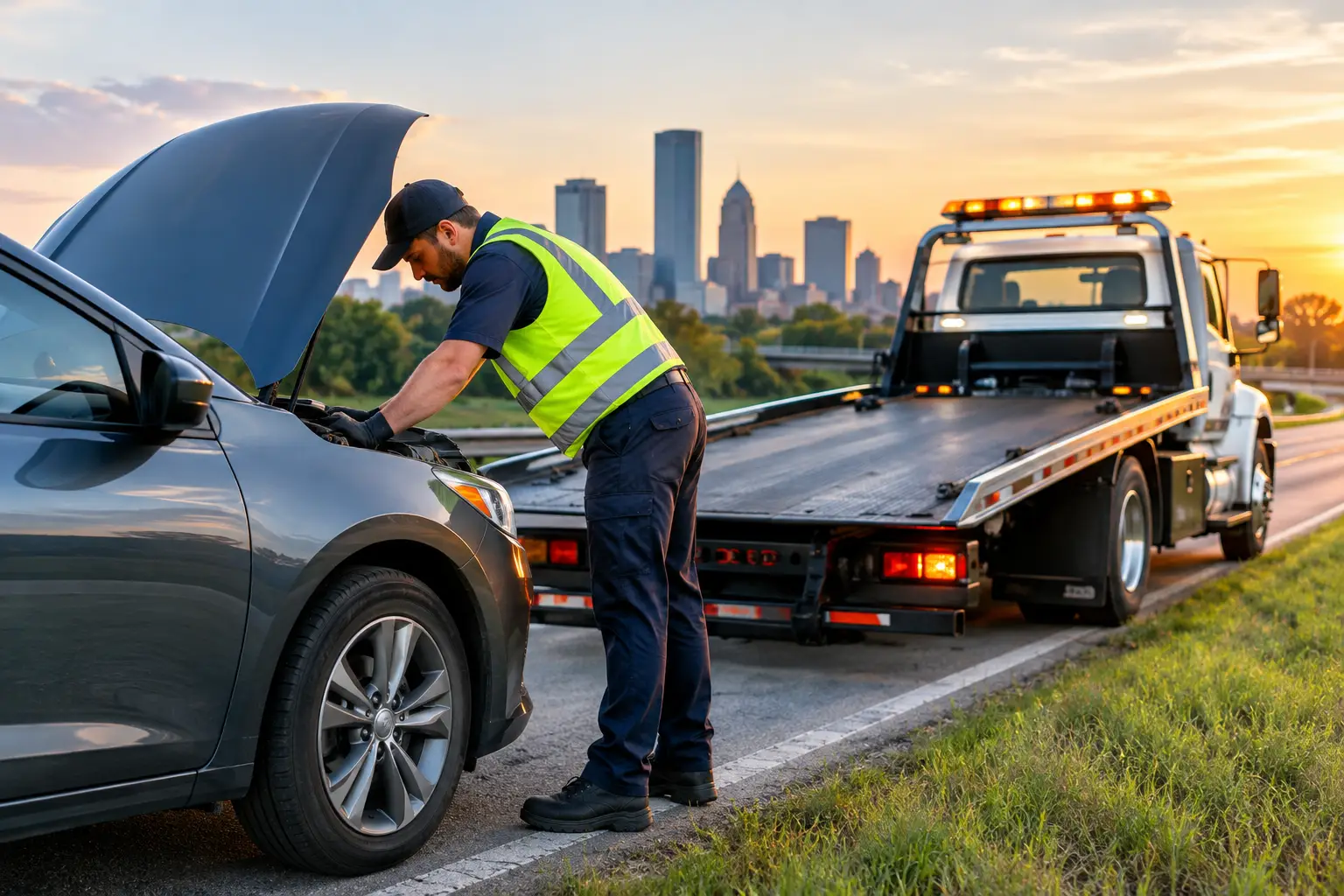
If a warning light flashes, you smell burning, see smoke, hear loud metal noise, or notice a fluid leak, stop as soon as you can safely do so. Do not open the radiator cap on an overheated vehicle. Do not crawl under a car on a highway shoulder to inspect a leak. The roadside is not the place for a detailed repair.
The same applies after a minor collision. Even when the vehicle looks drivable, a loose bumper, damaged tire, broken light, or shifted steering can make it unsafe at highway speed. A careful tow to a repair shop or dealership is often the simpler option.
Waiting Safely for the Tow Truck
After help is on the way, keep your phone available and watch for updates. If you need to conserve battery, lower the screen brightness and avoid unnecessary apps. Let the driver know if your location changes or if you are moved by emergency personnel.
Do not accept help from someone who cannot clearly identify why they are approaching or what service they are providing. A good tow operator will communicate where they are, confirm the vehicle details, and explain the loading plan before handling the car. If your vehicle has special requirements, such as an EV, low front bumper, parking brake issue, or locked steering, mention it before the truck arrives.
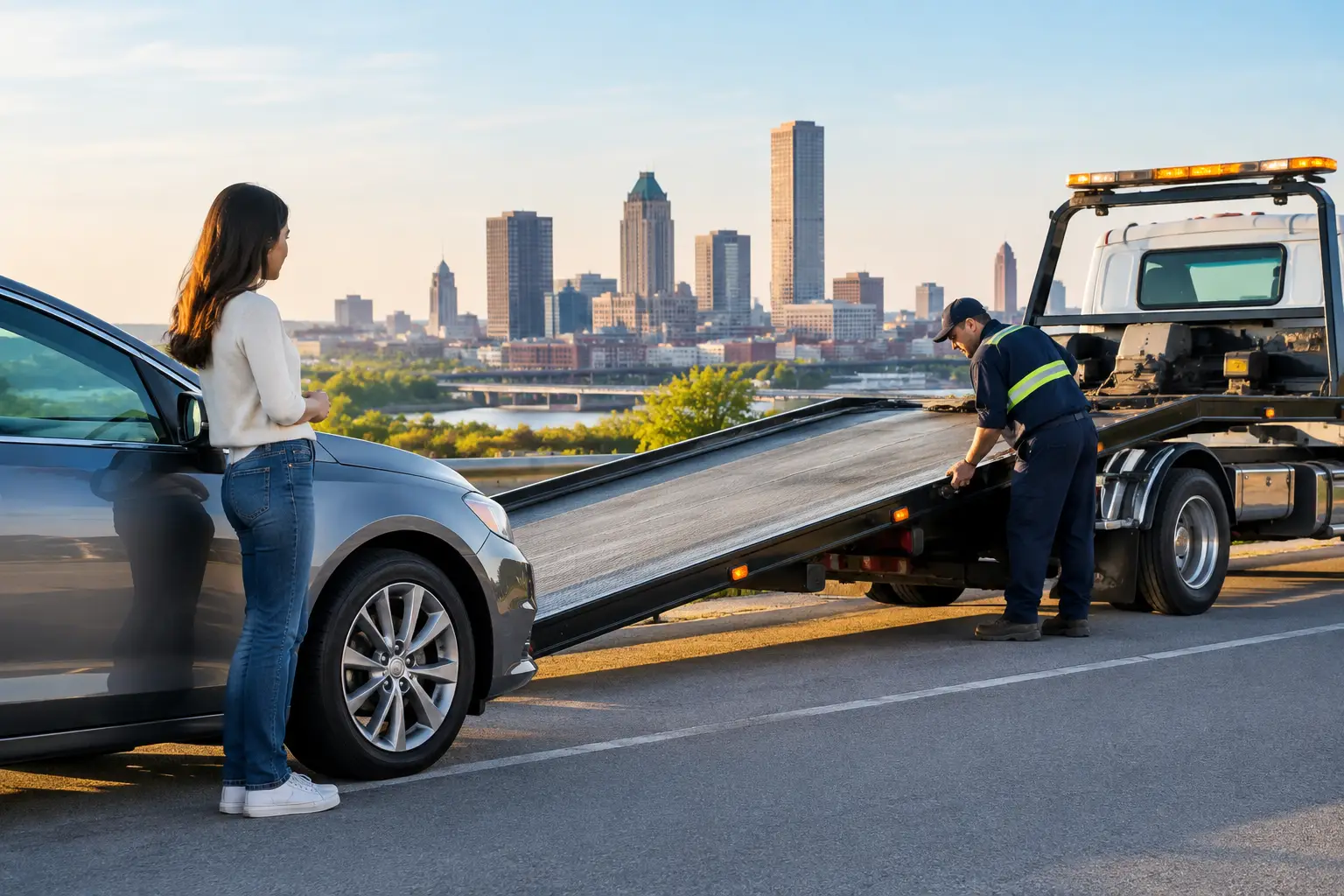
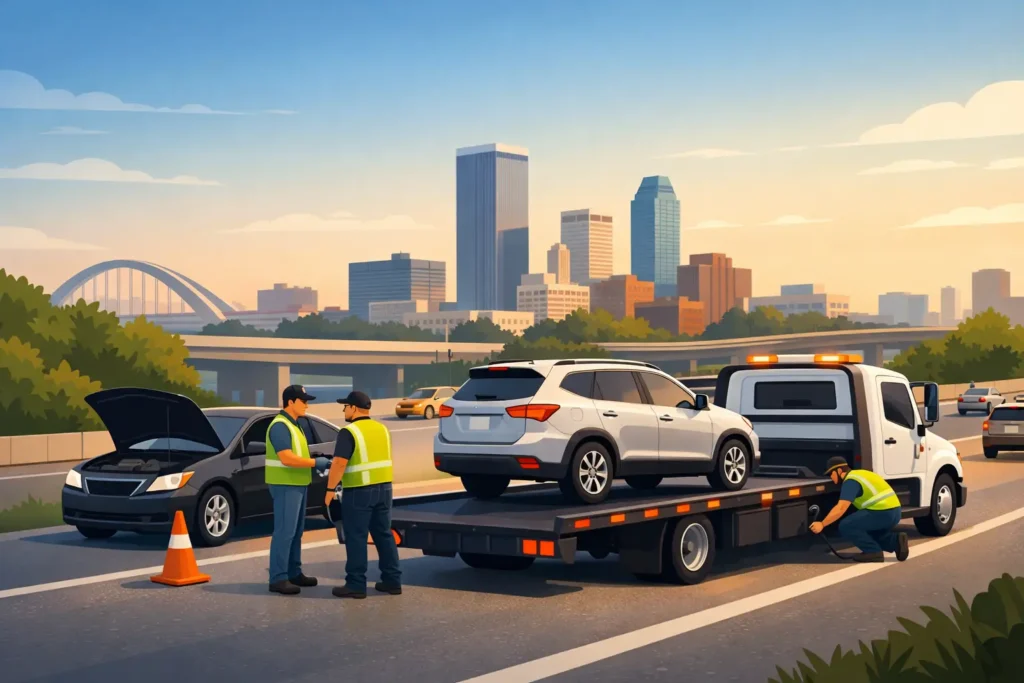
When the tow truck reaches you, give the operator room to work. Their truck needs a safe position to create a buffer between your vehicle and traffic. Follow instructions about where to wait, and keep passengers clear of the loading area. This is not a rushed process when the goal is damage-free transport.
A Local Plan Helps Before Trouble Starts
You cannot predict a dead battery or tire failure, but you can make the roadside decision easier. Keep your phone charged when possible, know how to share your location, and carry basic visibility gear in the vehicle. If you commute between Tulsa, Jenks, Bixby, or Broken Arrow, pay attention to the exits and safe pull-off areas you pass every day.
Tulsa Towing, powered by Neptune Towing, handles local roadside calls with the focus where it belongs: getting the vehicle safely loaded or helping on site when conditions allow. Clear location details and honest information about the problem help get the right response moving.
When your vehicle quits on a Tulsa highway, slow down, get out of the traffic lane if you safely can, and protect the people in the vehicle before worrying about the car. A vehicle can be repaired or transported. Keeping everyone out of harm’s way is the part that cannot wait.