
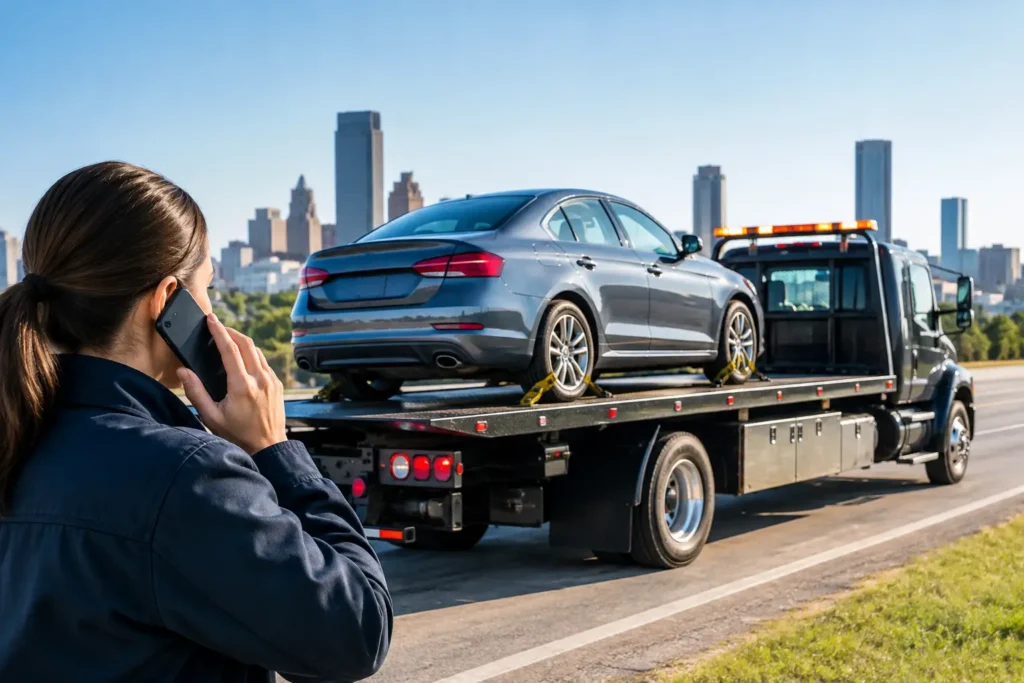
A breakdown on I-44, a dead battery in a South Tulsa parking lot, or a vehicle that will not restart near Downtown Tulsa all create the same immediate question: what happens during emergency tow dispatch? The short answer is that the dispatcher gathers the right details, matches the job to the right equipment, sends the closest available truck, and keeps you informed until your vehicle is handled safely.
Emergency dispatch is not just sending a truck to an address. A good dispatch process starts with understanding where you are, what your vehicle needs, and whether the problem can be handled on site or requires a tow. Those details help prevent delays and protect your vehicle from being loaded the wrong way.
What Happens During Emergency Tow Dispatch in Tulsa
When you call for an emergency tow, the first goal is to get a clear picture of the situation without making you explain more than necessary. You will usually be asked for your location, vehicle type, the issue you are having, and where the vehicle needs to go if towing is needed.
Your location matters more than many drivers realize. Saying you are “on US 75” is a start, but the dispatcher also needs to know the direction of travel, the nearest exit or cross street, and whether you are on the shoulder, in a parking lot, or on a residential street. A driver stranded near Memorial Drive may be easy to locate, while someone stopped along Highway 169 may need to identify the closest visible landmark before a truck can be sent safely.
The vehicle details matter just as much. A low-clearance car, an all-wheel-drive vehicle, a heavy-duty pickup, and an electric vehicle do not all get handled the same way. Dispatch needs the year, make, model, and a quick explanation of its condition. If the wheels are locked, the car is stuck in park, a tire is missing, or the vehicle was involved in an accident, say so early. That information determines the equipment and loading approach needed.
The dispatcher checks the service needed
Not every call needs a tow. If the issue is a dead battery, a lockout, a flat tire, or a vehicle stuck in mud or a ditch, roadside help may solve the problem where you are. If the vehicle has mechanical damage, will not move safely, has overheated, or cannot be driven without risking more damage, towing is usually the right call.
This is where clear answers save time. Tell the dispatcher what happened, but do not feel pressured to diagnose the vehicle. “The engine died and will not restart” or “the front wheel is bent after hitting a curb” gives useful information. Guessing at a mechanical cause does not help as much as describing what the vehicle is doing now.
Matching the Job to the Right Tow Truck
After the call details are confirmed, dispatch checks truck availability and assigns a driver based on location, equipment, and the job itself. The nearest truck is not always the right truck. A truck already close to you may not be equipped for a low-profile vehicle, a disabled EV, or a pickup that needs a flatbed.
Flatbed towing is often the safest choice for vehicles that cannot be driven, have drivetrain concerns, sit low to the ground, or need careful accident transport. It keeps all four wheels off the road and gives the operator more control during loading. For a Tesla or another electric vehicle, proper loading is especially important because the vehicle should not simply be dragged or moved in a way that can damage the drivetrain or underbody.
A real emergency dispatch also considers access. A tow truck may need a different approach for a tight apartment lot in Midtown, a parking garage, a busy Riverside area road, or a narrow street in Broken Arrow. If your vehicle is in a difficult spot, tell dispatch about low overhead clearance, a gate, a steep driveway, or traffic blocking access. The more the driver knows before arrival, the less time is spent figuring it out at the scene.
What You Should Do While the Truck Is on the Way
Once a truck is assigned, your job is mainly to stay safe and keep your phone available. If you are on a high-speed road and can safely move your vehicle out of traffic, do so. Turn on your hazard lights. If the vehicle cannot be moved, get yourself away from moving traffic when it is safe to leave the vehicle.
Do not stand between your vehicle and traffic, and do not try to push a disabled car across lanes. On busy Tulsa roads, a tow operator needs room to work and drivers around you may not see the situation until the last second. If you are in a safe parking lot or driveway, stay near the vehicle if possible so you can meet the driver and confirm the destination.
Keep your phone on and answer calls or texts from the dispatcher or tow driver. Sometimes a driver needs one more detail to find the correct entrance, confirm which side of the highway you are on, or locate you in a large lot. If your location changes, call back right away. A truck headed to the original spot cannot help until it knows where you actually are.
Arrival, Safety Check, and Vehicle Loading
When the tow truck arrives, the operator should first assess the scene before hooking up anything. This includes looking at traffic, the vehicle’s position, wheel condition, ground clearance, and any damage that may affect loading. If the vehicle is sitting in a dangerous place, the operator may focus on moving it out of the traffic lane before discussing the rest of the job.
You should confirm the vehicle and destination with the driver before loading begins. If it is going to a repair shop, dealership, home, or another location, make sure the address is correct. It is much easier to fix a destination before the vehicle is on the bed than after the truck is already moving.
Careful loading is not rushed. The driver positions the truck, uses the proper attachment points, and loads the vehicle at an angle that avoids scraping bumpers, spoilers, underbody panels, or drivetrain components. Some vehicles require wheel straps, skates, dollies, or a winch to move safely. That extra setup can take a few minutes, but it is part of doing the job without creating new damage.
If you were in an accident, the driver may document visible damage before transport. That is not an accusation or a complicated process. It is a basic step that helps keep the vehicle’s condition clear before it leaves the scene.
Transport and Delivery to Your Chosen Location
After the vehicle is secured, the tow driver transports it to the destination you approved. For a short city tow, that may be a local repair shop in Tulsa. For a vehicle that breaks down after business hours, it may be your home, where you can decide on repairs the next day.
The driver should unload the vehicle carefully and place it where the shop, dealership, or property owner can access it. If the repair shop is closed, ask ahead of time where they want after-hours drop-offs placed and whether they need keys left in a specific way. A quick call to the shop can prevent a problem at the end of an otherwise straightforward tow.
Tulsa Towing, powered by Neptune Towing, handles emergency calls with this city-focused approach: get the right information, send appropriate equipment, communicate clearly, and move the vehicle without unnecessary complications. The work is simple when it is planned correctly, even when the situation that caused the call is not.
Why Dispatch Details Affect Response Time
Emergency towing response time depends on truck availability, traffic, weather, distance, and the type of service required. Heavy rain, rush-hour traffic around Tulsa Hills, or an active crash scene can change the route and make a safe arrival take longer. Honest updates are more useful than a vague promise.
You can help dispatch move faster by having the basics ready: your exact location, vehicle information, a callback number, the problem you can see, and the destination if towing is likely. If you have roadside coverage through insurance or a motor club, mention it at the beginning so payment or authorization questions do not slow down the call later.
A tow dispatch should leave you with a clear next step, not more uncertainty. Stay in a safe place, keep your phone close, and give the driver accurate details when they call. From there, the goal is straightforward: get your vehicle handled carefully and get you out of a stressful roadside situation.

