
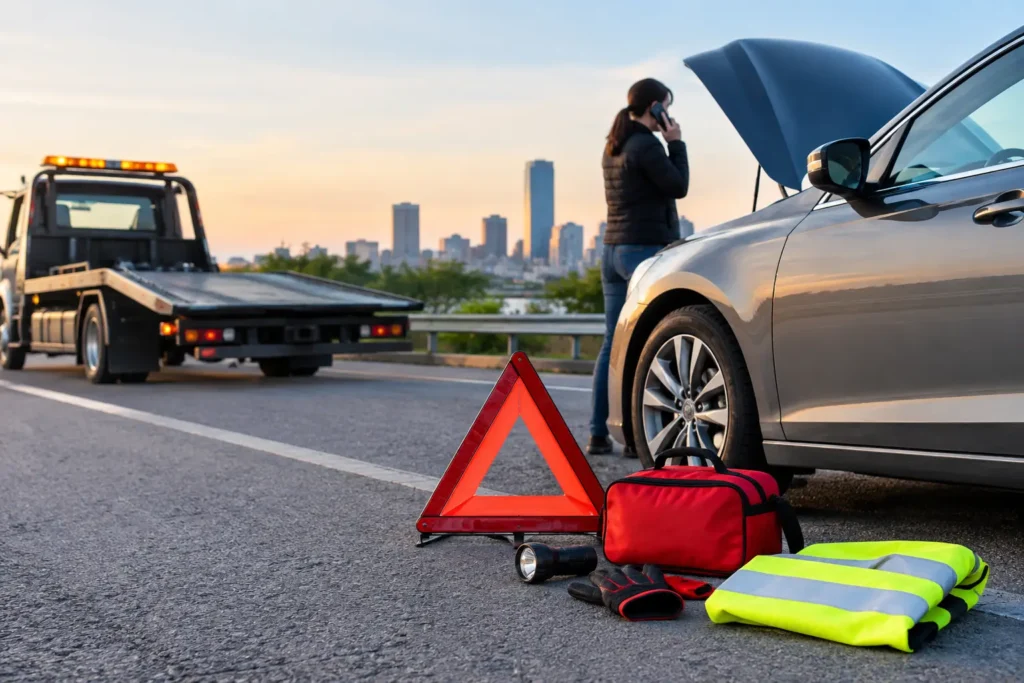
A dead battery on Memorial Drive, a flat on I-44, or an overheating warning near Tulsa Hills can turn routine errands into a roadside problem fast. The essential items after roadside breakdown are not about packing your trunk like a repair shop. They are the practical things that help you stay visible, safe, and ready to get the right help without making the situation worse.
The first job is not fixing the vehicle. It is getting out of danger. Traffic moves quickly around Tulsa, especially near US 75, Highway 169, and busy parts of Midtown. What you keep in the vehicle should help you make clear decisions while you wait for roadside assistance or a tow truck.
Start With Safety, Not the Vehicle
If your car starts losing power or a warning light tells you something is wrong, get as far away from moving traffic as the vehicle will safely allow. Turn on your hazard lights. Avoid stopping around a blind curve, the bottom of a hill, or a narrow shoulder if you have another safe option.
On a busy road, staying inside with your seat belt on is often safer than standing near traffic. If smoke, fire, or another immediate hazard means you need to leave the vehicle, move well away from the roadway and guardrail area. Conditions matter. A quiet parking lot in South Tulsa calls for a different approach than a disabled car on I-44 during rush hour.
Before calling for help, know your location. Look for a cross street, a nearby business, a highway exit number, or the direction you are traveling. “I am near downtown” is harder to dispatch than “I am northbound on US 75 near the 71st Street exit.” Good location details save time and prevent confusion.
Essential Items After a Roadside Breakdown
A few well-chosen items cover most real breakdown situations. Keep them together in a small tote or trunk organizer so they do not disappear under groceries, sports gear, or loose tools.
- Charged phone and vehicle charger: Your phone is your connection to roadside help, family, navigation, and payment information. A 12-volt charging cable is useful, but a small charged battery pack is better if the vehicle battery is dead or the charging port will not work.
- Reflective vest and warning triangles: Hazard lights can be hard to see in heavy rain, bright daylight, or around a curve. A reflective vest makes you easier to spot if you must get out. Warning triangles can help alert approaching drivers when it is safe to place them, but do not walk along a high-speed shoulder just to set them out.
- Flashlight with fresh batteries: A phone flashlight works in a pinch, but it drains the battery you may need to call for help. A compact flashlight helps you check a tire, locate a tow hook cover, find documents, or see inside the cabin after dark.
- Basic first-aid kit: This is for small cuts, headaches, or minor problems while waiting. It does not replace emergency medical care. If anyone is injured or the crash scene is unsafe, call 911.
- Water, shelf-stable snacks, and weather protection: Tulsa heat can make a short wait uncomfortable quickly, and winter wind can be rough when you are stranded. Keep drinking water, a light blanket, and a rain poncho or compact umbrella. In summer, shade and water matter more than extra layers.
- Paperwork and key information: Keep your insurance card, vehicle registration, roadside coverage details, and the name of your preferred repair shop accessible. A photo of these documents on your phone is helpful, but a dead phone should not leave you without the information.
These are the items worth keeping year-round. Add what fits your household, such as necessary medication, a child safety item, or a pet leash. The goal is not to buy every emergency gadget available. It is to handle the first 30 to 60 minutes calmly.
What About Jumper Cables, a Spare Tire, and Tools?
Jumper cables are useful if the battery is the only issue and another vehicle is available. A compact jump pack can be even more practical, but only use it if you understand the instructions and can safely reach the battery terminals. Some vehicles place the battery in the trunk or use designated jump points under the hood.
A spare tire, jack, and lug wrench deserve a quick check before you need them. Many newer vehicles have no spare at all, only an inflator kit. That kit may help with a small puncture, but it will not fix sidewall damage, a bent wheel, or a tire that has come apart. If traffic is close, the ground is uneven, or you are not comfortable lifting the vehicle, flat tire assistance is the safer call.
Avoid trying to repair a vehicle on the shoulder beyond simple, low-risk checks. Opening the hood to look for obvious smoke or a loose battery terminal is one thing. Crawling underneath, working near traffic, or continuing to drive with an overheating engine can create a much bigger problem.
Keep the Right Information Ready for a Tow
When roadside service cannot get you moving, a clear description helps the tow operator bring the right equipment and plan a safe load. Tell them the vehicle year, make, model, and where it is located. Mention whether it is all-wheel drive, a heavy-duty truck, very low to the ground, or an electric vehicle.
That last detail matters. EVs, including Tesla vehicles, have specific towing and loading requirements. They should not be dragged or handled as if they are a standard disabled car. A flatbed is typically the proper choice for protecting the drivetrain and avoiding unnecessary damage.
Also explain the actual condition. Does the vehicle roll? Are the wheels turned or locked? Is it in a parking garage, stuck in mud, or against a curb? A car that will not shift out of park needs a different approach than a vehicle with a simple dead battery. Honest details make for a smoother pickup and fewer surprises once the truck arrives.
Choose the destination before the tow truck gets there if you can. That may be your home, a trusted repair shop, or a dealership. Write down the shop address and confirm its hours. Arriving after closing can leave you making decisions under pressure.
Items That Do More Harm Than Good
There is a trade-off between being prepared and filling the trunk with things that are expired, loose, or unsafe. Old fuel containers, leaking chemicals, damaged lithium battery packs, and random heavy tools can become hazards in a collision. Check your kit twice a year, especially before summer heat and winter cold.
Be careful with roadside flares. They can improve visibility in limited situations, but they involve an open flame near dry grass, leaking fluids, or traffic. Reflective triangles and hazard lights are the safer default for most drivers.
A large tool kit can also create false confidence. Most breakdowns on the road are not solved by tightening a few bolts. Modern vehicles can have electrical faults, damaged tires, cooling issues, or drivetrain problems that need proper diagnosis. The better move is protecting the vehicle from further damage and arranging the correct service.
Make a Simple Breakdown Plan Before You Need It
Take five minutes while parked at home to check where your spare tire equipment is stored, whether your phone charger works, and who will pick up a child or pet if the vehicle cannot continue. Save the number of a local towing provider in your phone before the screen is wet, the battery is low, and traffic is moving past your door.
Drivers in Tulsa, Jenks, Bixby, and Broken Arrow do not need a complicated roadside plan. They need enough supplies to stay safe, a clear location to give dispatch, and a towing team that handles the vehicle carefully. Tulsa Towing focuses on that practical part of the job – getting the vehicle loaded properly and delivered where it needs to go without adding more stress.
When the unexpected happens, use the items in your kit to stay visible and comfortable, then let the vehicle condition determine the next step. A calm call with a precise location and honest vehicle details is often the fastest way to turn a roadside breakdown into a problem that is being handled.

