
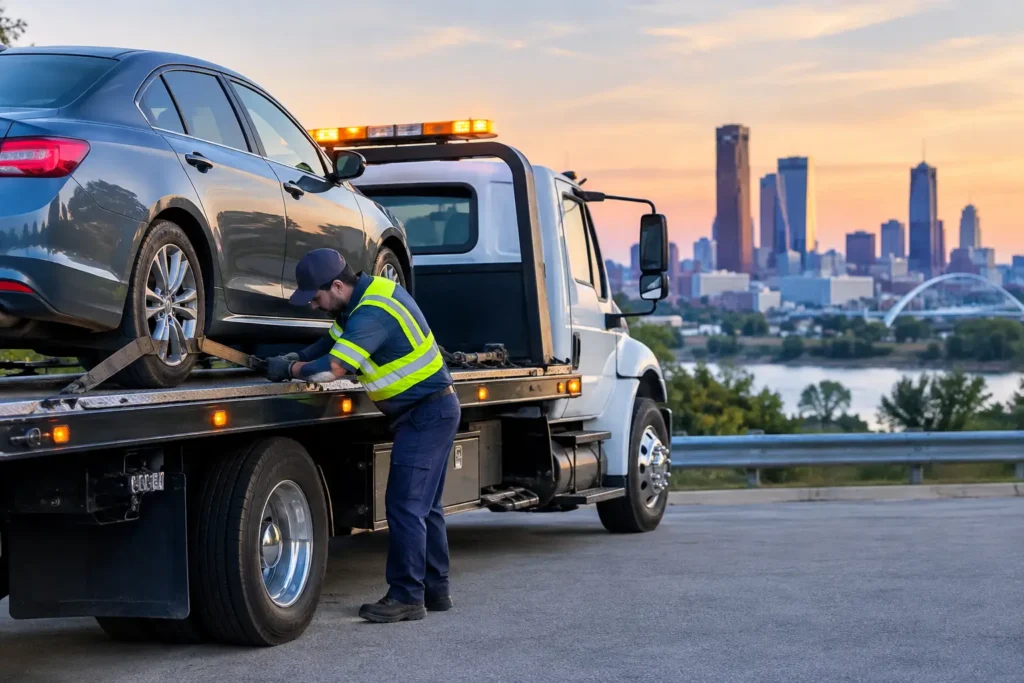
A crash on a busy Tulsa road can turn a normal drive into a problem that needs quick, careful decisions. This case study accident scene towing example follows a common situation: a disabled sedan after a rear-end collision near Memorial Drive, with traffic moving nearby and the driver unsure whether the car could be driven.
The details are representative of real local calls, not a promise that every accident scene will look the same. Vehicle damage, traffic conditions, emergency response activity, and the location all affect how a tow needs to be handled. The goal stays simple: keep people out of danger, prevent more vehicle damage, and get the car to the repair shop or destination the driver chooses.
The Call: A Car That Should Not Be Driven
The driver called after a collision during afternoon traffic in East Tulsa. The car had been struck from behind at a stoplight. It was still running, but the rear bumper was pushed in, a taillight was broken, and the trunk would not fully latch. More concerning, the driver noticed that the car sat unevenly and felt something dragging beneath the rear of the vehicle.
That is the point where guessing can create a bigger problem. A car may start and move a few feet after an accident, yet still have damage to the suspension, exhaust, wheel area, steering, or underbody. Trying to drive it away can cause a loose component to drag, worsen alignment damage, or put the driver back into moving traffic with a vehicle that is no longer safe.
During the call, the useful information was straightforward: the nearest cross streets, the vehicle type and condition, whether anyone was injured, whether the vehicle was blocking traffic, and where the driver wanted it taken. If there are injuries, leaking fuel, smoke, or an unsafe position in traffic, emergency services come first. Once the scene is stable and towing is appropriate, clear information helps send the right equipment without wasting time.
Securing an Accident Scene Before Loading
At an accident scene, the vehicle is only one part of the job. The people around it and the traffic passing by matter first. On corridors such as I-44, US 75, or major streets around Midtown and South Tulsa, stopped vehicles can be difficult for approaching drivers to see, especially after dark or in bad weather.
A careful operator starts by assessing where the vehicle sits, the traffic flow, available space, and any instructions from emergency responders on scene. The driver should stay in a safe location away from moving traffic when possible. If the vehicle can safely remain where it is, there is no reason to rush into a poor loading position just to save a few minutes.
The operator also checks for obvious hazards before touching the vehicle. That includes fluid leaks, loose body panels, damaged wheels, deployed airbags, and parts hanging under the car. A vehicle with a damaged front wheel or a bent suspension component needs a different approach than a car with only cosmetic bumper damage.
This inspection is not about making a mechanical diagnosis at the roadside. It is about choosing a transport method that does not turn collision damage into additional damage.
Case Study: Accident Scene Towing With a Flatbed
For this sedan, a flatbed was the right answer. Because the vehicle had possible rear suspension damage and an unsecured trunk, towing it with two wheels on the ground was not a good fit. A flatbed keeps all four tires off the road and avoids putting extra stress on damaged components during transport.
The loading process began with checking that the ramp angle and truck position would work without scraping the vehicle. Low-clearance cars, damaged bumpers, and cars sitting unevenly require patience here. Pulling a vehicle onto a bed at the wrong angle can damage the bumper cover, undertray, or exhaust before the tow even begins.
Once the vehicle was positioned, it was secured using proper tie-down points and wheel restraints. The goal is to hold the vehicle firmly without relying on damaged parts or putting unnecessary force on suspension areas that may already be compromised. Loose bumper pieces and the trunk area were also checked so they would not shift or create a hazard on the road.
A quick walk-around before leaving matters. It confirms that the vehicle is centered, secure, and clear of anything that could drag. It also gives the driver a chance to remove needed belongings, take photos if necessary, and confirm the drop-off location before the truck pulls away.
Why the Drop-Off Location Matters
After an accident, drivers often feel pressure to make a fast decision about where the vehicle should go. A repair shop, dealership, home, or another location may all make sense depending on the situation. The right choice depends on whether the vehicle needs an inspection, whether the shop can receive it, and what the driver needs to do next.
For this case, the driver chose a local collision repair facility in Tulsa that was able to accept the vehicle. Confirming that detail before transport prevents an avoidable problem at the end of the tow. A closed gate, no available parking space, or a shop that cannot receive the car can leave the driver with another decision to make when they are already dealing with enough.
At the destination, the sedan was unloaded in the repair facility’s designated area. The vehicle was placed where the shop could access it without needing to move it again. That last part is easy to overlook, but careful placement saves time and reduces handling after a collision.
What Made This Tow Go Smoothly
No accident tow is completely routine, but several decisions kept this one controlled. The driver did not attempt to drive a car with possible suspension damage. The exact location and visible damage were communicated clearly during the call. A flatbed was used instead of treating the vehicle like a normal breakdown. And the destination was confirmed before transport began.
Those details matter even more with electric vehicles, low-profile cars, all-wheel-drive vehicles, and heavy-duty pickups. An EV may require extra care around battery protection and designated towing procedures. An all-wheel-drive vehicle may need all wheels off the ground. A pickup with damaged steering or a loaded bed may require different planning than a compact sedan.
There is no one-size-fits-all method for accident towing. A careful operator looks at the vehicle in front of them, not just the type of call on the screen.
What to Do While Waiting for a Tow Truck
If your vehicle is involved in a crash in Tulsa, focus on safety before paperwork or vehicle concerns. Move to a safer area if it can be done without driving an unsafe vehicle. Turn on hazard lights if they work, stay aware of traffic, and follow directions from emergency responders at the scene.
When you call for a tow, be ready to provide your location, vehicle description, visible damage, and preferred destination. Mention anything unusual, such as a wheel pointed in the wrong direction, a vehicle stuck against a curb, a low-clearance car, or an electric vehicle. Those details help the tow operator arrive prepared.
Do not assume a car is safe to drive just because it still starts. If the steering feels wrong, a wheel is damaged, fluids are leaking, warning lights are on, or body parts are loose, transport is usually the safer choice.
A collision is stressful enough without worrying whether the tow will make the situation worse. The practical next step is to keep yourself safe, communicate clearly, and choose damage-free transport that gets your vehicle where it needs to go.

