
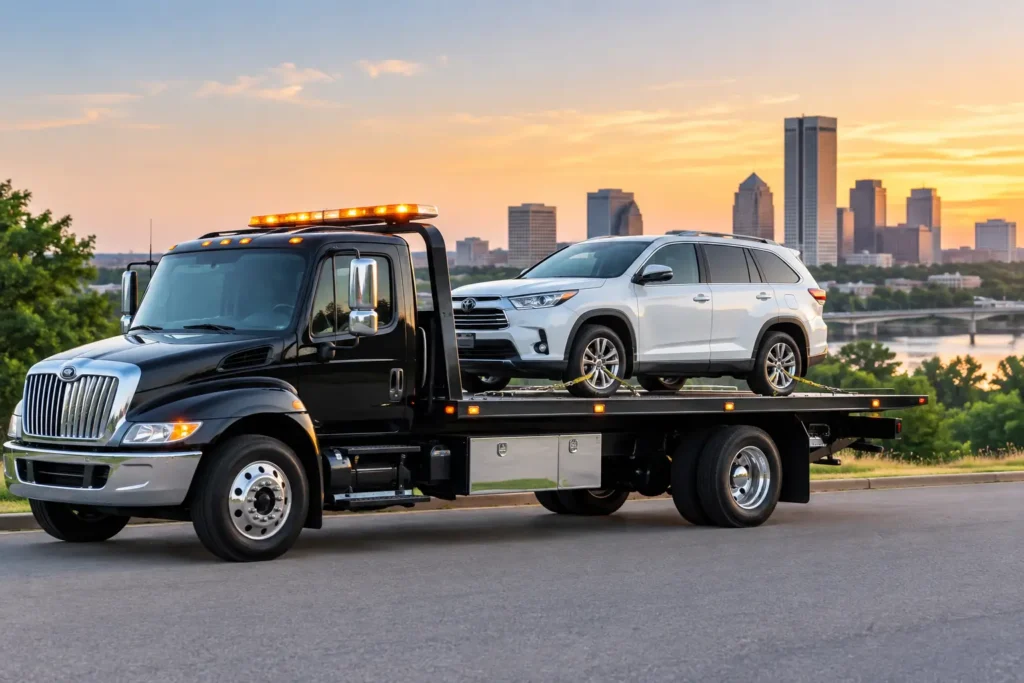
A vehicle that will not move is stressful enough. The wrong tow setup can turn a breakdown on I-44, a parking lot issue in Midtown, or an accident near Memorial Drive into more damage and a bigger repair bill. Knowing how to choose flatbed transport helps you make a clear decision when time matters.
Flatbed towing is often the safest way to move a disabled vehicle because all four tires ride off the road. But not every tow company handles every vehicle the same way, and not every situation calls for the exact same loading approach. The right choice comes down to your vehicle, its condition, where it is sitting, and whether the operator has the equipment and experience to load it carefully.
Why Flatbed Transport Is Often the Safer Choice
A flatbed truck carries the entire vehicle on a level deck instead of pulling it with two wheels on the ground. That matters when a car has drivetrain trouble, accident damage, a locked wheel, low ground clearance, or a tire that cannot safely roll.
For most modern cars, trucks, SUVs, and electric vehicles, a flatbed removes many of the risks that come with towing from one end. It keeps mileage off the vehicle, avoids leaving driven wheels on the pavement, and provides better control during transport through Tulsa traffic.
That does not mean a flatbed automatically makes every job damage-free. The loading process still matters. A rushed operator can scrape a low front bumper, pull on the wrong recovery point, or use tie-downs incorrectly. Good flatbed transport is about the truck, the equipment, and the person running the job.
How to Choose Flatbed Transport for Your Vehicle
Start with the condition of the vehicle. If it has been in a collision, has suspension damage, will not go into neutral, has a flat tire, or is sitting low to the ground, tell the towing company before the truck is dispatched. Those details affect how the vehicle should be loaded.
A standard car that rolls freely may be straightforward. A vehicle with a broken wheel, damaged steering, or a front end pressed against a curb needs more planning. The same applies to a vehicle stuck in a tight parking garage or angled in a narrow apartment lot in Brookside. The tow operator may need dollies, soft straps, a winch, or a different loading angle to avoid causing further damage.
When you call, give a plain description of what happened. Mention whether the vehicle starts, rolls, steers, has keys available, and has any visible damage. If it is an all-wheel-drive vehicle, an EV, or a lowered car, say that upfront. Clear information helps the right truck arrive prepared instead of turning a simple tow into a delay.
Ask Whether the Truck Can Handle Your Vehicle
Not every flatbed is set up the same. A compact sedan, a heavy-duty pickup, and a Tesla do not load the same way. Weight, wheelbase, ground clearance, and battery placement all matter.
If you drive a larger truck or SUV, ask whether the flatbed has the capacity for its weight and length. A truck that technically fits can still require careful positioning to keep the load balanced and secure. If you have a low-clearance car, ask how the operator will prevent bumper or splitter damage during loading. Experienced operators use the right ramp angle, boards, or equipment when needed rather than forcing the vehicle up the bed.
Electric vehicles need special attention as well. Many EVs should not be towed with wheels rolling on the ground, especially if the vehicle cannot be placed in the proper transport mode. The tow operator should understand approved lift points, safe tie-down locations, and how to move the vehicle without putting stress on the battery area or underbody.
Confirm How the Vehicle Will Be Secured
Once the vehicle is on the bed, it needs to stay in place without damaging the wheels, suspension, or body. Proper wheel straps secure the tires to the deck and keep the vehicle stable throughout the trip. This is generally a better approach than attaching chains or hooks where they do not belong.
You do not need to know towing equipment by name to ask a useful question. Simply ask how the vehicle will be secured and whether the operator uses wheel straps. A professional answer should be clear and specific. If your vehicle has special wheels, low body panels, or existing damage, bring that up before loading begins.
It is also reasonable to take a few quick photos of your vehicle before the tow. That is not about assuming the worst. It gives you a record of the condition of the car at pickup, especially after an accident or when it is dark, raining, or parked along a busy road.
Match the Tow Method to the Situation
Flatbed transport is the right call in many situations, but the location can change how the job is handled. A breakdown on US 75 needs a fast, safe approach that keeps the driver and operator out of traffic. A vehicle in a downtown garage may have height restrictions that prevent a flatbed from entering. In that case, the operator may need to recover the vehicle from the garage first and load it once it is in a safe, accessible area.
If your vehicle is stuck off pavement, in mud, or on a curb, recovery comes before transport. Winching a vehicle out incorrectly can cause damage to the bumper, suspension, or drivetrain. The operator needs to identify a safe pull direction and use proper recovery points before the vehicle goes on the flatbed.
Accident towing requires similar care. Even if the damage looks minor, a bent wheel, leaking fluid, or damaged steering component can make driving or rolling the vehicle unsafe. A flatbed keeps the vehicle off the road and gives the operator more control over a car that may not move normally.
Choose Clear Communication Over Guesswork
During an emergency, most drivers are searching for a tow truck near me and trying to get the vehicle moved quickly. Speed matters, but communication matters just as much. You should know when the truck is expected, what information the operator needs, and where your vehicle is being taken.
Before dispatch, confirm the pickup location and destination. Give useful landmarks if you are on a highway, such as the nearest exit, cross street, or direction of travel. In areas like Tulsa Hills or South Tulsa, a precise parking lot entrance can save time when several businesses share the same address.
Be direct about the destination too. Whether the vehicle is going to your home, a dealership, or a local repair shop, make sure the drop-off location can receive it. Some shops have after-hours procedures or specific areas for tow-ins. It is easier to confirm that before the truck arrives than to sort it out with a disabled vehicle already loaded.
Watch for Details That Affect the Tow
A few details are easy to overlook but can change the way a tow needs to be handled. Tell the operator if the vehicle is in a parking garage, has aftermarket modifications, has a locked steering wheel, or has a damaged tire. Let them know if it is carrying heavy tools, equipment, or cargo that could affect its weight.
For EV owners, mention the battery level if you know it and whether the vehicle has displayed any warnings. For trucks, mention if the bed is loaded or if there is a trailer attached. The more accurate the picture, the less likely there will be a surprise at pickup.
Tulsa Towing, powered by Neptune Towing, focuses on flatbed handling because careful loading is not an extra step. It is the job. From a low car in a Riverside parking lot to a disabled pickup near Highway 169, the goal is to assess the situation, use the right equipment, and get the vehicle where it needs to go without adding problems.
When you need a tow, do not feel pressured to understand every piece of equipment. Give an honest description of the vehicle and its location, ask how it will be loaded and secured, and make sure the operator is prepared for what is in front of them. That small conversation can make a difficult roadside situation a lot more manageable.

