
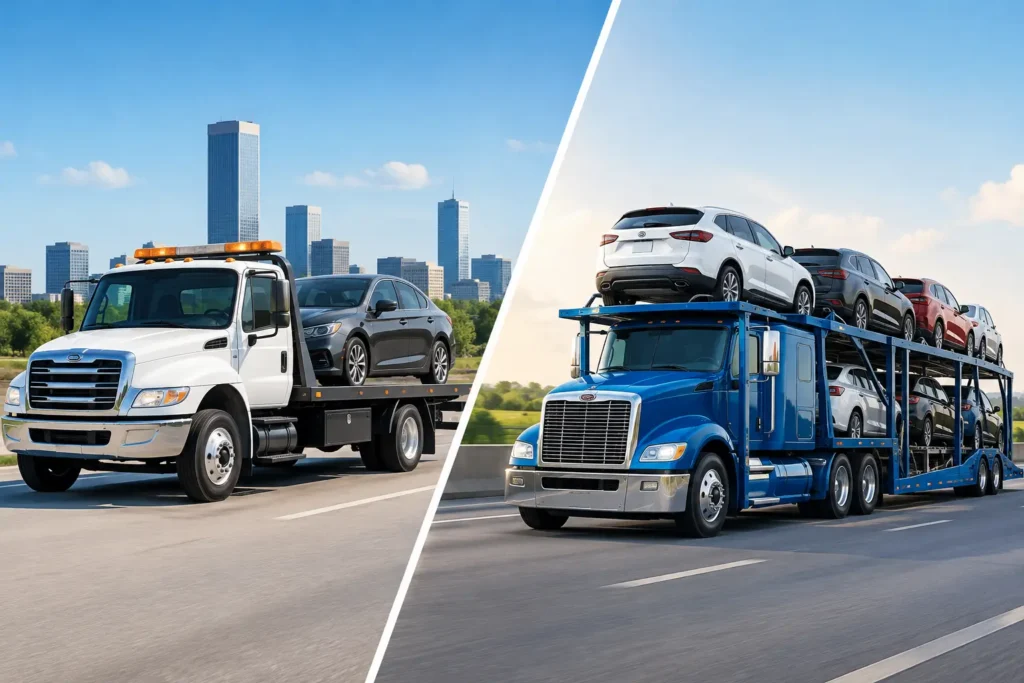
A vehicle stopped on I-44 near Midtown is not a shipping problem. It is a towing problem. The tow truck versus auto transport decision usually comes down to one question: does the vehicle need help now, or does it need to be moved as part of a planned trip? Knowing the difference can save time, prevent extra damage, and get your vehicle to the right place without adding more stress.
Tow Truck Versus Auto Transport: The Main Difference
A tow truck is built for immediate, local vehicle recovery. It is the right fit when a car will not start, has been in an accident, has a flat tire that cannot be changed safely, or cannot be driven without risking more damage. The driver dispatches to your location, loads the vehicle, and takes it to a repair shop, dealership, home, or another local destination.
Auto transport is built for scheduled vehicle shipping, usually over a long distance. It is commonly used when someone is moving to another state, buying a vehicle from an out-of-town seller, sending a car to a family member, or relocating a specialty vehicle that does not need emergency service. Transport carriers generally move several vehicles at once and work around pickup windows instead of immediate dispatch.
That difference matters when you are parked on the shoulder of US 75, stuck in a South Tulsa apartment garage, or dealing with a dead EV in Broken Arrow. In those situations, waiting days for a scheduled carrier is not practical. You need a local tow truck with the equipment to safely load the vehicle where it sits.
When a Tow Truck Is the Right Call
A tow truck is for the problem happening in front of you. Maybe your transmission failed on Memorial Drive. Maybe your car was hit and the steering or suspension is not safe to drive. Maybe the battery died at Tulsa Hills and a jumpstart did not solve the issue. The job is to secure the vehicle, load it correctly, and move it out of an unsafe or inconvenient spot.
Flatbed towing is often the safest choice for a disabled vehicle because all four wheels ride on the bed. This is especially useful for all-wheel-drive vehicles, low-clearance cars, trucks with drivetrain issues, and electric vehicles. A proper flatbed setup avoids rolling a disabled vehicle down the road and reduces the chance of damage during transport.
Tow trucks also make sense for short-distance planned moves. A vehicle may run, but the driver may not want to risk taking it across town after overheating, a warning light, brake trouble, or a recent accident. A local tow can take it from East Tulsa to a trusted shop or from a dealership to a nearby home when driving it is not the smart option.
Roadside help may solve the problem first
Not every call ends in a tow. A locked car, drained battery, or accessible flat tire may be handled on site. But if the vehicle cannot be made safe to drive, the next step is towing it where you want it to go. That is simpler than guessing whether it will make it another mile.
A good towing operator will ask practical questions before arriving: where the vehicle is located, what it is doing, whether it is in a garage or on a busy road, and where it needs to go. Those details help determine whether roadside assistance, a winch-out, or a flatbed tow is the right response.
When Auto Transport Makes More Sense
Auto transport is the better fit when the vehicle is operable or can be loaded at a scheduled pickup point and the destination is far away. If you are moving from Tulsa to another state, purchasing a collector car from across the country, or sending a second vehicle to a college student, shipping can keep miles off the odometer and avoid a long drive.
Most auto transport jobs require more flexibility than a local tow. Pickup and delivery often happen within a window rather than at an exact hour. The carrier may need room to maneuver a large truck, so a residential street in Bixby or a tight neighborhood in Jenks may not work as the final loading point. The customer may need to meet the carrier at a wider nearby road or commercial lot.
Open carriers are common and generally cost less. The vehicle rides on a multi-car trailer exposed to normal weather and road conditions. Enclosed transport offers more protection and is usually chosen for high-value, classic, exotic, or show vehicles. Neither option is designed to respond to a breakdown on the side of the road.
If your vehicle is disabled, tell the transport company before booking. A non-running vehicle may require a winch-equipped carrier and can cost more to load. If it is blocked in, has locked wheels, sits in a parking garage, or is damaged after a collision, a local tow may still be needed first to get it to a location where the carrier can load it safely.
Cost, Timing, and Handling Are Different
People often compare tow truck pricing and auto transport pricing as though they are the same service. They are not. A tow is typically priced around the local recovery and transport work involved: distance, vehicle type, accessibility, loading conditions, and the destination. An accident scene, a low-clearance garage, or a vehicle that needs to be winched into position can take more time and equipment than a straightforward curbside load.
Auto transport pricing is shaped by shipping distance, route demand, vehicle size, whether the vehicle runs, trailer type, and scheduling flexibility. A cross-country shipment costs more than a local tow because it involves a different type of equipment, planning, and transit time. It may be the better value for a long move, but it is not a substitute for immediate roadside recovery.
Handling is different as well. With local towing, the operator is focused on one vehicle and one immediate load. The vehicle can be inspected at pickup, secured on the flatbed, and delivered directly to a local destination. With auto transport, vehicles are loaded alongside others, and the shipment may involve multiple stops before delivery.
Questions to Ask Before Choosing
Before calling, think about the vehicle’s condition and where it needs to go. If it is unsafe, undriveable, stuck, damaged, or blocking traffic, call for a tow truck. If it is part of a move and can wait for a scheduled pickup, auto transport may be the better route.
It also helps to know the exact destination. A repair shop, dealership, your driveway, or a body shop are normal local towing destinations. For a carrier shipment, confirm that both pickup and delivery locations have enough space and that someone can meet the driver if required.
For EV owners, be clear about the vehicle model and condition. A Tesla or other electric vehicle may need specific loading care, especially if the battery is low, the vehicle cannot shift normally, or it has suspension damage. Flatbed towing is usually the right local solution when an EV cannot be driven safely.
Local Towing for the Problem You Have Right Now
A scheduled shipment and an emergency tow can work together, but they should not be confused. If your car breaks down near Downtown Tulsa before a long-distance move, get it recovered safely first. Once it is at a secure, accessible location and you know its condition, you can decide whether repair, local delivery, or transport shipping makes sense.
Tulsa Towing focuses on the local side of that decision: damage-free flatbed towing, roadside help, and clear communication when a vehicle needs to move now. Whether you are on Riverside, in a Midtown parking lot, or at home in South Tulsa, the useful next step is the one that gets the vehicle out of the situation safely and to the place you chose.

