A dead battery on Memorial Drive, a flat on I-44, or keys locked inside your car at Tulsa Hills can turn an ordinary trip into a stressful stop fast. Knowing how to request roadside help gives the dispatcher what they need to send the right truck, prepare the right equipment, and get you out of an unsafe situation without wasting time.
The main goal is simple: get yourself to a safe spot if possible, clearly explain where you are and what happened, then wait where the driver can find you. You do not need to diagnose every problem. A good roadside provider can ask the right questions and determine whether a jumpstart, tire change, lockout service, winch-out, or tow is the safer answer.
Get Safe Before You Make the Call
If your vehicle is still moving, do not stop in a travel lane unless it will not move any farther. Aim for a shoulder, parking lot, side street, or other area away from traffic. Turn on your hazard lights as soon as you realize there is a problem.
On busy roads such as US 75, Highway 169, or the Broken Arrow Expressway, your position matters as much as the vehicle issue. If you can safely exit the vehicle and move well away from traffic, do so. If traffic is moving fast and there is no safe path away from the car, stay buckled inside with the doors locked while you arrange help.
Do not stand between your vehicle and traffic. Do not try to change a tire on a narrow highway shoulder. And if your car is stuck in mud, a ditch, or an uneven area, avoid spinning the tires or repeatedly forcing it forward and backward. That can make recovery harder and cause more damage.
How to Request Roadside Help Clearly
When you call for roadside assistance, lead with your location and safety situation. The person dispatching the truck needs to know whether you are in a parking lot in Midtown, on a highway shoulder near Riverside, or blocked in a tight downtown garage. Those are very different approaches, even if the vehicle problem is the same.
Give the nearest cross streets, exit number, business name, landmark, or direction of travel. Saying “I am on I-44” is a start, but “eastbound I-44 near the Yale exit, on the right shoulder” gets the truck much closer. If your phone map shows a precise pin, keep it open in case the dispatcher asks for more detail.
Next, explain what the vehicle is doing. Plain language is enough. You might say the battery is dead and the lights will not come on, the tire is flat, the key is locked inside, or the engine started overheating and you shut it down. Mention if the vehicle is in a place with limited access, such as a parking garage, apartment lot, steep driveway, or soft ground.
The most useful information to have ready includes:
- Your exact location and the safest way for the truck to approach
- The vehicle year, make, model, and color
- The problem you can see or the symptoms you noticed
- Whether the vehicle can roll, steer, shift into neutral, or start
- Where you want the vehicle taken if roadside service will not solve it
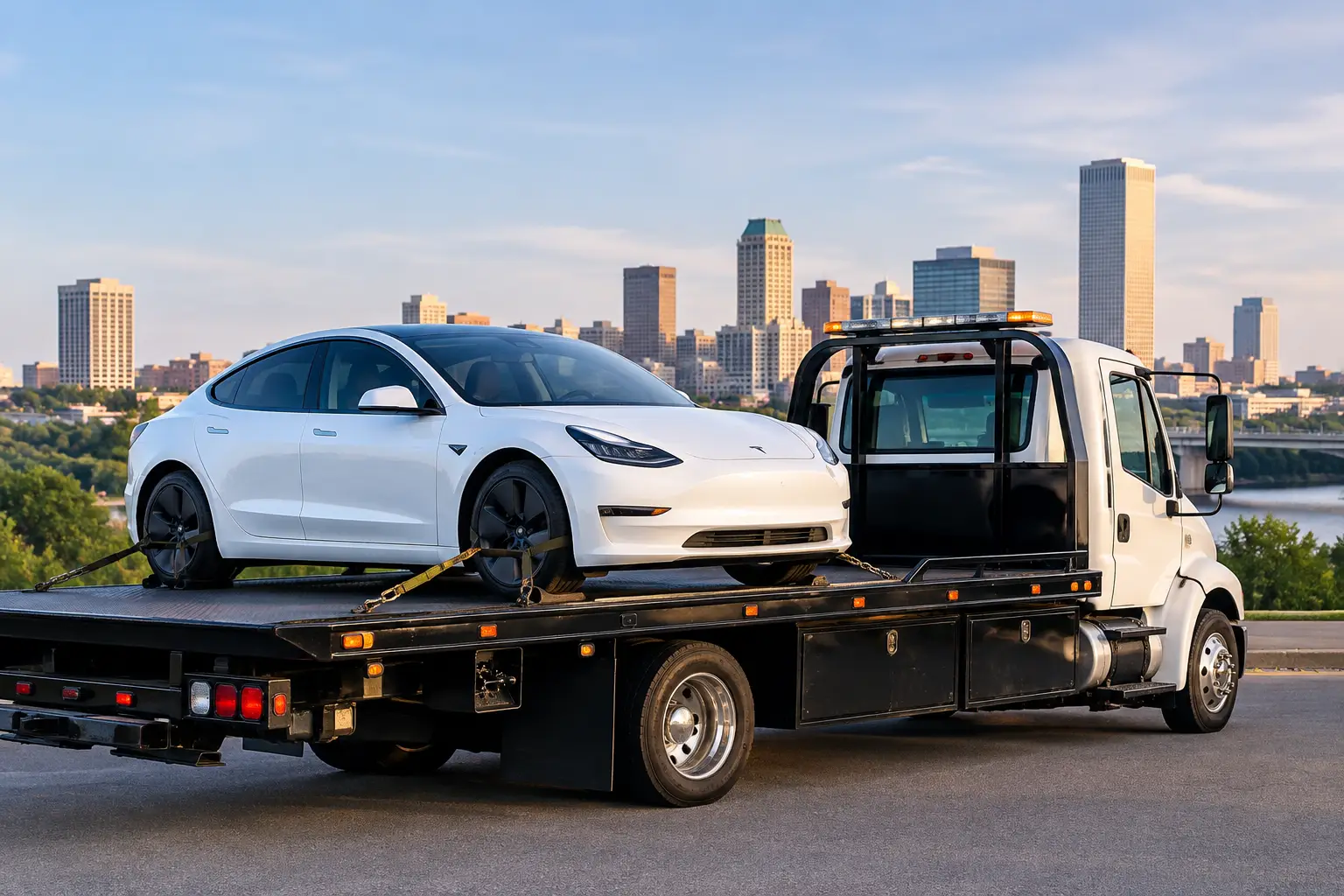
Also tell the dispatcher if your vehicle has low ground clearance, all-wheel drive, oversized tires, or is an electric vehicle. A Tesla or another EV needs proper handling and loading. The same goes for heavy-duty pickups, modified vehicles, and cars with damage after an accident. Details upfront help prevent the wrong equipment from arriving.
Know When Roadside Service Is Enough
Some problems can be handled where the vehicle sits. A jumpstart may get you going if the battery is drained. A lockout service can get you back into the vehicle without breaking a window. If you have a usable spare tire and the vehicle is parked in a safe area, flat tire help may be all you need.
That said, a quick fix is not always the right fix. A jumpstart does not confirm that the battery, alternator, or charging system is healthy. If your car starts but dies again shortly after, or warning lights remain on, arranging a tow to a repair shop can save you from being stranded a second time.
A flat tire also depends on the condition of the spare and the location of the vehicle. If there is no spare, the spare is damaged, the tire sidewall is torn, or you are stopped beside fast traffic, towing is often the safer choice. Roadside help should reduce the risk, not put you in a worse position trying to force a temporary repair.
When You Should Request a Tow Truck Instead
Request a tow when the vehicle cannot be driven safely or when driving it could make the damage worse. Common examples include overheating, a collision with visible damage, a transmission problem, a wheel that will not turn correctly, severe fluid leaks, or an engine that will not stay running.
If you hit a pothole in East Tulsa and now the car pulls hard, shakes, or has a damaged wheel, do not assume you can slowly drive it home. Steering or suspension damage can change quickly. The same applies when a vehicle is stuck off pavement or hung up on a curb. A winch-out or careful recovery may be needed before transport.
Tell the dispatcher your preferred destination before the truck arrives when possible. That may be your home, a trusted repair shop, or a dealership. If you are unsure where to take it, say so. You can still get the vehicle off the road first and make a practical decision based on the issue, time of day, and shop availability.
What to Do While You Wait for Help
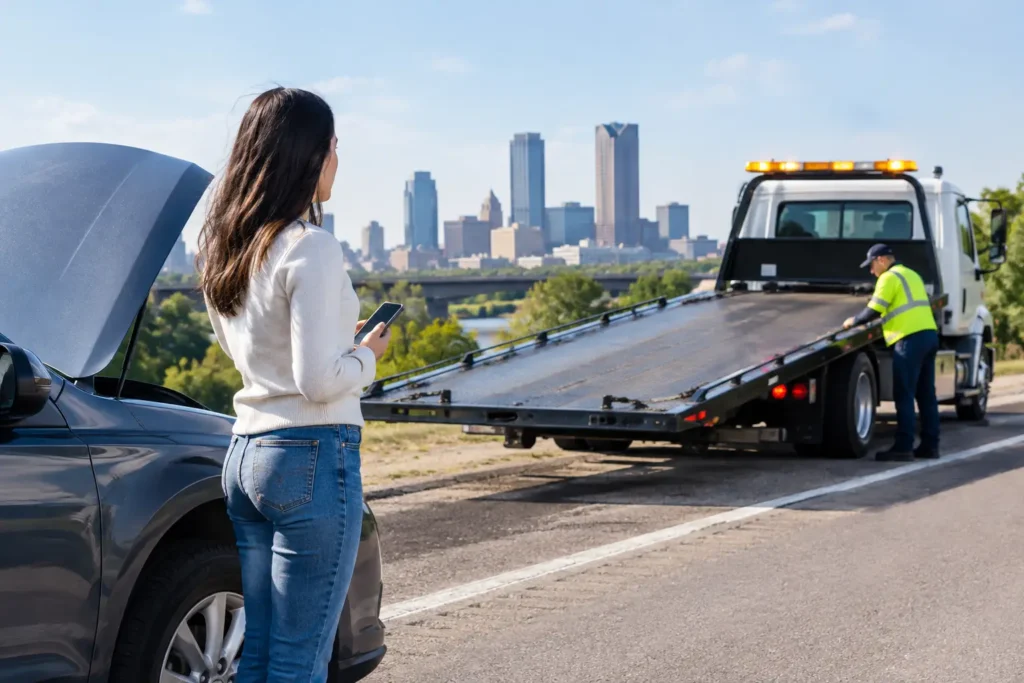
Once help is on the way, keep your phone charged and listen for calls or texts. If you move to a safer place nearby, let the dispatcher know. A tow truck can lose valuable time searching a large lot, frontage road, or highway interchange when the driver has been given an old location.
If it is dark, keep your hazard lights on if the battery allows. Interior lights, a phone flashlight, or a reflective item can help identify the vehicle, but do not walk into traffic to flag down the truck. If you are with children, older passengers, or pets, make their safety and comfort part of the plan when deciding whether to remain in the vehicle or move away from it.
Gather any items you will need before a tow, including your wallet, medication, work equipment, house keys, and child seats. Remove valuables from plain sight. If the vehicle is going to a shop after hours, ask where it should be left and whether the keys need to go through a drop box.
You do not need to stay stressed about every mechanical detail. Your job is to give clear information, stay visible but safe, and avoid making the situation worse. The driver’s job is to assess the vehicle, use the proper equipment, and get it handled carefully.
Ask the Right Questions Before Service Starts
A straightforward towing company should be able to confirm the type of help being sent and communicate clearly about the plan. Ask whether the situation sounds like a roadside repair or a tow, especially if you are unsure whether the vehicle can be driven after service.
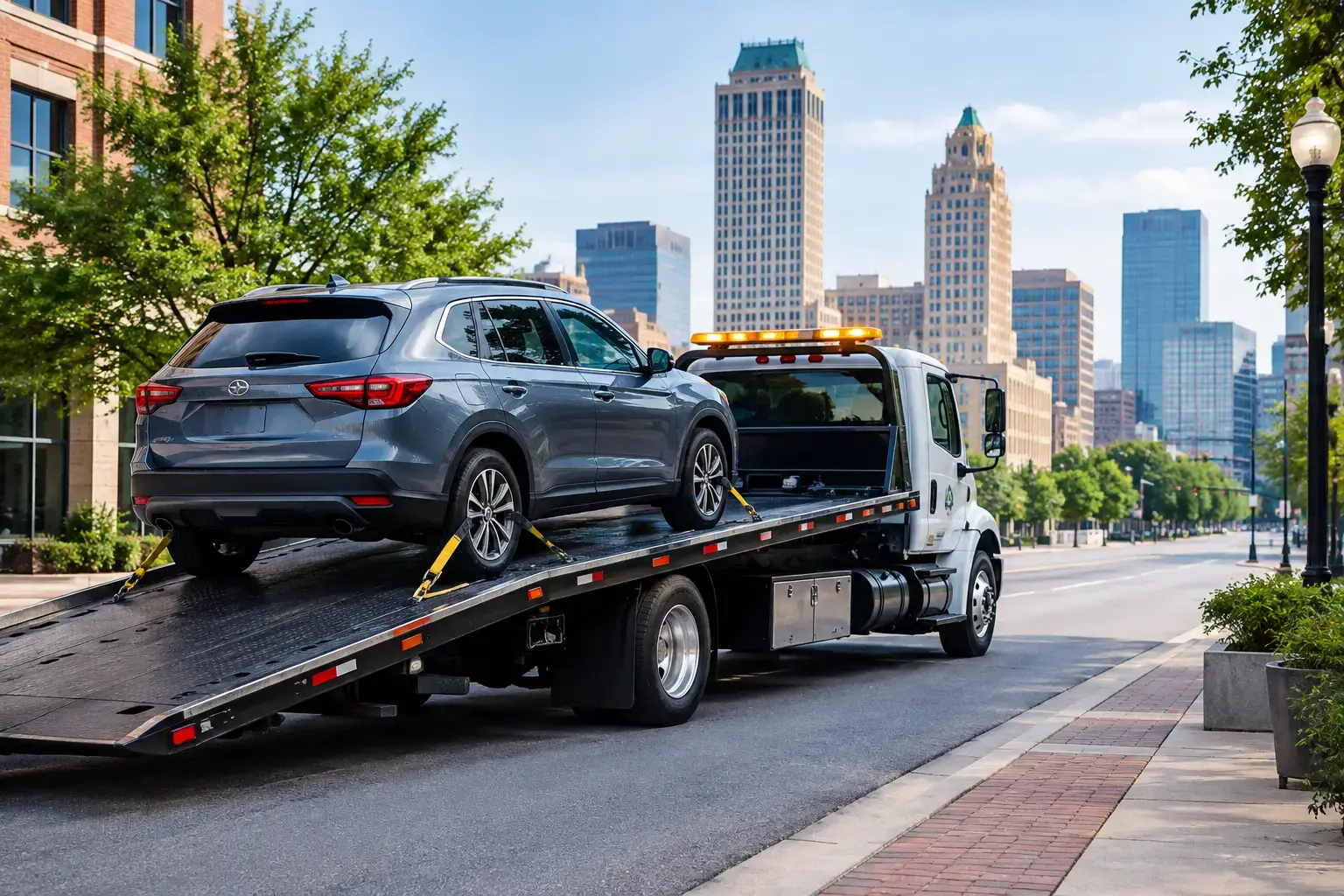
If a tow is needed, confirm the destination and make sure the driver knows about any special vehicle considerations. Flatbed transport is the right approach for many vehicles, particularly low-clearance cars, all-wheel-drive vehicles, damaged cars, and EVs. It keeps the vehicle fully off the road during transport instead of leaving wheels rolling behind the truck.
Tulsa Towing, powered by Neptune Towing, focuses on this kind of clear local dispatch and damage-free handling throughout Tulsa, with nearby service in places such as Jenks, Bixby, Broken Arrow, and Glenpool when availability allows. The point is not to complicate a bad day. It is to send the right help and get your vehicle where it needs to go.
A roadside problem rarely arrives at a convenient time. Put your location first, describe the issue honestly, and choose the safer option when the vehicle is not fit to drive. That one calm call can turn a stranded moment into a manageable next step.