A stalled vehicle on I-44, a flat tire near Midtown, or a car that will not start in a South Tulsa parking lot can turn stressful fast. The right towing safety questions help you make clear decisions before anyone loads your vehicle. They also help protect you, your passengers, and the vehicle from avoidable damage while help is on the way.
Most drivers do not need a long explanation in that moment. They need to know where to stand, whether the car can be driven, what information to provide, and whether the tow truck has the right equipment. Here are the questions that matter in a real roadside situation.
Towing Safety Questions to Ask Before Help Arrives
Is my current location safe enough to wait?
Your first priority is not the vehicle. It is getting yourself out of danger. If your car is on a busy roadway, move it to the shoulder only if it can be done safely and the vehicle is still drivable. Turn on the hazard lights, keep your seat belt on while you are stopped near traffic, and avoid standing between your vehicle and passing lanes.
On a high-speed section of US 75 or Highway 169, stay well away from traffic if you can safely exit the vehicle. If the shoulder is narrow, uneven, or too close to moving cars, remaining inside with the doors locked may be safer. Conditions matter. A vehicle in a quiet shopping center lot needs a different approach than one stopped beside fast-moving traffic in rain or after dark.
When calling for service, give a clear location. The road name alone may not be enough. Mention the direction of travel, nearest exit, cross street, business, or visible landmark. Clear location details help a tow truck find you without unnecessary delays.
Can the vehicle be driven, or should it stay parked?
A car that still starts is not automatically safe to drive. Ask yourself what caused the stop. If the engine is overheating, there is smoke, fluid leaking heavily, steering feels loose, a wheel is damaged, or warning lights came on with a major loss of power, do not try to push it farther down the road.
Driving a short distance on a flat tire can ruin the tire and damage the wheel. Continuing with an overheating engine can turn a repairable issue into serious engine damage. After an accident, the vehicle may have hidden suspension, tire, or fluid-line damage even if it appears to roll normally.
If there is any doubt, explain the symptoms when you call. A qualified operator can determine whether roadside help may solve the problem or whether the vehicle needs to be loaded and transported. The safe answer is often to stop guessing and avoid making the original problem worse.
What kind of tow does my vehicle need?
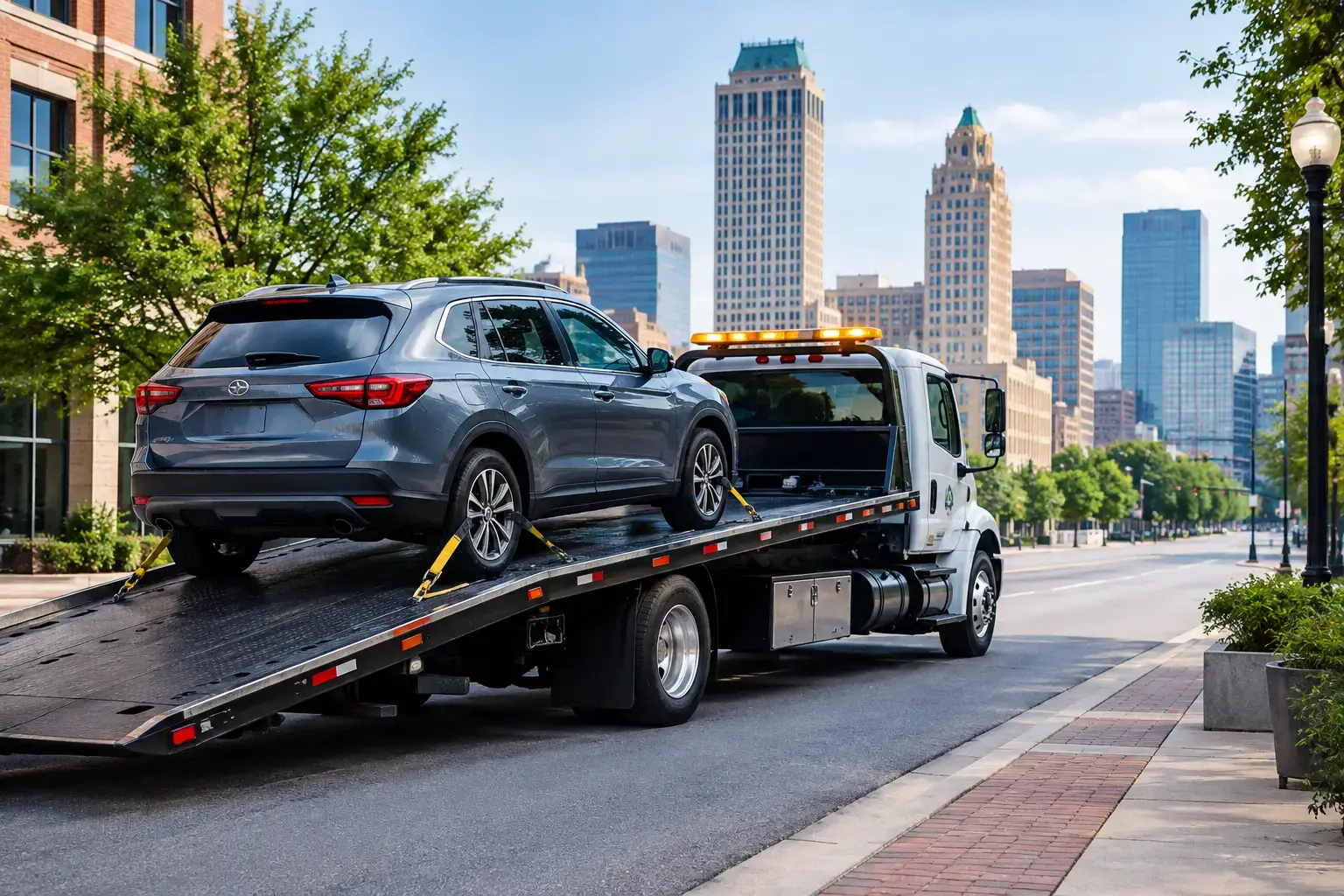
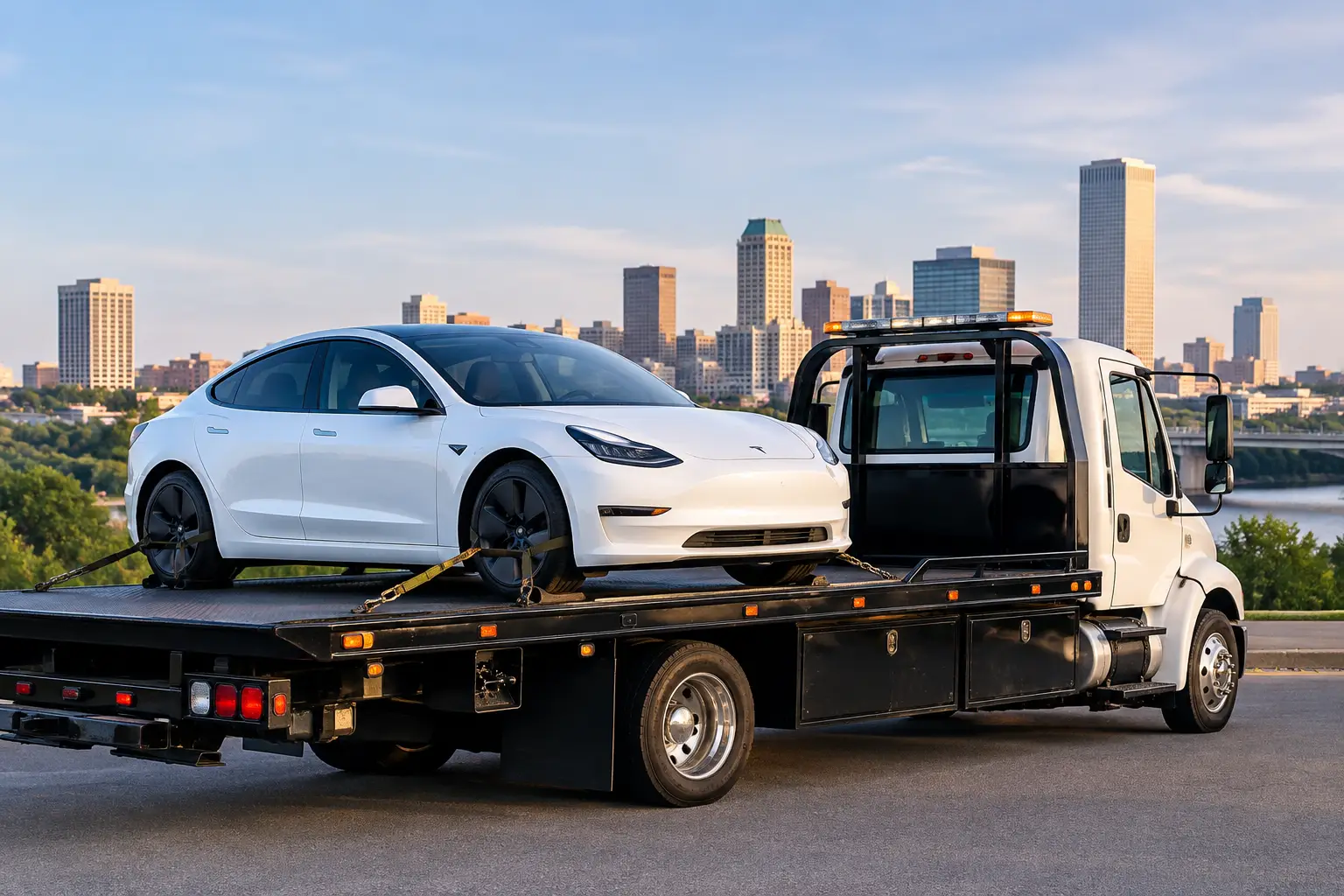
This is one of the most useful towing safety questions because vehicle setup matters. A flatbed is often the right choice for all-wheel-drive vehicles, electric vehicles, low-clearance cars, vehicles with collision damage, and cars that cannot roll freely. It keeps all four tires off the road during transport.
Some vehicles have special towing instructions from the manufacturer. Tesla and other EV models, for example, should not be handled like a standard front-wheel-drive sedan. Their battery placement, low ground clearance, and transport requirements call for careful loading and proper securement. The same goes for lowered cars, heavy-duty pickups, and vehicles with an air suspension issue.
Tell the dispatcher the year, make, model, drivetrain if you know it, and whether the vehicle has damage or is stuck in park. Mention any modifications, very low clearance, oversized tires, or a wheel that will not turn. That information allows the operator to arrive prepared rather than trying to improvise at the roadside.
Questions That Help Prevent Towing Damage
How will the vehicle be loaded and secured?
You do not need to know every piece of towing equipment, but it is reasonable to ask how a disabled vehicle will be handled. A careful operator will assess whether the car rolls, steers, and has intact tires before deciding on the loading method. When a vehicle cannot move under its own power, additional equipment may be needed to load it without dragging it or putting stress on damaged parts.
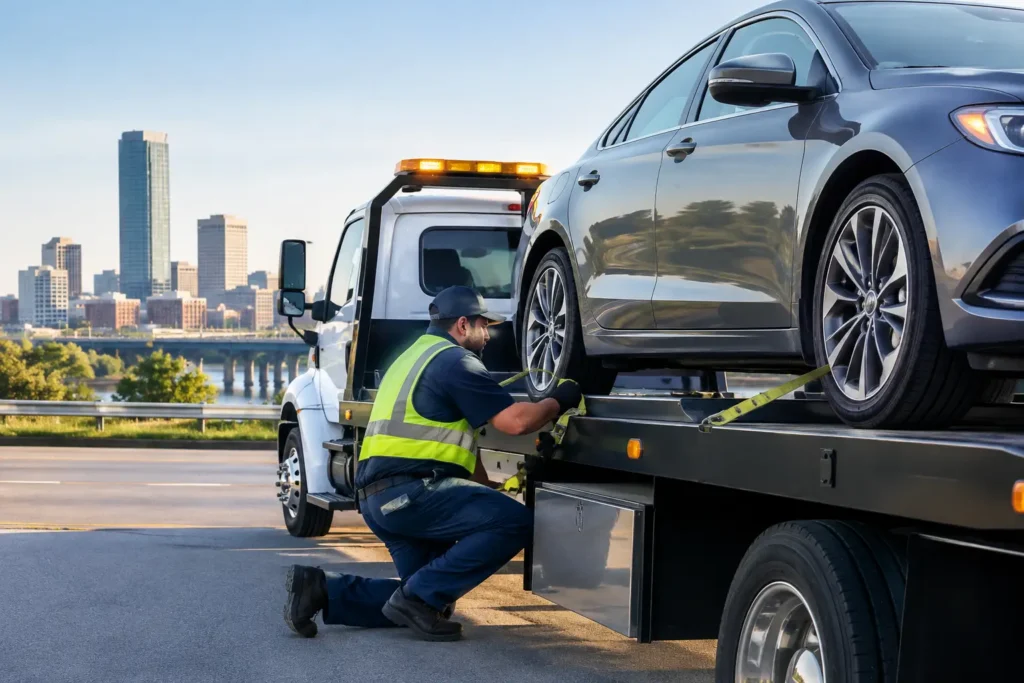
Flatbed loading should be controlled, especially with low bumpers, damaged wheels, or a vehicle sitting at an awkward angle. Proper tie-down points matter too. The goal is to secure the vehicle correctly without using a shortcut that could damage suspension components, body panels, or undercarriage parts.
Take a few photos of your vehicle before loading if conditions allow. This is not about creating conflict. It gives you a simple record of the vehicle’s condition, particularly after an accident or when there is existing body damage. Then give the operator room to work. Standing too close to a winch cable, ramp, or moving vehicle is never safe.
Should I remove personal items before the tow?
Take your phone, wallet, keys you do not need to leave behind, medications, garage remotes, work equipment, and anything valuable or loose from the cabin. If the vehicle is going to a repair shop after hours, make sure you know where the keys will be left and how the shop will receive them.
Do not climb into the vehicle while it is on the flatbed or attempt to retrieve something after loading has started. Tell the operator what you need, and wait until it is safe. A tow truck is a work zone, not a place to move around casually.
Where is the vehicle being delivered?
Confirm the destination before loading begins. It may be your preferred repair shop, dealership, home, or another safe location. Give the full address and, when relevant, the shop name, service entrance, or after-hours instructions.
A repair facility may not accept a vehicle after closing, and some lots have limited access or designated drop areas. If you are being towed from Broken Arrow, Jenks, or Bixby into Tulsa, confirm the destination and availability early. A few clear details at the start can prevent the vehicle from arriving somewhere that cannot take it.
What to Do While Waiting for a Tow Truck
Keep your hazards on when the vehicle is stopped near traffic, but do not run the battery down unnecessarily if you are safely parked. At night, interior lights and a charged phone can help you remain visible and communicate. If you have reflective triangles or a roadside warning device, use them only when it is safe to place them without walking into traffic.
Do not attempt a roadside repair in an unsafe location. Changing a tire on the traffic side of a vehicle, crawling underneath a car, or trying to push a disabled vehicle through an intersection creates more risk than most drivers realize. If the car is stuck in mud, a ditch, or a curbside drainage area, avoid spinning the tires or hooking random straps to suspension parts. A controlled winch-out may be the safer option.
If children, older passengers, or pets are with you, make their safety part of the plan. Keep everyone away from the loading area and out of the roadway. If the weather is severe, communicate that to the dispatcher so the operator understands the situation on arrival.
What Should You Expect From a Safe Tow?
You should expect clear communication about the vehicle, destination, and the basic plan for handling the job. The operator should take the time to assess the situation instead of rushing directly into a hookup. That is especially important after an accident, when a tire is flat, or when the vehicle is an EV or has low clearance.
You should also expect the driver to work safely around traffic and explain where you should wait. The process may take a little longer when conditions are difficult, but careful loading is better than forcing a vehicle onto equipment it is not ready for. Tulsa Towing, powered by Neptune Towing, keeps the focus on getting the vehicle where it needs to go with proper flatbed handling and straightforward communication.
When you are stranded, you do not need to have every answer before calling. Start with your location, your vehicle information, and what happened. Then ask the safety questions that apply to your situation, stay clear of traffic and equipment, and let the vehicle be handled carefully from the first hookup to the final drop-off.