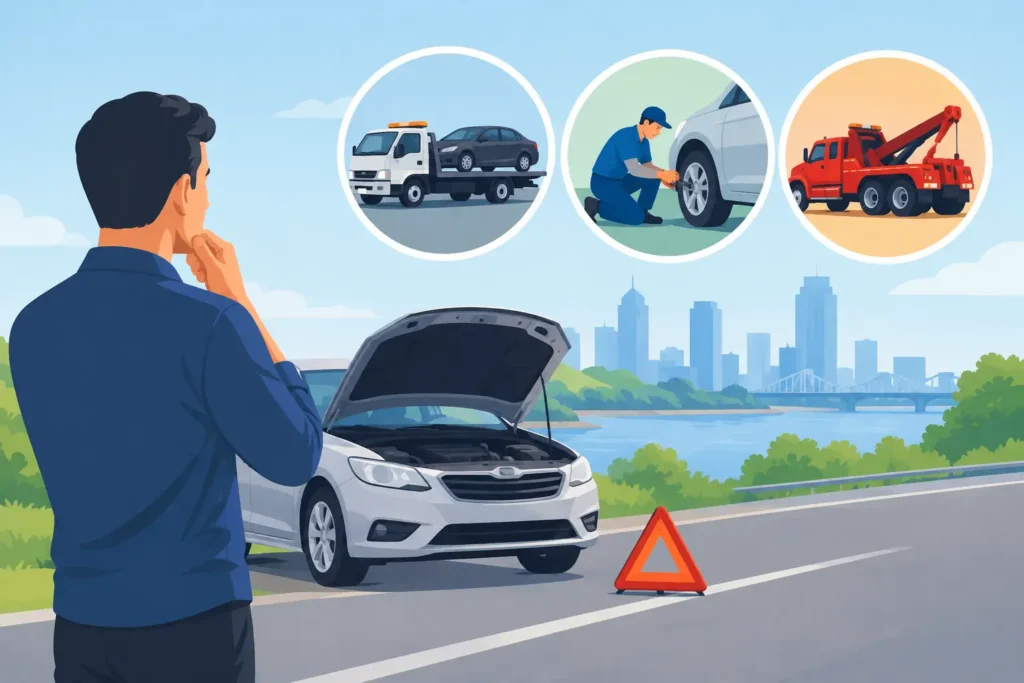
A breakdown on I-44, US 75, or a crowded Midtown parking lot creates one immediate question: where should the vehicle go? Knowing how to choose a repair destination before the tow truck arrives can save you from a second tow, a closed shop, or leaving your car somewhere that cannot handle the actual problem.
The closest shop is not always the right shop. The right destination depends on what failed, what type of vehicle you drive, whether the shop has room to receive it, and whether you have a repair plan already in place. A few quick checks while you wait can make the rest of the day much easier.
Start With the Problem You Actually Have
Try to separate a no-start situation from a mechanical failure, collision damage, or a vehicle that is simply stuck. A dead battery, flat tire, lockout, or empty fuel tank may be handled on site. If the vehicle starts and is safe to drive afterward, you may not need a repair destination at all.
When the vehicle will not run, is overheating, has a warning light, has been in an accident, or has a damaged wheel or suspension, it needs to go somewhere equipped for that type of repair. A general repair shop may be a good choice for a starter, alternator, cooling issue, brake issue, or check-engine diagnosis. Collision damage is different. A body shop can assess damaged panels and structural repairs, but it may not be the right place for an engine or transmission problem.
Be honest about what happened when you call the shop and the towing company. If the car hit a curb near Riverside Drive and the wheel is sitting at an angle, say so. If it shut off in South Tulsa after the temperature gauge climbed, mention the overheating. Details help determine whether the vehicle can be loaded normally and whether the destination makes sense.
How to Choose a Repair Destination That Can Take Your Vehicle
Before authorizing a tow, call the repair shop if you can. Ask whether they are accepting drop-offs, whether they have room for your vehicle, and when they can look at it. A shop may be excellent at repairs but backed up for days, closed for the weekend, or unable to receive a vehicle after hours.
You do not need a long conversation. Confirm three things: they can accept the vehicle, they work on the problem you have, and they know you are sending it over. Ask where to leave the keys if the office is closed and whether they need your contact information attached to the vehicle.
This matters especially after normal business hours. Towing a car to a locked lot with no approved key-drop process can create delays. You may have to return the next morning, or the shop may not know the vehicle belongs to you. A simple call prevents that confusion.
If you cannot reach the shop, consider whether another destination is more practical. Your home, a trusted family member’s driveway, or a dealership that has confirmed after-hours procedures may be better than guessing. This depends on the vehicle condition. A car with a serious leak, damaged steering, or collision damage should not be left in a place where it creates a safety issue or blocks access.
Match the Shop to the Vehicle
Not every repair destination works on every vehicle. That is especially true for electric vehicles, luxury vehicles, diesel trucks, and vehicles with manufacturer-specific systems.
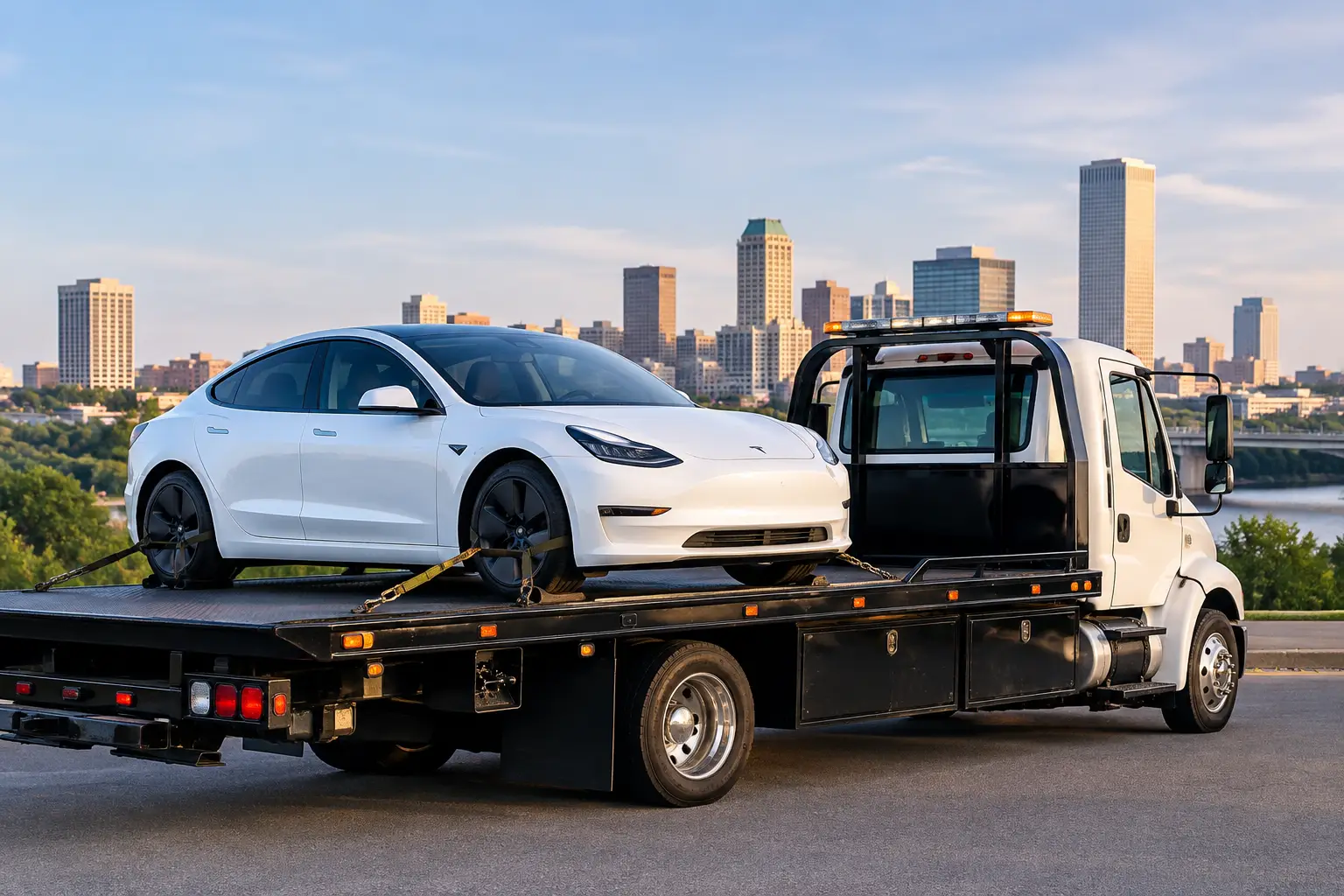
If you drive a Tesla or another EV, ask whether the shop services electric vehicles and whether it can perform the repair you need. An EV with underbody damage, a battery warning, or a charging-system issue may need a dealership or a qualified EV repair facility. It should also be transported correctly. Flatbed towing helps protect low-clearance vehicles and avoids unnecessary wear on vehicles that should not be pulled with their drive wheels on the ground.
For a heavy-duty pickup, confirm that the shop has the space and equipment to work on it. A small neighborhood shop may handle routine maintenance well but may not be set up for larger trucks, diesel diagnosis, or a vehicle that cannot roll safely.
Dealerships are often the right destination for warranty work, recall repairs, software-related issues, and brand-specific diagnosis. The trade-off is that they may have limited appointment availability or longer wait times. An independent shop may be a better fit for common mechanical problems when you already know and trust their work.
Check Insurance and Warranty Requirements First
After an accident, your insurance company may have a claims process that affects where the vehicle should go. You can usually choose a repair shop, but it is still smart to ask your insurer what documentation they need and whether they recommend an inspection before repairs begin.
Do not assume a body shop is ready to begin work just because it is listed by an insurer. Confirm it can receive the vehicle and ask what happens next. If the vehicle is not safe to drive, getting it off a busy roadway in Downtown Tulsa or near Memorial Drive is the first priority. The repair decision can follow once the vehicle is in a secure, approved place.
For warranty coverage, roadside assistance plans, or dealership service contracts, check whether towing must go to a specific location. Some plans cover only the nearest qualified facility. Others allow you to select the destination but limit the covered towing distance. Knowing that before dispatch helps avoid surprise out-of-pocket costs.
Consider Distance, But Do Not Let It Make the Decision Alone
A nearby repair shop can reduce towing cost and get your vehicle off the road faster. That is useful when you are stranded in East Tulsa, Tulsa Hills, or along Highway 169. But a short tow to the wrong place can cost more later if the shop cannot perform the work and the vehicle needs to be moved again.
Think about the full route from breakdown to repair, not just the first few miles. If your regular mechanic is farther away but already knows the vehicle, has your records, and can take it today, that may be the better choice. If the car is undrivable and your preferred shop is closed for several days, a closer shop that can diagnose it now may be more practical.
There is no single right answer. The best destination is the one that can safely receive the vehicle and move the repair forward without creating another problem.
Tell the Tow Driver What the Shop Needs
Once you choose a destination, share any instructions you received from the shop. That may include a specific entrance, a service lane, a key-drop box, or a request to park in a designated area. These details are common at dealerships and busy repair facilities around Broken Arrow, Jenks, and Bixby.
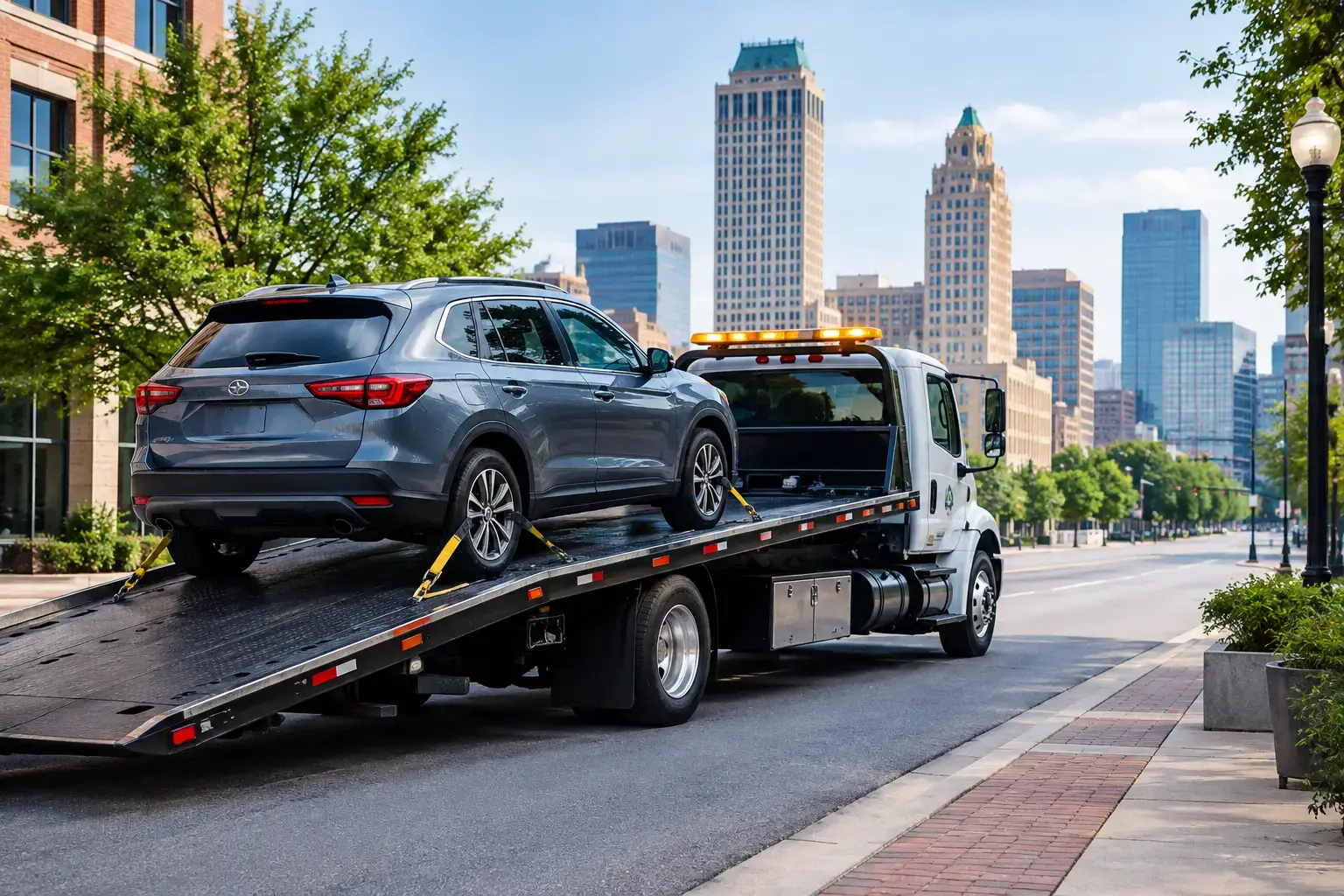
Also tell the driver if the vehicle has special handling needs. Low ground clearance, a locked steering wheel, a flat tire, a missing key, collision damage, or an EV warning can change how the vehicle is loaded. Proper equipment and careful loading matter more than rushing the process.
Take personal items, house keys, work equipment, documents, and valuables out of the vehicle before it leaves. Leave the keys only where the repair shop instructs. If you are not riding with the tow truck, make sure the shop has your name, phone number, and a short description of the issue.
When You Do Not Know Where to Send It
It is normal not to have a repair shop picked out when something fails unexpectedly. If you are stopped on a busy stretch of road, focus first on getting yourself somewhere safe and getting the vehicle moved out of traffic.
A practical fallback is to tow it home if the vehicle can be parked safely there and you need time to choose a shop. That gives you control over the next step, but it can mean paying for another tow later. If the repair shop is open, can receive the car, and is qualified for the job, going straight there usually avoids that extra move.
Tulsa Towing, powered by Neptune Towing, focuses on getting vehicles to the destination customers choose with careful flatbed handling and clear communication. Before the truck arrives, make one call to the repair shop if possible. That small step can turn a stressful breakdown into a straightforward repair plan.