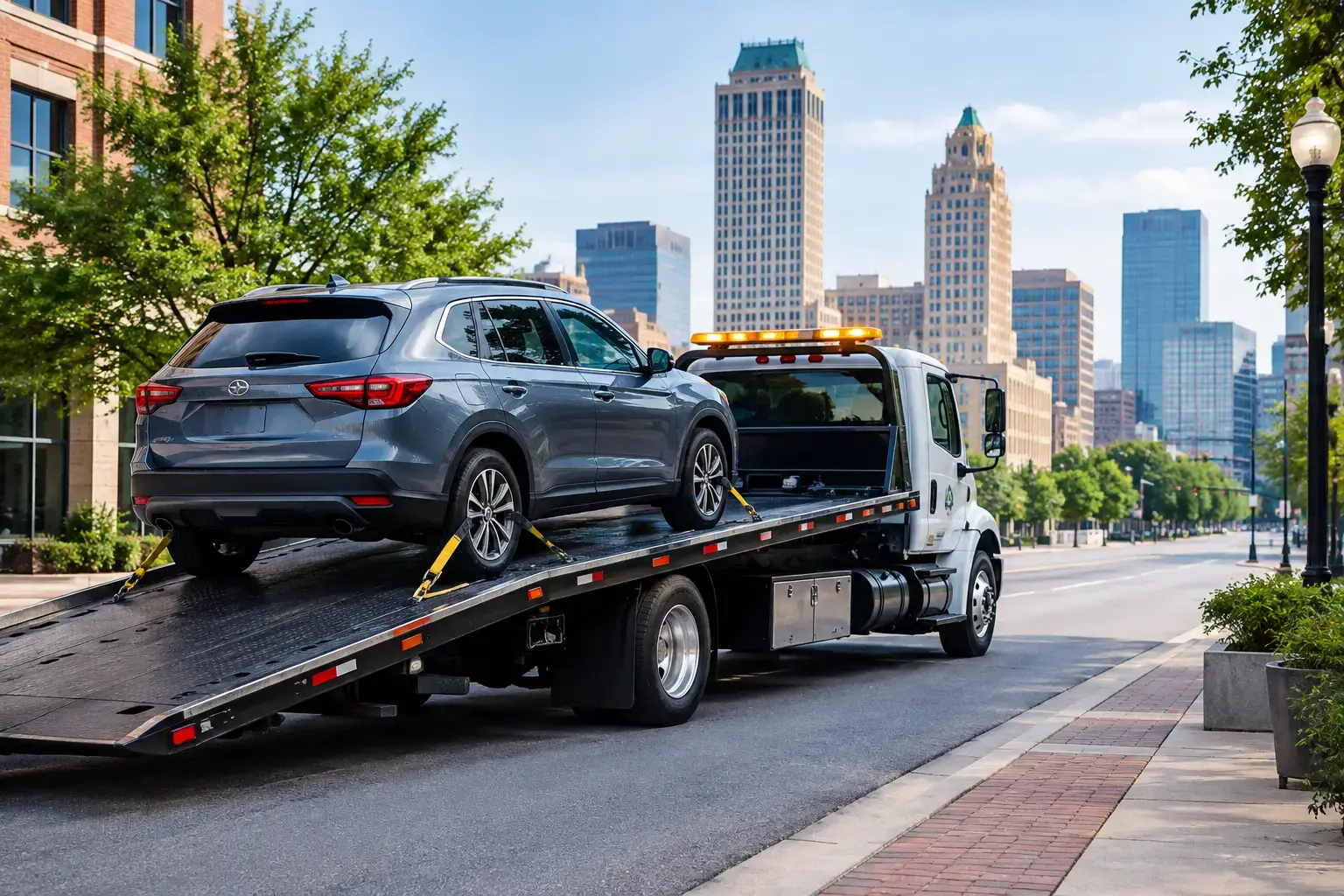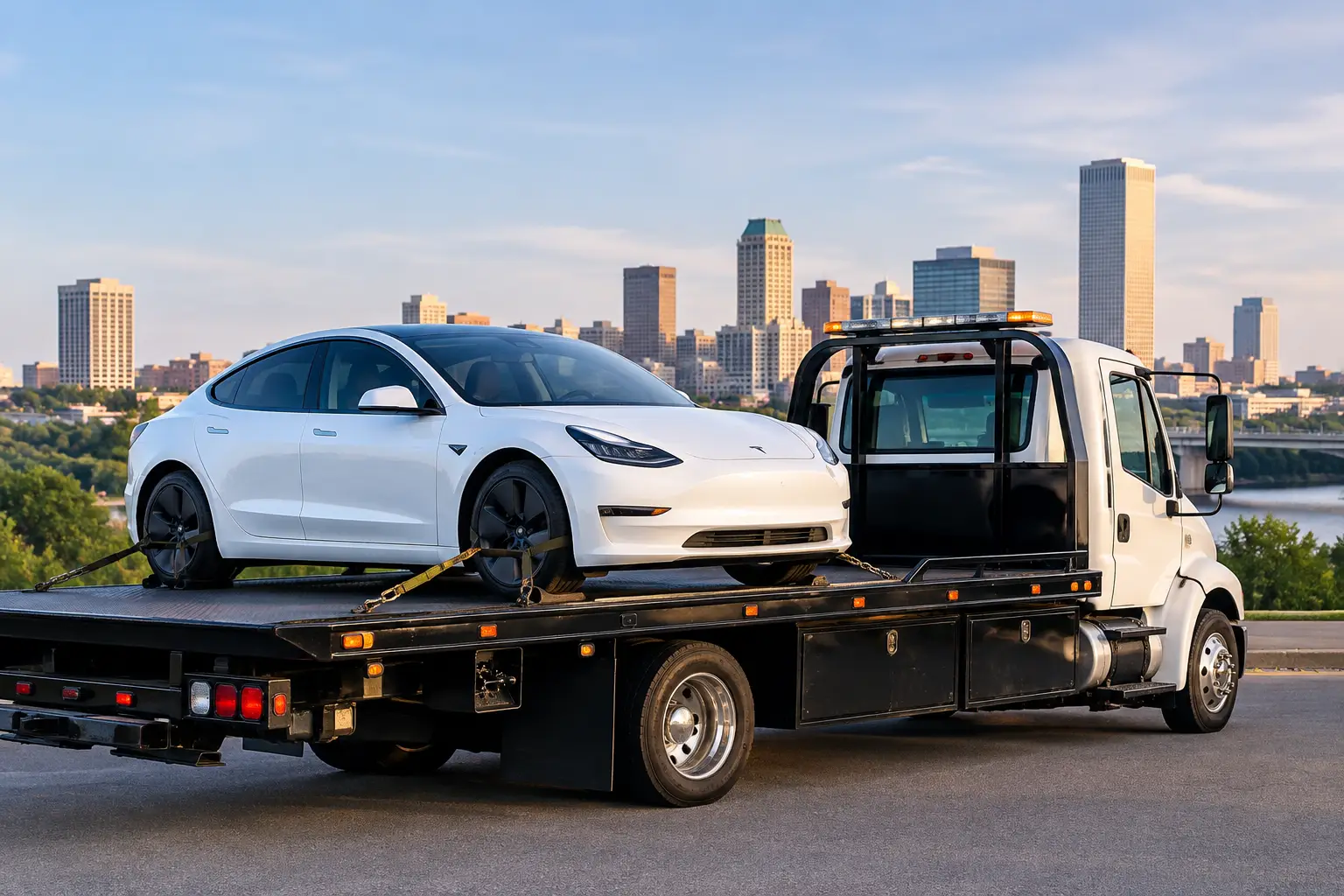
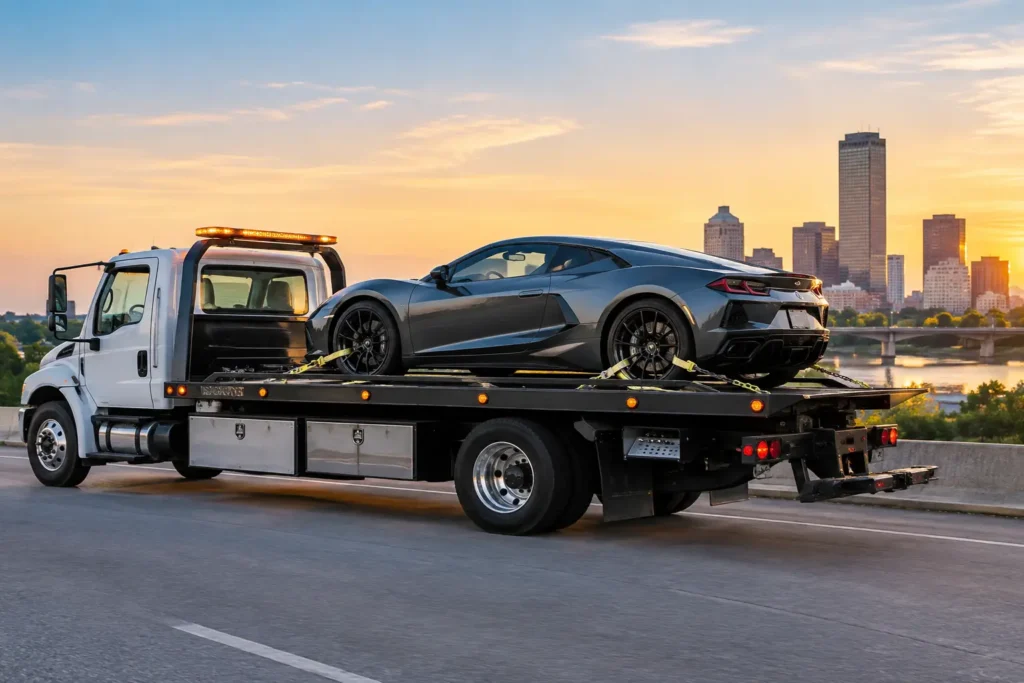
A car can be running perfectly and still be unsafe to tow the wrong way. Vehicles needing low-clearance transport can scrape a bumper, splitter, battery tray, exhaust, or undercarriage before they are even fully on the truck. That is why the loading method matters as much as the tow itself.
For drivers stuck in Tulsa, the concern is usually immediate: the vehicle will not start, has a flat tire, was in an accident, or cannot safely be driven another mile. If it sits low to the ground, the right answer is typically a properly loaded flatbed, not a rushed hookup and a guess.
What Makes a Vehicle Low Clearance?
Low clearance means there is limited space between the lowest part of the vehicle and the pavement. It is not limited to modified sports cars. A factory sedan with a damaged tire, broken suspension, or a low-hanging bumper may need the same careful handling as a lowered vehicle.
Common examples include sports cars, performance sedans, lowered trucks, modified imports, classic cars, and vehicles with aftermarket body kits. Electric vehicles can also require extra attention. Their battery packs are mounted under the floor, so avoiding contact underneath the vehicle is a basic part of safe transport.
A car does not need to look exotic to have a clearance problem. A front bumper that was pushed down in a minor collision, an air suspension that has dropped, or a wheel that is sitting at an odd angle can change how the vehicle needs to be loaded. This is especially common after an accident on I-44, US 75, or a busy street where the driver has had to pull onto an uneven shoulder.
Why Low-Clearance Transport Requires a Flatbed
A flatbed lets the vehicle ride completely off the ground. All four wheels are supported on the deck, which avoids adding miles, stress, and possible damage to the drivetrain. For low vehicles, it also gives the operator more control during the loading process.
The difficult part is the transition from pavement to the bed. A standard loading angle can be too steep for a low front end. If a bumper or splitter contacts the bed, forcing the vehicle forward is not the solution. The angle needs to be managed with the proper equipment and loading technique so the vehicle can come aboard without dragging.
This is where experience shows. The operator needs to look at the vehicle’s height, damage, wheel position, parking location, and approach angle before starting. A car in a flat Midtown parking lot is different from a disabled vehicle on a sloped driveway in South Tulsa or a tight garage near Downtown.
A flatbed is also the safer choice when a vehicle cannot be driven onto it. A winch can pull a disabled vehicle carefully into position, but it must be connected to appropriate recovery points and operated slowly. Pulling from a suspension component, bumper cover, or another unsuitable point can create a second problem during an already stressful situation.
The Risk of Rushed Loading
Most damage during a tow does not happen on the road. It happens when the vehicle is being picked up or unloaded. Low front bumpers, side skirts, oil pans, underbody shields, and exhaust components are all vulnerable when clearance is limited.
A driver may assume that a vehicle only needs a short tow to a nearby repair shop, so the equipment choice does not matter. It does. A short move across Tulsa can still involve driveway entrances, uneven pavement, speed bumps, and turns. Damage-free handling starts at pickup and continues until the vehicle is placed where it needs to go.
Situations That Change the Towing Plan
Low clearance is only one part of the decision. The condition of the vehicle and where it is sitting will determine the safest approach.
Lowered or Modified Cars
Aftermarket suspension, wheels, front lips, and body kits often reduce the margin for error. Even a small change in ride height can make a normal loading angle unsafe. The operator may need additional ramp support or a different position for the flatbed to keep the car from scraping.
Modified cars also may have nonstandard tow hooks, low side skirts, or fragile aero parts. Clear communication helps here. If there is a specific tow point, special starting procedure, or part of the vehicle to avoid, tell the tow operator before loading begins.
Electric Vehicles
Electric vehicles, including Tesla models, need flatbed transport when they cannot be driven normally. Their low-mounted battery systems and vehicle-specific towing requirements mean the truck should not simply be pulled or dragged into place.
If an EV has lost power, has a damaged wheel, or is not moving after an accident, the operator needs to account for its weight and whether the wheels can roll. The goal is to get it onto the flatbed without dragging the underside or placing unnecessary strain on the vehicle.
Accident-Damaged Vehicles
A damaged vehicle may have less clearance than it did before the crash. A loose bumper, flattened tire, bent suspension, or leaking fluid can affect how it is loaded. Some cars cannot roll straight, and some should not be driven even a few feet.
In these cases, the tow is not about speed alone. It is about stabilizing the situation and getting the vehicle to a repair shop, dealership, or other requested destination without making the damage worse. If the vehicle is on a high-traffic road, safety around the scene comes first.
Vehicles Stuck in Garages or Tight Spaces
Parking garages, apartment lots, and narrow driveways create a different challenge. Clearance overhead may limit which truck can access the vehicle, while ramps and tight turns can make loading more complicated.
Drivers around Tulsa Hills, Downtown, and busy retail areas may find their vehicle disabled in places where a straight approach is not available. Giving the dispatcher the exact location, level of a garage, height restriction, and vehicle condition helps send the right setup from the start.
What to Tell the Tow Operator Before They Arrive
A few clear details can prevent delays and help protect the vehicle. Explain whether the car is lowered, whether it has a front lip or body kit, and whether it can roll and steer. Mention flat tires, suspension damage, locked wheels, accident damage, or any fluid leaks.
It also helps to describe the location honestly. Say if the vehicle is on a steep driveway, a narrow residential street, a garage level, a grassy shoulder, or beside traffic. A car stopped near Memorial Drive needs a different pickup plan than one parked safely in a Broken Arrow apartment complex.
If you have the key, keep it available. If the vehicle has a special procedure for neutral, parking brake release, or tow mode, let the operator know. The owner’s manual or the vehicle screen may provide the information needed, but sharing it early saves time.
What Drivers Should Do While Waiting
Do not try to force a low vehicle over a curb, steep entrance, or deep pothole to make it easier for the truck. A few minutes saved can turn into bumper or underbody damage. If the car is safely out of traffic, leave it where it is and wait for the correct loading approach.
If you are on a highway shoulder or near fast traffic, move yourself and passengers to a safe location when possible. Turn on hazard lights, stay aware of passing vehicles, and avoid standing between the car and traffic. Do not remain inside a disabled vehicle if the location is unsafe.
Take a quick photo of the vehicle if there is existing accident damage or a low-hanging part. This is not about making the tow complicated. It gives everyone a clear starting point and helps you point out concerns before loading begins.
Careful Transport Is Worth the Extra Attention
A vehicle with limited ground clearance is not difficult to move when the right equipment and method are used. The problem starts when someone treats it like every other pickup. A flatbed, a controlled loading angle, and a careful inspection before the winch starts can protect the parts closest to the pavement.
Tulsa Towing handles low-clearance cars, damaged vehicles, trucks, and EVs with the same practical goal: get the vehicle where it needs to go without adding damage or confusion. When you call for help, describe the clearance issue and the location clearly. That gives the tow operator the information needed to make the pickup safe from the first move.