A stalled vehicle on I-44, a dead battery in a South Tulsa parking lot, or a flat tire near Downtown Tulsa can make every minute feel longer than it is. Towing arrival times depend on where the truck is when you call, the type of help needed, traffic conditions, and whether the driver can safely reach your vehicle. A clear answer matters more than a vague promise when you are sitting roadside.
For most local calls, the goal is simple: dispatch the right truck, get to the vehicle safely, and either solve the problem on site or transport the vehicle without adding damage or confusion. The more accurate information you provide at the start, the easier it is to give you a realistic arrival window.
What affects towing arrival times?
The biggest factor is truck location at the moment of dispatch. A tow truck finishing a job in Midtown may be close to a disabled car near Riverside Drive, while a call in East Tulsa or near Highway 169 may require more drive time. Local coverage helps because the driver already knows the main routes, common traffic backups, and safer ways to approach busy areas.
Traffic is another real factor. US 75, I-44, Memorial Drive, and the Tulsa Hills area can slow down quickly during rush hour, after an accident, or when road work narrows lanes. A truck may be only a few miles away but still need extra time to move safely through congestion. In bad weather, the driver also has to allow more room for braking, loading, and working around traffic.
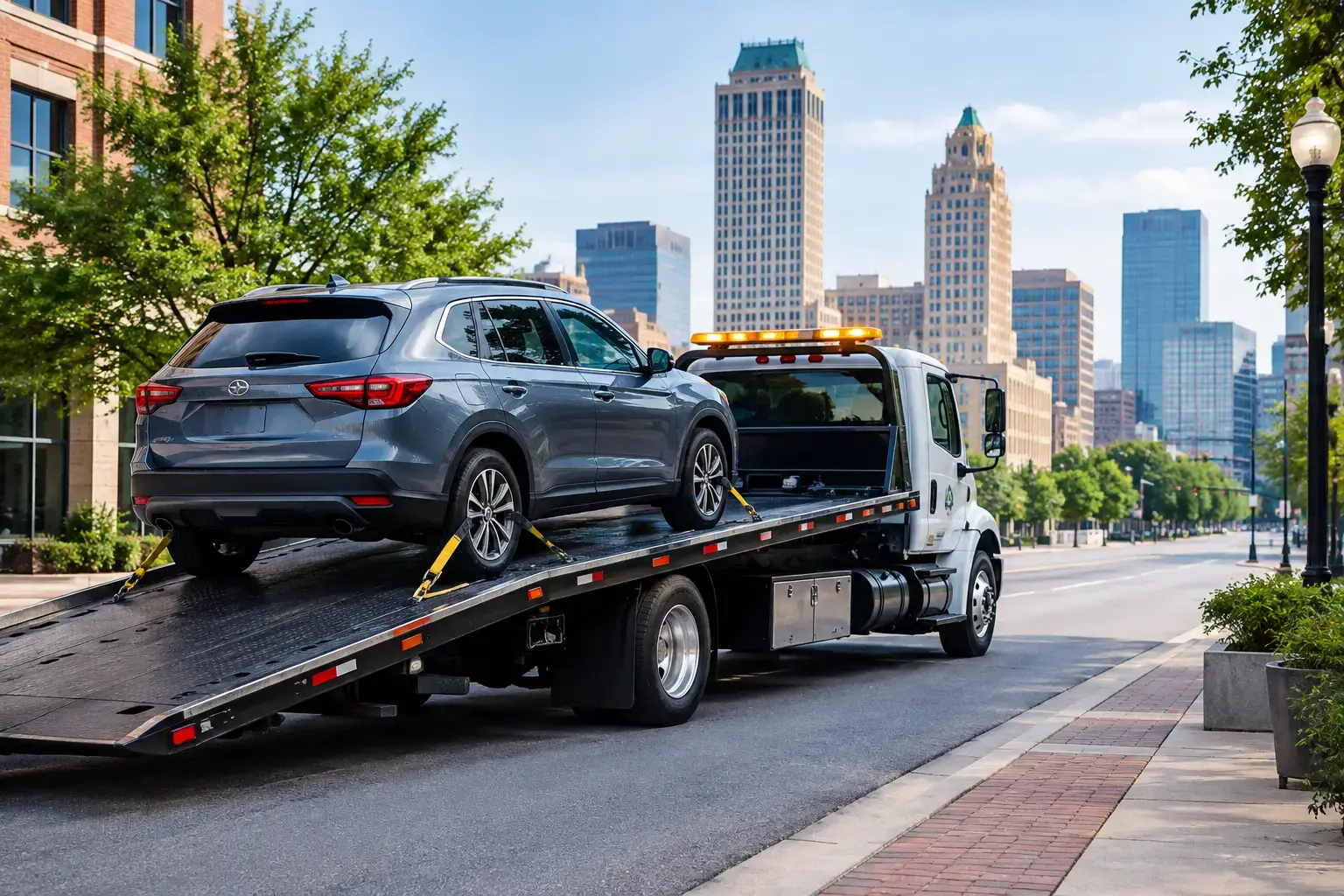
The type of service requested changes the dispatch process as well. A straightforward jumpstart in a safe parking lot may only need roadside equipment. A low-clearance car, heavy-duty pickup, accident-damaged vehicle, or electric vehicle may require a flatbed and a driver prepared to load it correctly. Sending the right equipment first is usually faster than sending a truck that cannot safely complete the job.
Access to the vehicle matters more than many drivers realize. A car parked at a tight apartment complex, inside a garage, behind a locked gate, or on the shoulder of a high-speed roadway can take longer to reach and load. That does not mean the call is being ignored. It means the driver is planning the safest way to get the truck in, protect the vehicle, and get back out.
A realistic wait is better than a made-up promise
No towing company can honestly promise the same arrival time for every call. A quiet weekday morning in a residential part of Bixby is different from a multi-vehicle crash near Downtown Tulsa during evening traffic. The right answer is based on the actual truck location, current job status, road conditions, and the details of your vehicle situation.
Clear communication makes the wait easier to manage. When a truck is dispatched, you should know the estimated arrival range and receive an update if traffic, a difficult load, or an emergency road condition changes that estimate. A good estimate is not about sounding fast. It is about giving you enough information to make safe decisions while help is on the way.
Tulsa Towing is powered by Neptune Towing and uses a city-focused service model for that reason. Keeping service concentrated in Tulsa and nearby areas such as Jenks, Broken Arrow, Bixby, and Glenpool helps reduce unnecessary travel and keeps dispatch practical. Availability still matters, but local route knowledge makes a difference when time is tight.
How to help the tow truck find you faster
When you call for a tow truck, start with your exact location. “I am on I-44” is helpful, but “I am eastbound on I-44 near the Riverside exit, on the right shoulder” is much better. If you are in a parking lot, give the business name, the closest entrance, and any landmark that will help the driver spot you quickly.
Be specific about the vehicle. Share the year, make, model, color, and whether it is a car, truck, SUV, EV, or a vehicle with low ground clearance. Let the dispatcher know if the wheels are locked, the vehicle is in a garage, it was in an accident, or it is stuck in mud or on a curb. Details like these help determine whether roadside help, a standard tow, a flatbed, or a winch-out is needed.
Keep your phone nearby after the call. Drivers may need to confirm your location, ask which direction you are facing, or let you know they are close. If you move to a safer place nearby, tell the dispatcher. A tow truck arriving at an empty shoulder or the wrong side of a large shopping center loses time that could have been avoided.
What to do while you wait for roadside help
Your first priority is safety, not watching the clock. If your vehicle is disabled in a travel lane or on a narrow shoulder, turn on your hazard lights and move as far from traffic as the vehicle will allow. If it is safe to exit, stand well away from moving vehicles and avoid waiting directly in front of or behind your car.
On highways such as I-44, US 75, or Highway 169, do not try to inspect the vehicle near traffic unless there is a clear, safe area. A flat tire or dead battery is frustrating, but a roadside shoulder can become dangerous fast, especially after dark or in rain. Stay visible, keep children and passengers away from traffic, and follow instructions from emergency personnel if they arrive.
If the problem is a lockout, do not force a window or use makeshift tools that can damage the door, weather stripping, or electronics. If the vehicle will not start, repeated attempts can drain the battery further. It is usually better to wait for a proper jumpstart or tow than turn a simple roadside issue into a larger repair.
Why the right truck matters more than a rushed truck
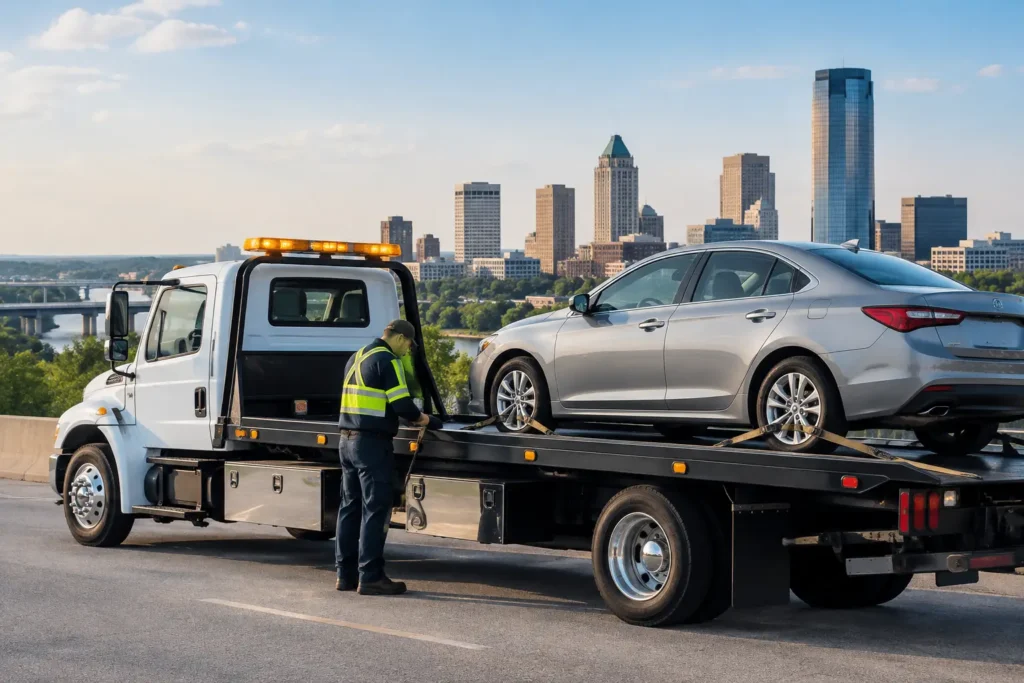
Fast dispatch is valuable, but careful loading is what protects the vehicle once the truck arrives. Flatbed towing is often the right choice for all-wheel-drive vehicles, electric vehicles, low-clearance cars, accident-damaged vehicles, and cars that cannot be driven or rolled normally. It keeps all four wheels off the ground and gives the operator more control during loading and transport.
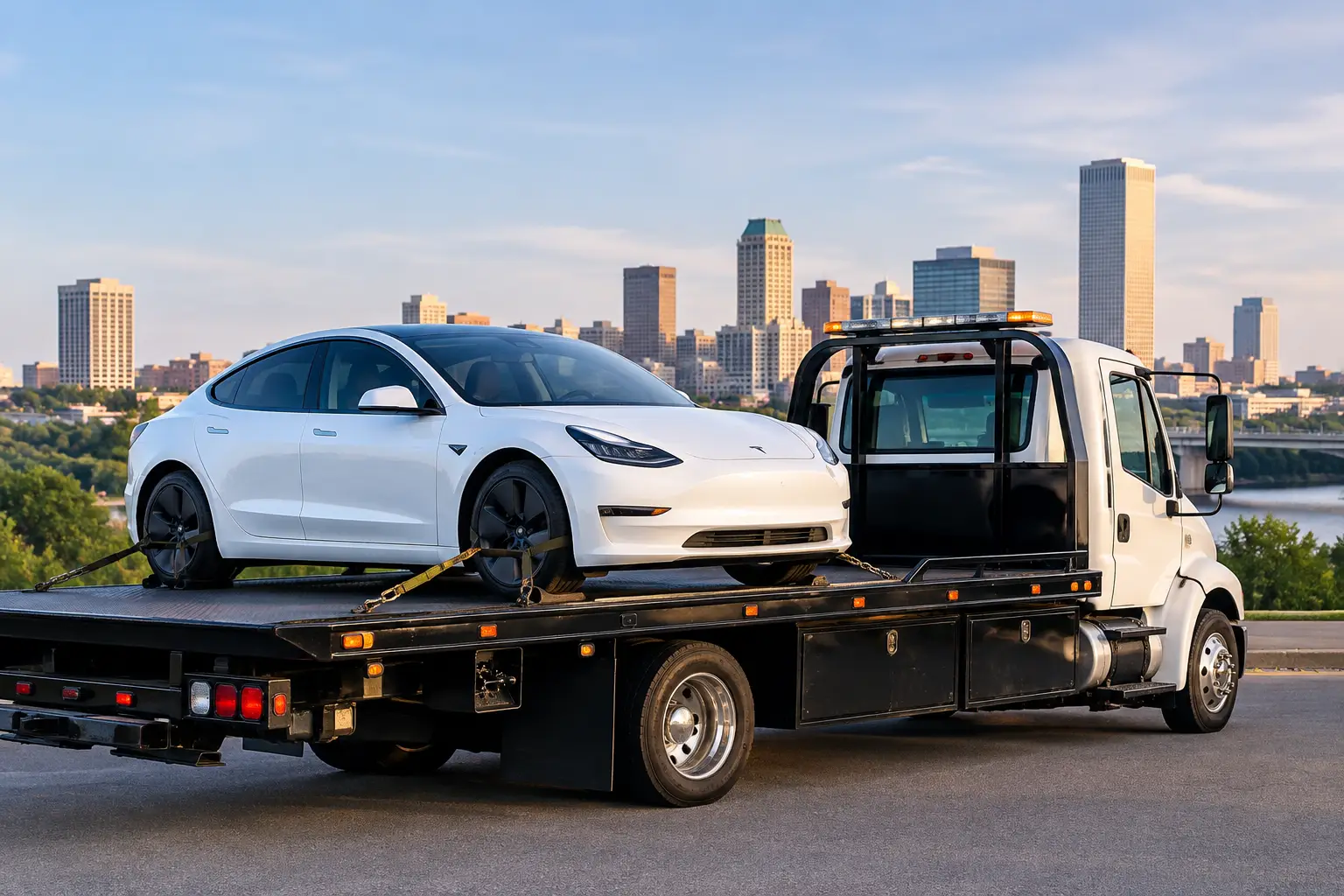
A Tesla or other EV needs particular attention. Improper towing can damage the vehicle’s drive system, underbody, or battery area. The operator needs to understand safe loading points, clearance, and how to secure the vehicle without taking shortcuts. The same applies to heavy pickups, lowered cars, and vehicles with broken suspension components.
Sometimes the quickest-looking option is not the safest one. A driver may need to reposition the truck, use the correct loading equipment, or take a few additional minutes to avoid scraping a bumper or putting stress on a damaged wheel. That is time spent preventing a second problem.
When an arrival may take longer than expected
Most delays come from conditions outside the driver’s control. An earlier call may involve a vehicle that is blocked in, a difficult recovery, or an unsafe roadside loading situation. Severe storms, high call volume after ice or heavy rain, lane closures, and major accidents can affect the entire city at once.
There are also times when a nearby truck is not the right truck. If your vehicle requires a flatbed and the closest available operator is handling a different job, waiting briefly for properly equipped service can be the safer choice. This is especially true for EVs, vehicles with wheel or suspension damage, and cars in locations where a careless approach could create more damage.
The useful question is not only, “How soon can a truck get here?” It is also, “Will the truck that arrives be able to handle my vehicle correctly?” Both matter when your car is already having a bad day.
If you need help in Tulsa, give the dispatcher a clear location, accurate vehicle details, and a safe callback number. Then focus on getting yourself out of danger while the truck makes its way to you. A calm, accurate update and proper vehicle handling are worth far more than a rushed answer that does not hold up once the job begins.