A collision on I-44, Memorial, US 75, or a neighborhood street can turn a normal drive into a rushed series of decisions. This guide to towing after collision helps you slow that process down enough to protect yourself, your passengers, and your vehicle. The first goal is not getting the car moved quickly at any cost. It is getting everyone safe, documenting the situation, and arranging transport that does not add more damage.
Start With Safety Before Calling for a Tow
Check yourself and your passengers for injuries first. If anyone may be hurt, call 911 and follow the dispatcher’s instructions. Even a low-speed impact can cause an injury that is not obvious in the first few minutes.
If the vehicle is creating a danger and can be moved safely, pull it out of traffic. That may mean getting to a shoulder, a nearby parking lot, or the side of a residential street. Turn on your hazard lights. At night, in rain, or around fast-moving traffic, stay aware of approaching vehicles and avoid standing between cars.
Do not try to move a vehicle that has leaking fluid, smoke, a damaged wheel, airbags deployed, steering problems, or a bent suspension. A car may still start after an impact, but that does not mean it is safe to drive. Moving it under its own power can turn repairable collision damage into a larger mechanical problem.
On busy Tulsa roads, the safest place for occupants may be away from the vehicle and outside the path of traffic, if conditions allow. Follow directions from police, fire personnel, or roadside responders at the scene. They can see hazards that are easy to miss when you are focused on the damage to your car.
Document the Scene Before the Vehicle Leaves
Once everyone is safe, take clear photos and video if you can do so without putting yourself in danger. Get wide shots that show the vehicles’ positions, nearby intersections, traffic signals, skid marks, debris, and lane markings. Then take closer photos of damage on every side of your vehicle.
Write down or save the other driver’s name, contact information, insurance details, license plate, and vehicle description. If police respond, ask how to obtain the report number. Keep records from the beginning, including the time of the collision, where it happened, and the name of the towing company that moved your vehicle.
This is not just for an insurance claim. Photos taken before loading provide a useful record of pre-existing collision damage. They also help a repair shop understand what happened before it begins an estimate.
If you are too shaken up to document everything, handle the basics and focus on safety. A towing operator can wait while you finish a reasonable amount of documentation, but no photo is worth remaining in an unsafe traffic lane.
Decide Whether the Vehicle Needs a Tow
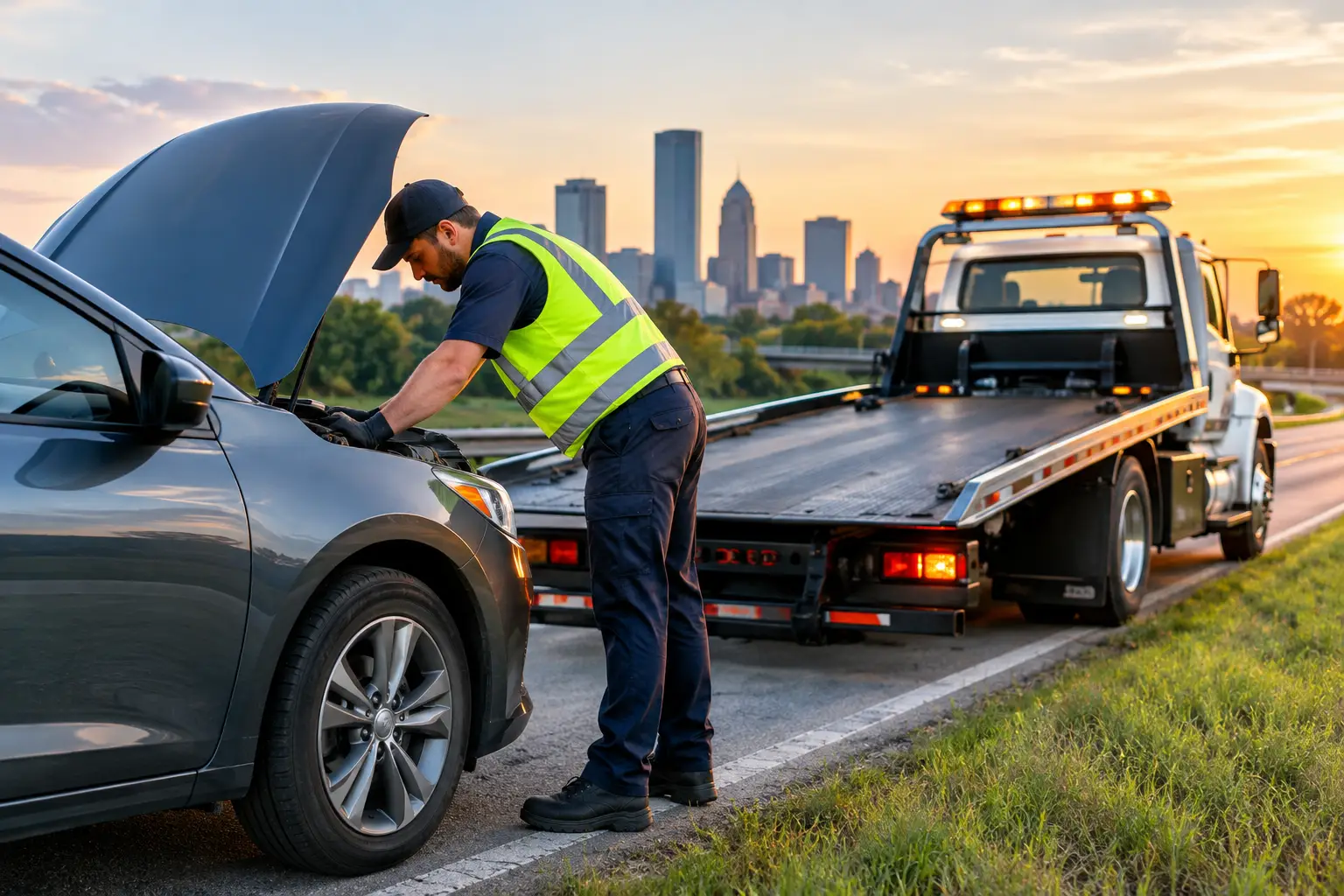
After a collision, assume the vehicle needs professional inspection when there is visible damage or any change in how it drives. Common reasons to tow include a flat or damaged tire, a wheel sitting at an unusual angle, rubbing noises, broken lights, fluid leaks, steering that feels off, a hood that will not latch, or body panels dragging near the tires.
There are also issues you may not see from the outside. A hard hit can damage suspension components, cooling parts, sensors, battery connections, or the underbody. Modern vehicles use cameras, radar, and electronic systems that may need recalibration after repair. Trying to limp the vehicle to a shop can be risky when the condition is uncertain.
Electric vehicles need extra caution. Damage near the battery pack, undercarriage, or charging system should be assessed carefully. Do not attempt to drive an EV with warning messages, unusual heat, smoke, fluid leakage, or severe underside damage. Tell the towing company that the vehicle is electric before dispatch so the right loading approach can be planned.
A Guide to Towing After Collision: Choose the Right Transport
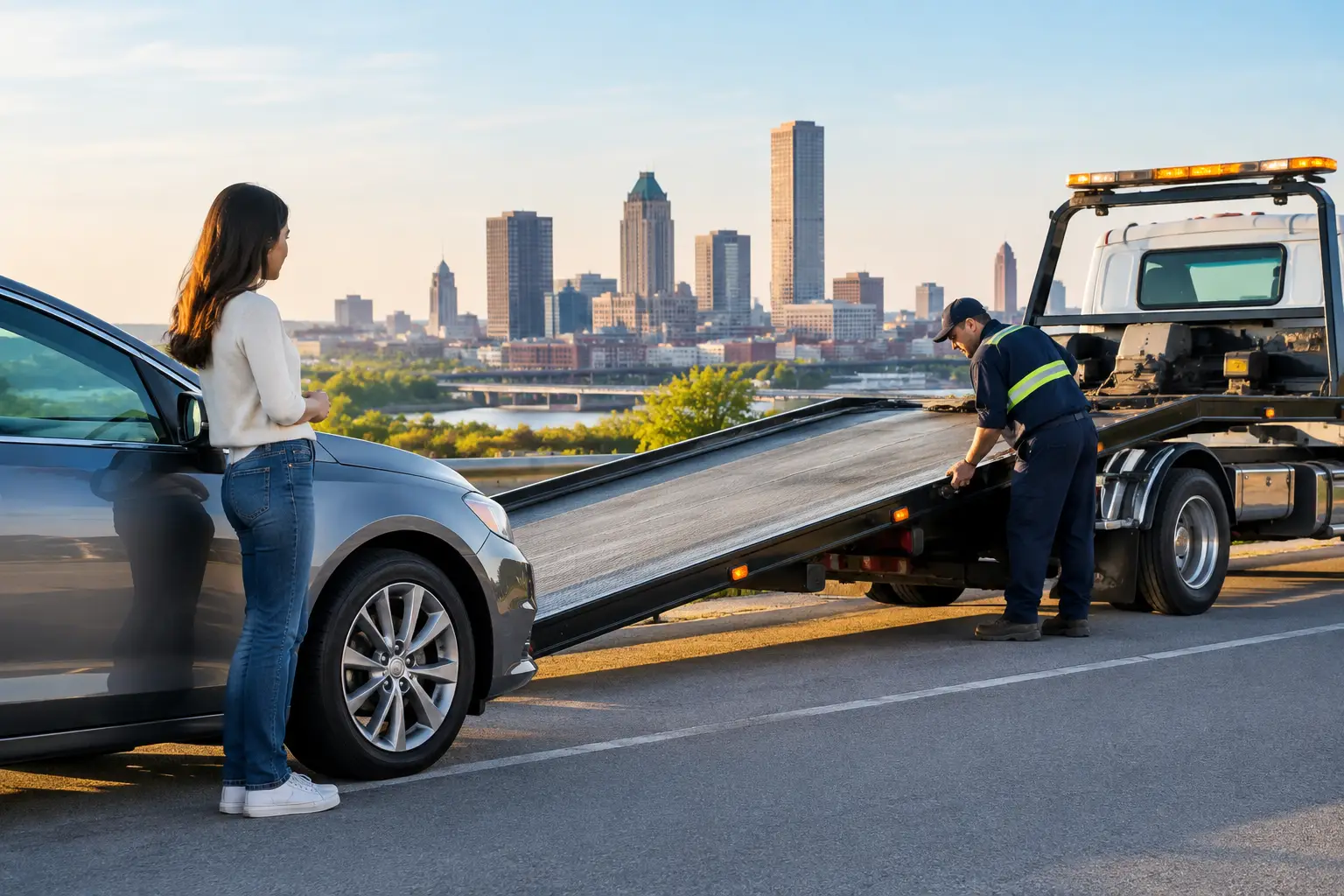
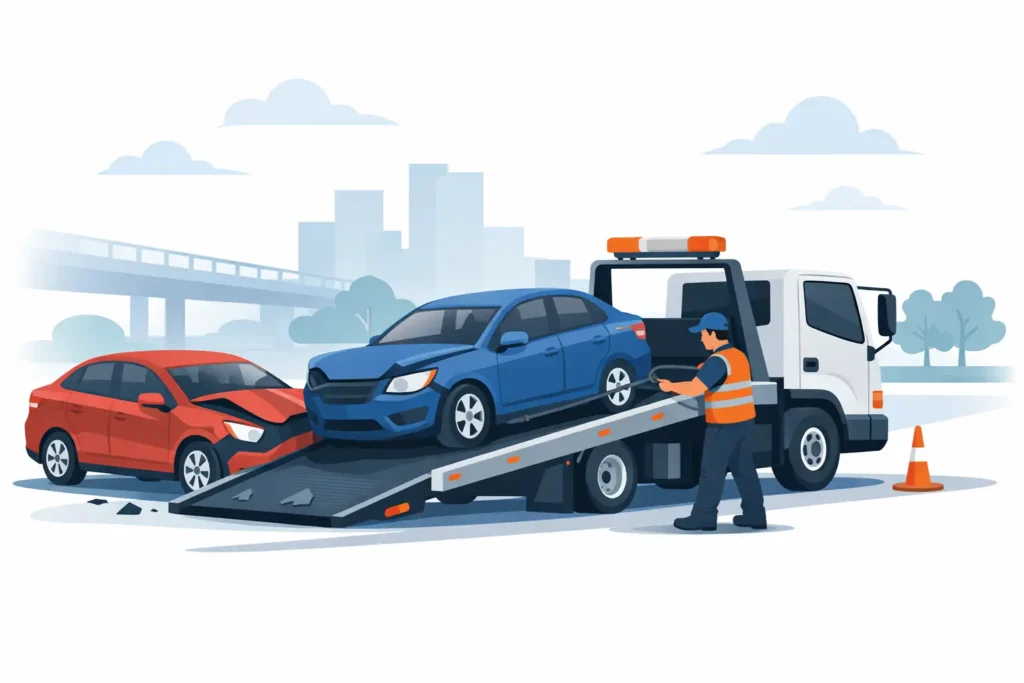
A flatbed is often the safest choice for a collision-damaged vehicle. With the vehicle fully supported on the bed, the wheels do not need to roll during transport. That matters when a tire, axle, steering component, drivetrain, or suspension part may be damaged.
The operator should inspect the vehicle before loading and choose secure attachment points. Careful loading is especially important for low-clearance cars, all-wheel-drive vehicles, trucks with collision damage, and EVs. A rushed hookup or improper angle can scrape a bumper, damage a wheel, or place strain on parts that were already compromised.
Be direct when you call. Share the vehicle’s year, make, model, location, and the visible damage. Mention if it will not roll, has a flat tire, is blocked in a parking garage, has a damaged wheel, or is an electric vehicle. Those details help the driver arrive prepared instead of finding out at the scene that a different setup is needed.
You should also state where you want the vehicle delivered. In most cases, that is your preferred collision repair shop, dealership, home, or another location approved by your insurer. Confirm that the destination can receive the vehicle, especially if the collision happens late in the day or on a weekend.
Know Who Is Authorizing the Tow
After an accident, several people may be talking at once: police officers, other drivers, insurance representatives, roadside responders, and tow operators. Take a moment to understand who is requesting the tow and where your vehicle is going.
If law enforcement directs you to move the vehicle from an unsafe location, follow those instructions. If you have a choice of towing provider and destination, make it clear before loading begins. Ask for the company name, the destination address, and an estimate of what service is being performed.
Avoid signing paperwork you do not understand while standing in traffic. It is reasonable to ask what you are authorizing. A straightforward towing service should be able to explain the destination, the condition of the vehicle at pickup, and what happens next in plain language.
Keep the keys with the vehicle if the repair facility needs them, unless the towing operator or shop gives you a different instruction. Remove valuables, medication, garage remotes, documents, work equipment, and personal items before the tow when possible. Check the glove box, center console, trunk, and back seat. Once the car is at a repair shop, retrieving items may be less convenient.
Tell Your Insurance Company What Happened
Report the collision to your insurance carrier as soon as you can. Give them the facts, the police report number if available, the tow destination, and photos of the scene. Your insurer may recommend repair facilities, explain rental coverage, or tell you what documentation they need for towing reimbursement.
You do not have to decide every repair detail from the roadside. The immediate job is getting the vehicle safely out of harm’s way. If you are unsure whether to send it to a body shop, dealership, or home, ask the insurer what makes sense for your coverage and the vehicle’s condition.
Keep the towing receipt, photos, and any written authorization together. A simple folder in your phone or email can save time later when an adjuster asks for details.
What Not to Do After a Collision
Do not keep driving because the damage “doesn’t look that bad.” A damaged bumper can hide a broken radiator support, a shifted wheel, or a loose underbody panel. Do not let a friend pull the car with a strap, either. That can create another collision, worsen drivetrain damage, or put people at risk on a busy road.
Do not stand close to traffic while inspecting every inch of the vehicle. Do not open a hot hood if smoke or steam is coming from the engine area. And do not enter a smoke-filled or unstable vehicle to retrieve belongings. Personal property can be replaced. People cannot.
If your vehicle is stuck off the road, in a ditch, against a curb, or in soft ground after the impact, tell the tow operator before arrival. A winch-out may be needed before the vehicle can be safely loaded. Trying to force it free can damage the bumper, suspension, or underside.
A Safer Next Step for Tulsa Drivers
The right tow after a collision is not just a ride from point A to point B. It is careful handling at a moment when the vehicle may have damage you cannot fully see. For drivers in Tulsa, Jenks, Bixby, and Broken Arrow, a local operator who understands traffic patterns, tight access points, and proper flatbed loading can make the next step easier.
Tulsa Towing, powered by Neptune Towing, focuses on clear communication and damage-free transport to the repair shop, dealership, or other destination you choose. When the scene is under control, take one more look at the destination address and your personal belongings, then let the vehicle be moved the right way.