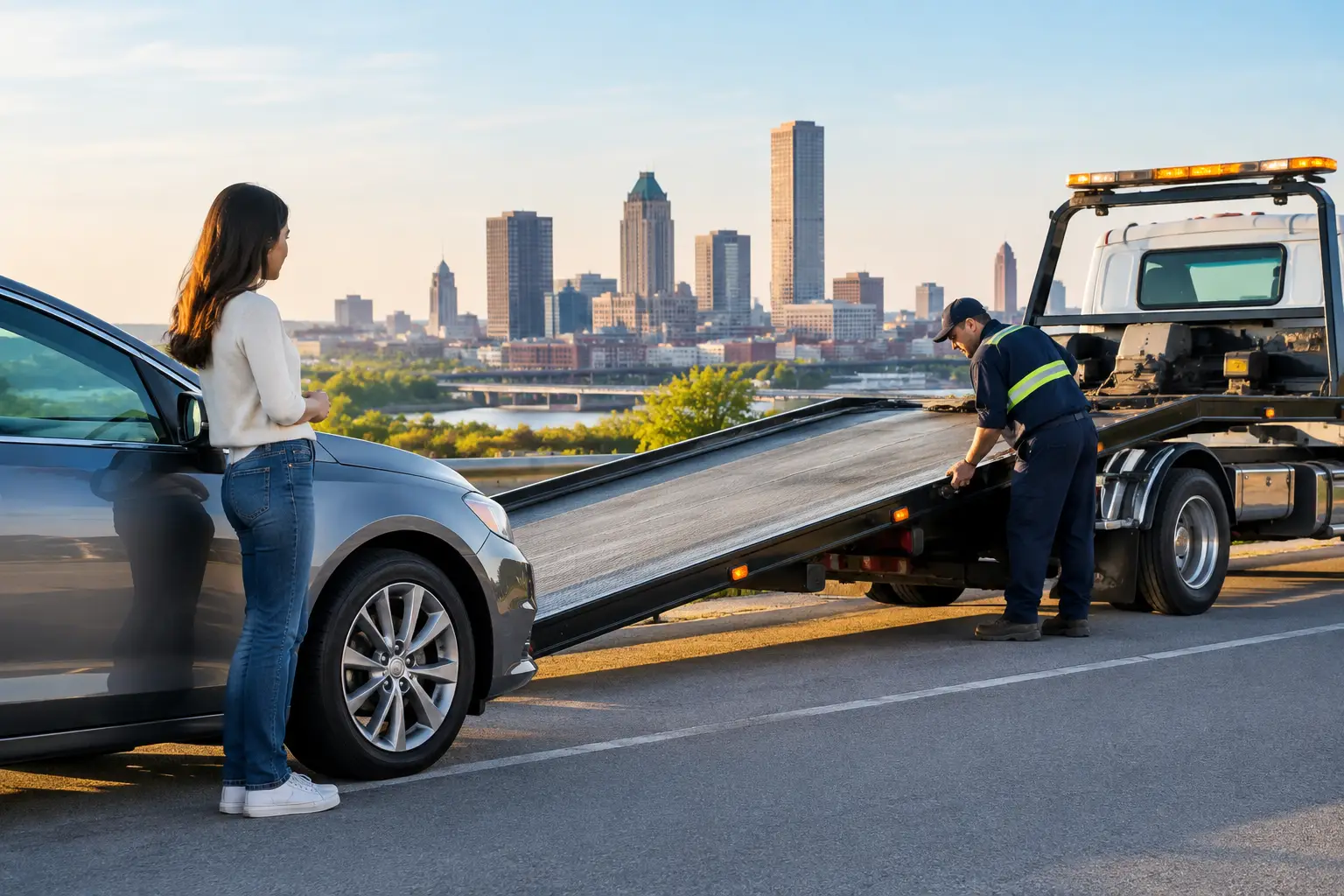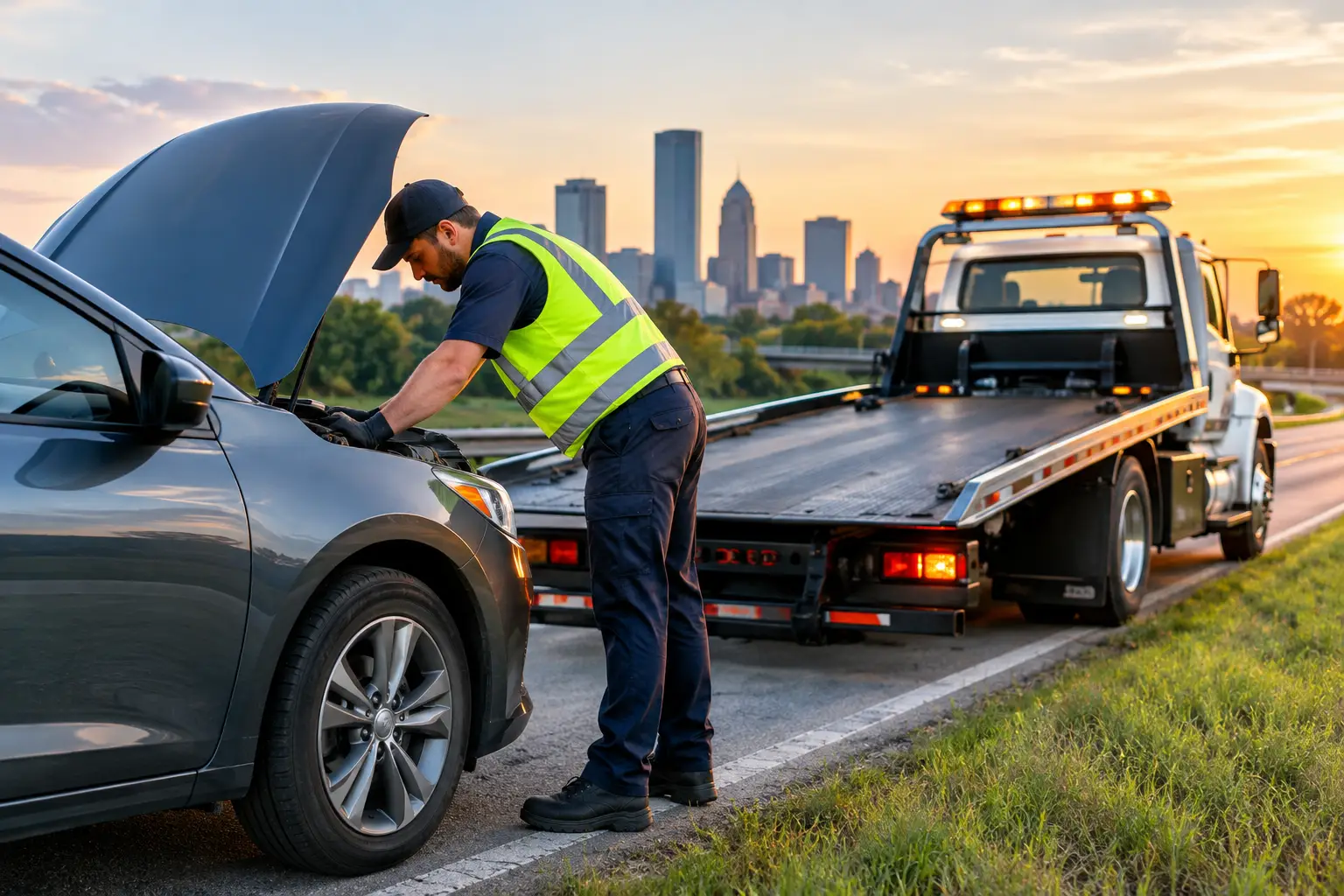
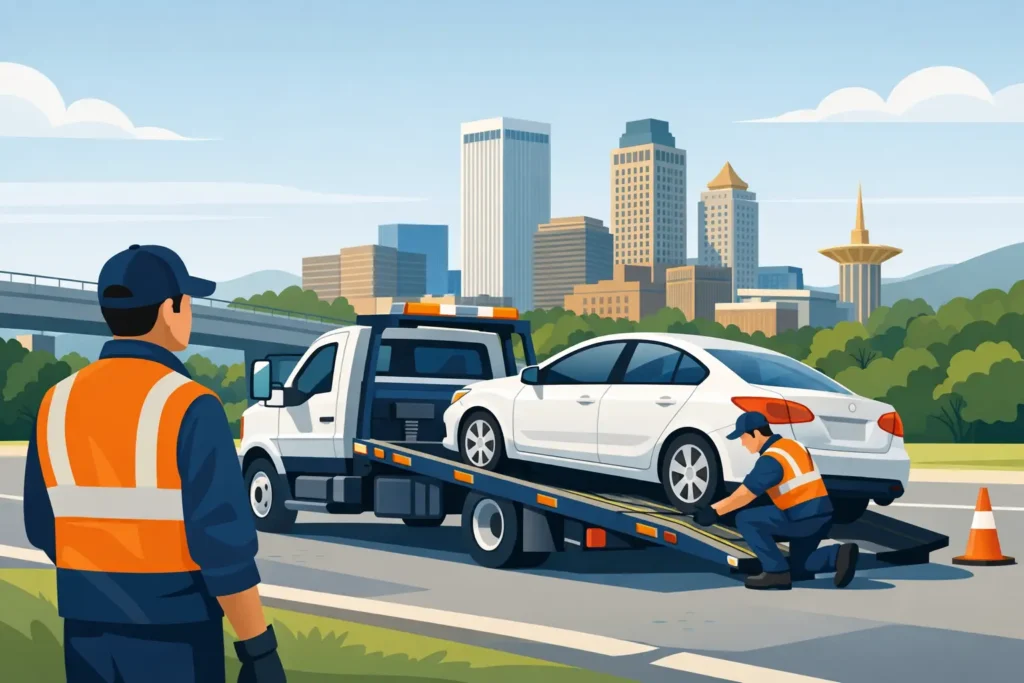
A vehicle problem rarely gives you a good place to stop. You may be on the shoulder of I-44, stuck in a Tulsa Hills parking lot after work, or sitting in your own driveway with a car that will not start. When you search tow truck near me, the goal is simple: get safe, get clear answers, and get your vehicle handled without making a bad situation worse.
The right next step depends on what happened and where you are. A flat tire may be handled on site. A dead battery may only need a jumpstart. But a vehicle that is damaged, overheating, stuck, unsafe to drive, or unable to move needs the right truck and someone who knows how to load it properly.
Start With Safety Before You Request a Tow Truck Near Me
If your vehicle is on a busy road, move it out of traffic only if it can be done safely. Turn on your hazard lights, stay aware of passing vehicles, and avoid standing between your vehicle and traffic. On high-speed roads such as US 75, Highway 169, or I-44, getting yourself to a safe location matters more than trying to diagnose the problem.
If the car cannot move, do not keep attempting to start it, force it into gear, or try to push it from an unsafe spot. A damaged tire, overheated engine, collision damage, or electrical issue can become more serious when the vehicle is moved the wrong way.
Once you are safe, take a moment to identify your location as clearly as possible. An address is helpful, but landmarks, cross streets, business names, highway direction, and the nearest exit are often just as useful. “Southbound US 75 near the 61st Street exit” gives a local tow operator a much clearer starting point than “somewhere on the highway.”
Know Whether You Need Roadside Help or a Flatbed Tow
Not every call requires a tow. The fastest practical solution may be roadside assistance if the issue can safely be fixed where the vehicle sits. This is common with a dead battery, a locked vehicle, or a flat tire when you have a usable spare.
A tow is usually the better call when the vehicle will not run reliably, has been in an accident, has a damaged wheel or suspension, is leaking fluids, or has a warning light that makes driving risky. It is also the right choice if you are simply not comfortable driving it farther. Getting a vehicle to a repair shop before a minor issue turns into a major repair is often the smarter move.
Flatbed towing is especially useful for low-clearance cars, all-wheel-drive vehicles, trucks, and electric vehicles. Instead of pulling the vehicle with two wheels on the ground, a flatbed brings the entire vehicle up onto the truck. That reduces the risk of drivetrain damage and keeps a damaged or non-running vehicle from being dragged into position.
There are situations where a standard tow setup may work, but that decision should come from the vehicle, its condition, and the pickup location. A careful operator will ask questions first instead of treating every tow like the same job.
Electric vehicles need proper handling
EVs, including Tesla vehicles, should not be treated like a typical disabled car. Many cannot be towed with drive wheels on the ground without risking damage. They may also have a low front end, limited access to tow points, or an electronic issue that prevents normal shifting.
When calling for help, say that the vehicle is electric and explain whether it can roll, shift into neutral, or power on. A flatbed and the correct loading approach are usually the safest choice. The same goes for lowered cars, vehicles with body damage, and cars parked in tight garages where clearance and angle matter.
What to Tell the Tow Operator
Clear information helps dispatch the right equipment and avoids wasted time at the scene. You do not need to know the mechanical diagnosis. Just explain what you can see and what the vehicle is doing.
Be ready to provide the vehicle year, make, model, and color; your exact location; the problem you are experiencing; whether the vehicle can roll and steer; and where you want it delivered. If it was in an accident, has a flat tire, is in a garage, or is stuck in mud, a ditch, or a parking barrier, say so upfront.
The destination matters too. You may need a local repair shop, dealership, tire shop, home address, or another safe location. If a shop is closed, it is worth confirming where the vehicle can be left and whether keys need to be placed in a drop box. That small detail can prevent a second problem after the tow is complete.
Good communication also means asking what to expect. You should know that a truck has been dispatched, get a realistic update if traffic or another active call affects arrival, and understand whether the problem appears suitable for roadside service or transport. Clear answers are more useful than vague promises.
Why Damage-Free Towing Is Not Just a Selling Point
A tow truck is not automatically safe just because it arrives. The condition of the vehicle, the loading angle, the tie-down points, and the operator’s judgment all affect the outcome.
A car with a broken suspension cannot be loaded the same way as a vehicle with a dead battery. A heavy-duty pickup needs different planning than a compact sedan. A vehicle that will not shift into neutral may need dollies, skates, or a different loading method. In a parking garage, the height of the truck and the available turning room can change the entire approach.
Careful towing starts with looking at the vehicle before connecting anything. That includes checking clearance, identifying existing damage, deciding how to position the truck, and using proper wheel restraints rather than rushing through the load. It may take a few extra minutes at the scene, but those minutes matter when they prevent scraped bumpers, damaged wheels, or drivetrain trouble.
Common Tulsa Situations That Call for Help
Tulsa drivers deal with a mix of highway travel, rough weather, busy surface streets, and long commutes between the city and nearby communities. A breakdown on Memorial during rush hour is different from a dead battery in a quiet Bixby neighborhood, but both require a clear plan.
A few situations are especially common. A vehicle may overheat after sitting in traffic during summer. Heavy rain can leave a car stuck off pavement or unable to gain traction. A tire failure on a highway shoulder can make changing it yourself unsafe. Winter cold can expose a weak battery before an early morning commute.
Then there are the less obvious calls: a car that starts but will not shift, a truck that will not move after a curb strike, or a low-clearance vehicle that needs transport from a downtown garage. These are not jobs to solve by guessing. The condition and location of the vehicle determine what safe recovery looks like.
Choose a Local Service That Focuses on the Job at Hand
When you need a tow, you want a company focused on getting your vehicle from the problem location to the destination you choose. That means a direct service process: dispatch the appropriate truck, assess the vehicle on arrival, handle roadside help if it is safe and practical, or load and transport it carefully.
A city-focused service also has value when time matters. Familiarity with Tulsa traffic patterns, highway access points, narrow apartment lots, busy retail areas, and local repair destinations helps keep the process moving. Coverage can extend to Jenks, Broken Arrow, Bixby, and Glenpool when availability allows, but a realistic response estimate is always better than an answer that sounds good but does not match the situation.
Tulsa Towing, powered by Neptune Towing, is built around that straightforward approach: proper flatbed equipment, clear communication, and careful transport for vehicles that need to get somewhere safely.
When the car is disabled, the best decision is usually the simple one. Get yourself out of harm’s way, share accurate details, and let an experienced tow operator determine the safest way to handle the vehicle. A careful tow now can save you from a much bigger repair later.