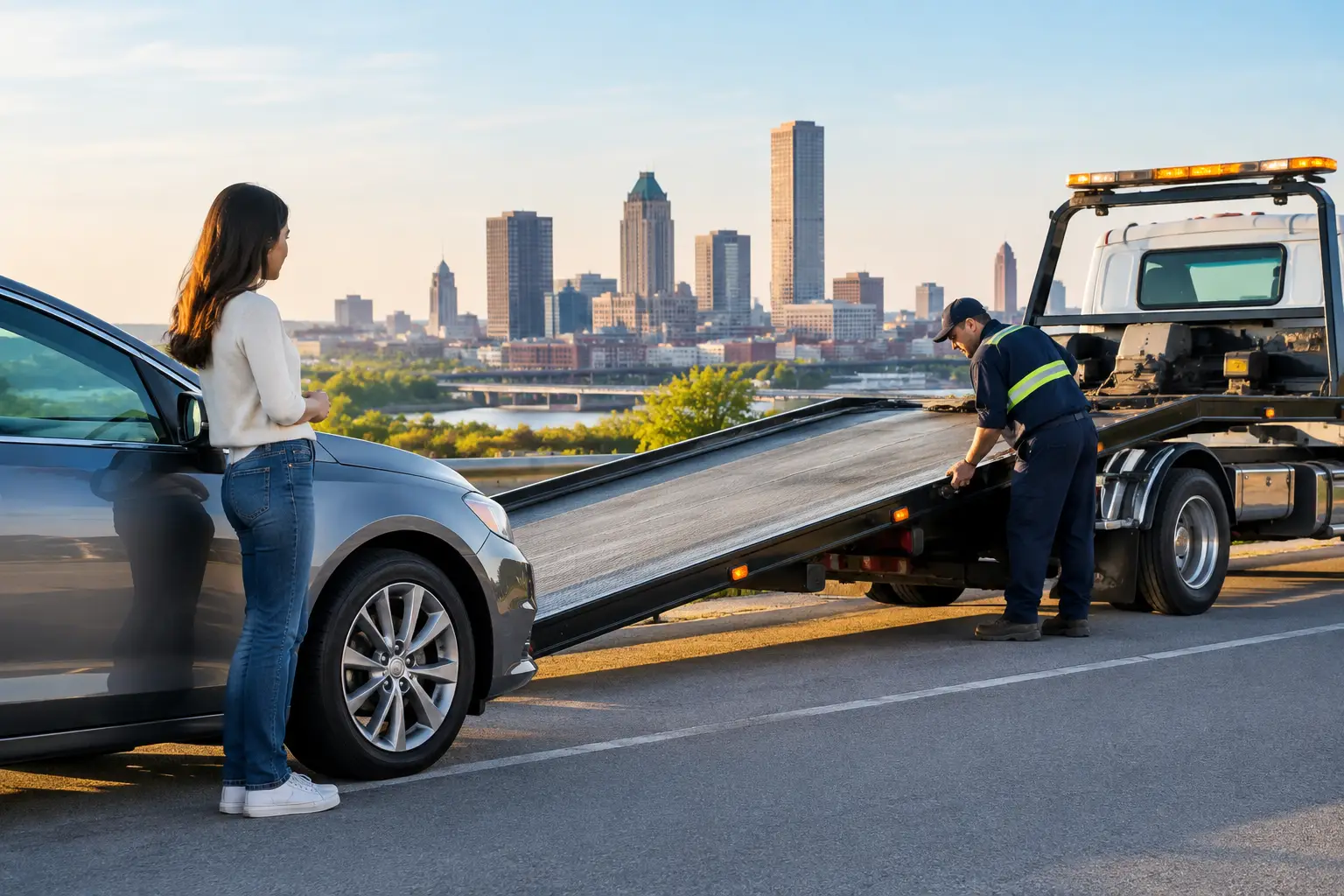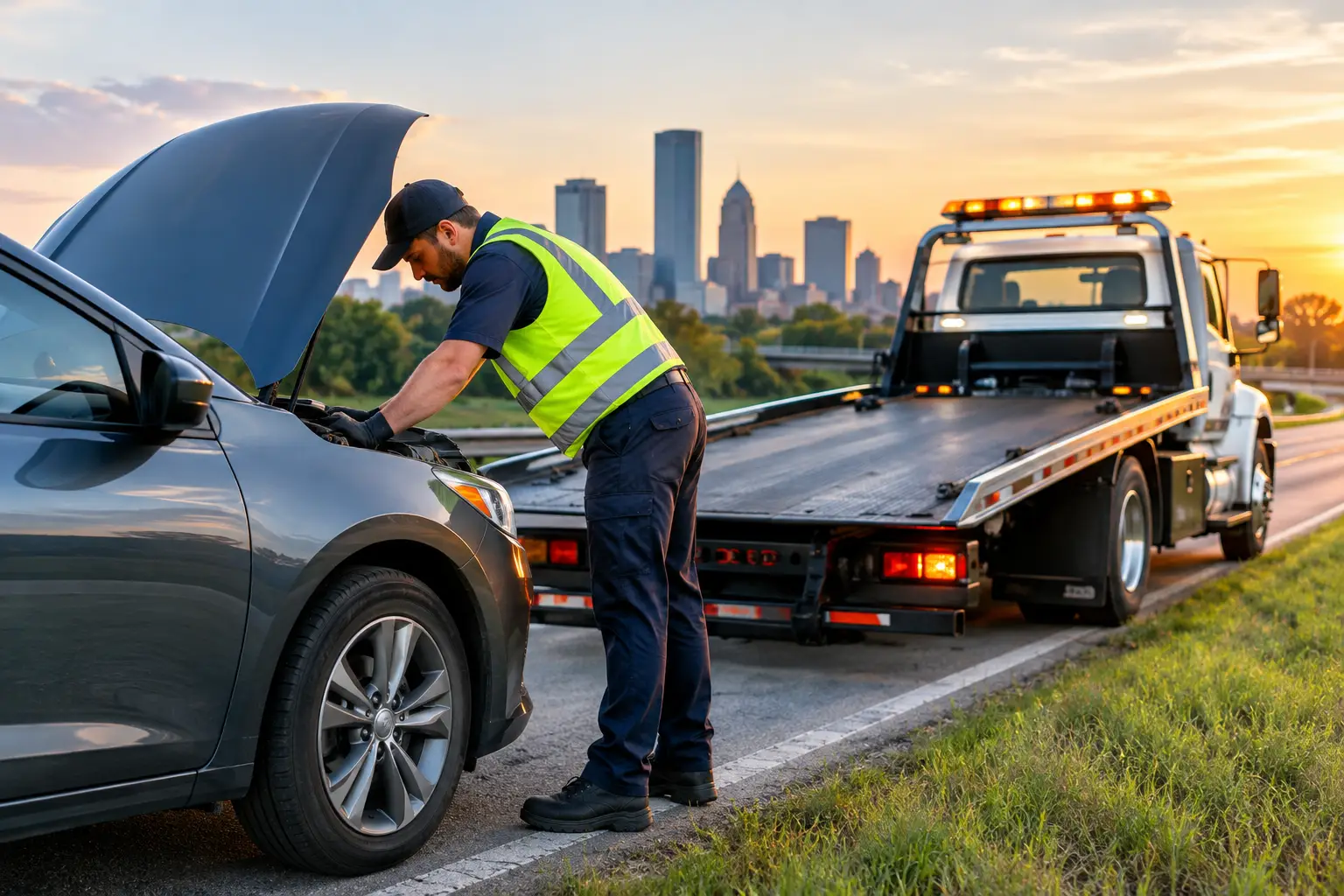
A car that will not start in a grocery store lot is one problem. A disabled car on the shoulder of I-44 or US 75 is another. When money is tight, asking what’s the cheapest way to tow a car is reasonable. The answer is usually not simply finding the lowest number. The least expensive choice is the one that gets the vehicle where it needs to go without turning a breakdown into transmission, bumper, tire, or EV battery damage.
For many drivers, the cheapest option is not a tow at all. A jumpstart, flat tire change, lockout service, or minor roadside fix can cost less than loading and transporting the vehicle. But once the car cannot be driven safely, the right towing method matters more than shaving a few dollars off the initial call.
What’s the Cheapest Way to Tow a Car?
The cheapest safe option depends on why the car stopped, how far it needs to travel, the vehicle’s drivetrain, and what equipment is already available. A short tow from Midtown to a nearby repair shop will look different from moving a disabled truck from Broken Arrow or transporting an electric vehicle.
Start by asking one direct question: can the problem be safely handled where the car is sitting? If the battery is dead, a jumpstart may get you moving. If a tire is flat and the spare is usable, roadside tire help may be enough. If the vehicle is locked, a lockout service avoids a tow entirely.
That is the true low-cost route when it fits the situation. It also saves time, because the car stays where it is instead of being loaded, secured, unloaded, and checked in at a shop.
When a vehicle has overheated, has a warning light tied to the engine or transmission, has collision damage, is leaking fluid, or will not move under its own power, do not try to save money by driving it anyway. A short drive can create a much bigger repair bill.
Check Roadside Coverage Before Paying Out of Pocket
Roadside assistance through your auto insurance, vehicle warranty, credit card, or auto club can be the lowest out-of-pocket option. Some plans cover a set towing distance or reimburse a portion of the charge. Check the details before dispatching a truck, especially if you need to choose a repair shop.
Coverage is helpful, but it does not always mean every part of the service is free. Your plan may limit the number of calls, towing miles, or type of assistance. It may also require you to use a particular dispatch process. If your car needs special handling, such as a low-clearance vehicle, a heavy-duty pickup, or an EV, make sure the provider understands that before the truck arrives.
If you do not have coverage, a local tow to the nearest qualified repair shop is often less expensive than a longer move to a dealership across town. That does not mean the nearest shop is always the right destination. If the vehicle is under warranty or needs a shop that can work on its specific issue, an extra few miles can be worth it.
Why a DIY Tow Can Cost More Than It Looks
Borrowing a strap, using a friend’s truck, or renting equipment may seem like the cheapest way to move a car. In the right circumstances, it can be. But it is only a reasonable option when the tow vehicle is properly rated, the driver knows how to use the equipment, the disabled vehicle can roll and steer safely, and the vehicle manufacturer allows that towing method.
A tow strap is not a general-purpose solution for a disabled car. It can be dangerous in traffic, difficult to control when braking, and unsuitable for a vehicle with damaged steering, brakes, suspension, or tires. It also creates real risk on busy Tulsa roads, especially around highway ramps, Memorial Drive, Riverside, and traffic-heavy intersections.
Tow dollies and car trailers have their place, but they require the right setup. A vehicle with all-wheel drive or four-wheel drive may not be safe to pull with two wheels on the ground. Many electric vehicles should be transported on a flatbed. Some front-wheel-drive cars can be moved by lifting the drive wheels, but the vehicle still needs to be secured correctly and loaded without scraping the bumper or undercarriage.
The rental price is only part of the cost. Add fuel, equipment time, deposits, possible damage, and the risk of being stuck with a car that cannot be loaded. If the car is in a tight apartment lot, parking garage, roadside shoulder, or muddy area, DIY towing can become complicated fast.
When Flatbed Towing Is the Better Value
A flatbed may not always be the lowest upfront price, but it is often the better value for a vehicle that cannot be driven. All four wheels are off the road, which avoids putting extra stress on the drivetrain and reduces the chance of damage during transport.
Flatbed towing is a strong choice for accident-damaged vehicles, low cars, trucks, vehicles with wheel or suspension damage, and electric vehicles. It is also the practical answer when a car will not roll freely or is parked in a spot where a quick hookup would be unsafe.
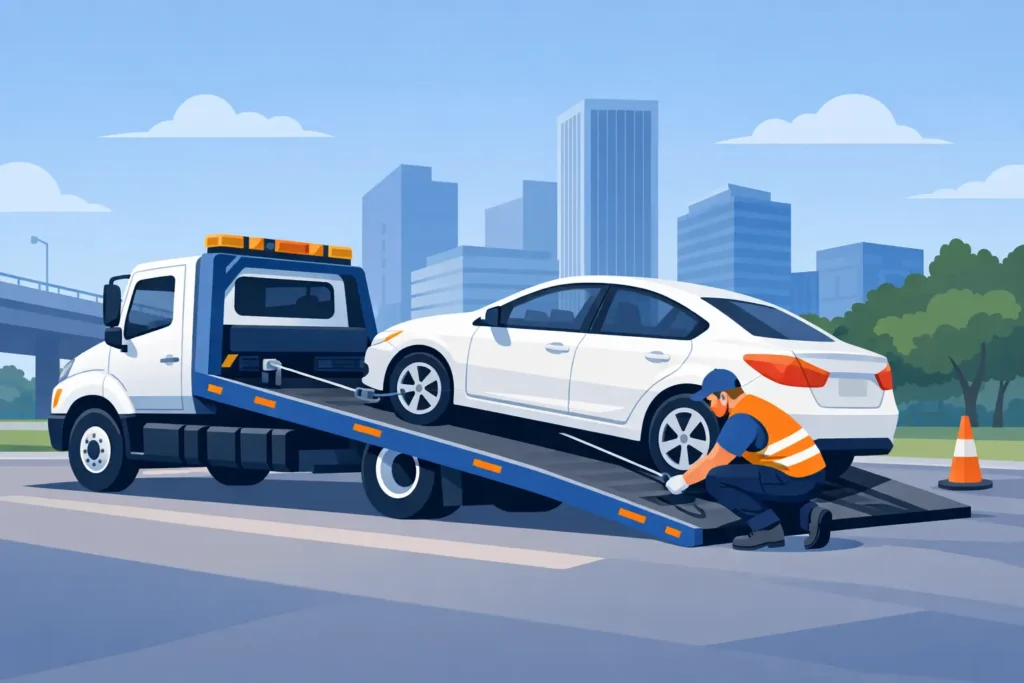
Proper loading matters. A driver should assess the vehicle’s condition, loading angle, clearance, and tie-down points before moving it. That is not extra fuss. It is what prevents a front bumper from dragging, a loose vehicle from shifting, or a disabled car from taking more damage on the way to the shop.
For a short city tow, paying for the right equipment can be less costly than paying a body shop or mechanic to correct damage caused by an improper tow. That is especially true for Teslas and other EVs, where the wrong method can create expensive problems that have nothing to do with the original breakdown.
How to Keep the Tow Bill Reasonable
Clear information helps the towing company send the correct truck and gives you a more accurate estimate. When you call, explain where the vehicle is, where it needs to go, and whether it rolls, steers, and has inflated tires. Mention collision damage, a locked steering wheel, low clearance, parking-garage height restrictions, or a vehicle that is stuck in mud or a ditch.
Have the exact destination ready. A tow quote can change when the driver arrives and learns the car is going somewhere farther away, needs to be moved out of a difficult spot first, or cannot be loaded normally. There is nothing wrong with asking what the estimate includes and whether there are additional charges for mileage, winch-out work, after-hours service, or special equipment.
You can also save money by choosing a repair facility before the truck arrives. Calling several shops while your car is on the roadside can waste time and may lead to an unnecessary second tow. If the car is safe where it is, call a shop first, confirm they can take it, and then arrange transport directly there.
Do not leave valuables, loose tools, or important documents in the vehicle if you can safely remove them. Take a few photos of the car’s condition before it is loaded, particularly after an accident. This is not about expecting trouble. It simply gives you a clear record during a stressful situation.
Choose the Option That Solves the Actual Problem
A jumpstart is usually less costly than a tow when the battery is the only issue. A flat tire service may be enough when the spare is ready and the wheel is not damaged. If the car is stuck but otherwise driveable, a winch-out may solve the problem without transporting it.
But when the car is unsafe to drive, does not move, or needs to reach a shop, the practical low-cost choice is a properly equipped tow with a clear destination. Tulsa Towing, powered by Neptune Towing, handles local flatbed transport and roadside situations with that approach: assess the problem, use the right equipment, and get the vehicle where it needs to go without adding unnecessary complications.
If you are stranded on a busy road, move yourself and passengers to a safe location when possible, turn on your hazard lights, and do not attempt a risky roadside fix just to avoid a tow. Saving money matters. Getting home without making the vehicle problem worse matters more.