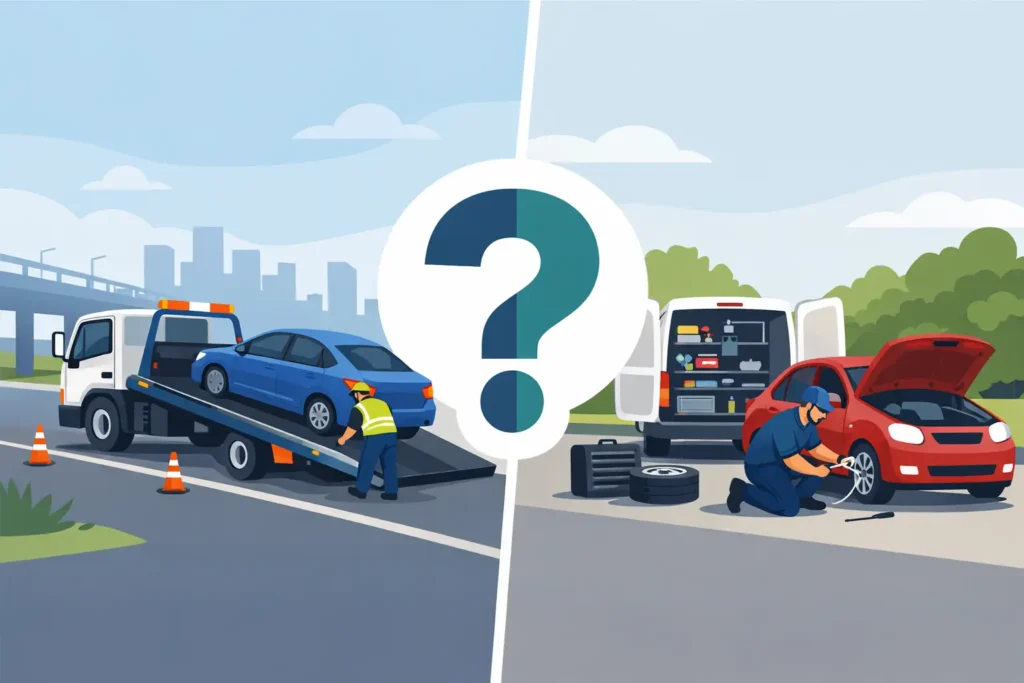
You turn the key, the car will not start, and now you have to make the call that actually matters – tow truck or mobile mechanic. The right choice depends on what failed, where the vehicle is sitting, and whether it can be made safe to drive without risking more damage. In a real roadside situation, guessing wrong can cost you time, money, and another breakdown a few miles later.
Tow truck or mobile mechanic: start with safety
The first question is not what is cheaper. It is whether the vehicle should move under its own power at all.
If the car is in a traffic lane, stuck on the shoulder of I-44, disabled after an accident, or sitting in a spot where loading is difficult or unsafe, a tow truck is usually the right call first. The priority is getting the vehicle and driver out of a bad position. Mechanical diagnosis can happen later at a repair shop or after the vehicle is moved somewhere safe.
If the car is parked at home, in an office lot, or in a safe parking space and the issue seems minor, a mobile mechanic may make sense. That is especially true when the repair is something straightforward and the vehicle does not need transport.
This is where a lot of drivers get stuck. They are not deciding between two equal options. They are deciding between on-site repair and safe transport. Those are different jobs.
When a mobile mechanic makes sense
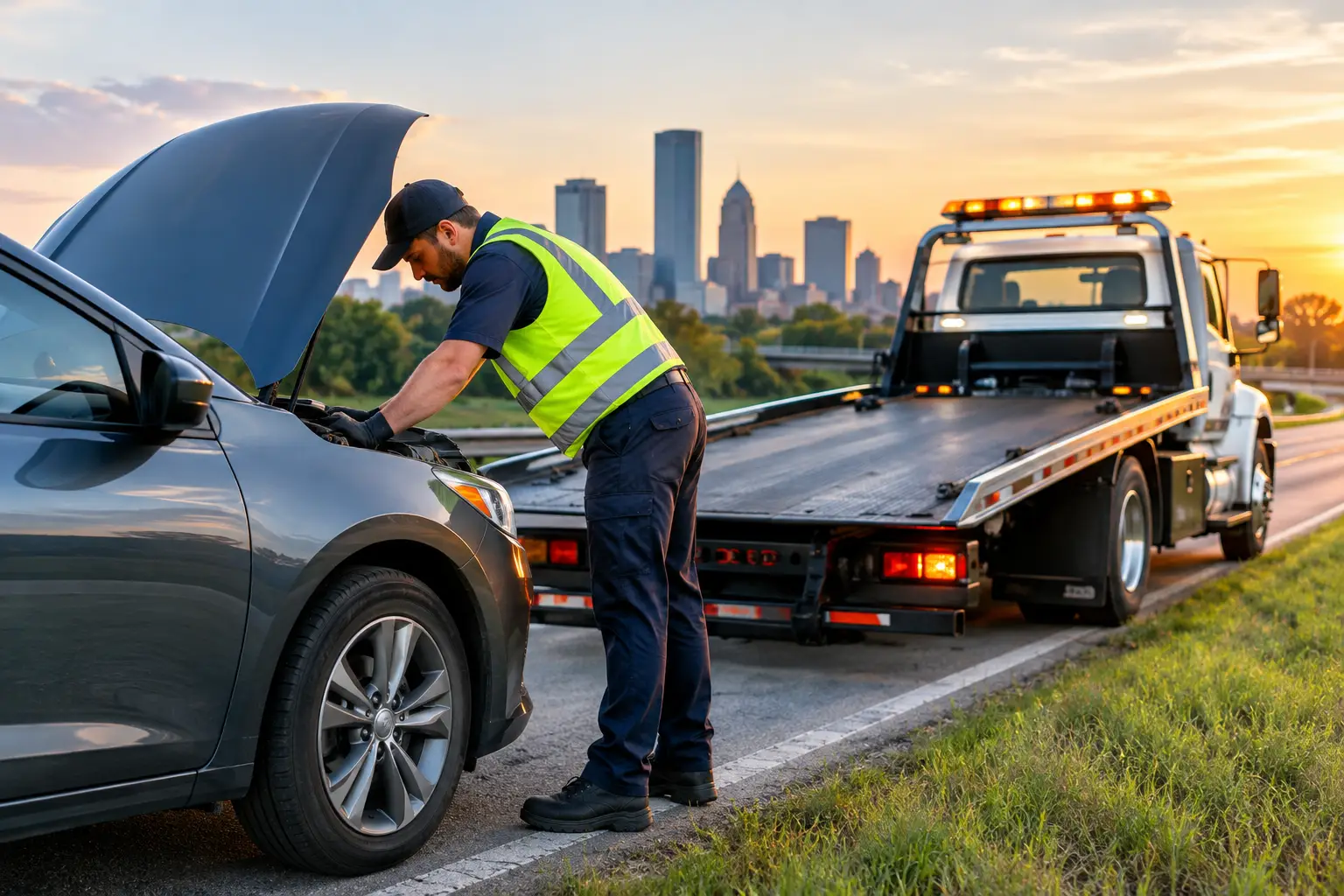
A mobile mechanic is useful when the vehicle is otherwise safe where it sits and the problem can realistically be fixed on site. Common examples include a dead battery, a simple no-start issue, some starter problems, or minor component replacement if the part is available.
If the vehicle was driving normally before it was parked and now just will not start, there is a reasonable chance a mobile mechanic can help. The same goes for some battery-related problems, provided the issue is not more serious than a jumpstart, battery replacement, or basic electrical diagnosis.
But there is a limit. A mobile mechanic is not the answer for every breakdown just because the car is not moving. If the engine overheated badly, the transmission is slipping or stuck, the suspension is damaged, a wheel is bent, fluid is pouring out, or the vehicle was in a collision, on-site repair is often not practical. Even if someone can diagnose it, that does not mean it should be fixed where it sits.
There is also a parts and access issue. Some repairs need a lift, shop tools, or more time than most parking lots allow. In those cases, waiting for a mobile mechanic can delay the inevitable tow.
When a tow truck is the better call
A tow truck is the right move when the vehicle cannot be driven safely, should not be driven, or needs to go somewhere else before repairs can begin.
That includes obvious breakdowns such as a blown engine, major overheating, no-start conditions that have already been tested without success, transmission failure, brake problems, accident damage, and vehicles stuck in mud, curbs, or uneven ground. It also includes situations where the vehicle may technically move, but driving it could make things worse.
A lot of expensive damage happens in that gray area. The car starts, so the driver tries to limp it to a shop. Then the overheating gets worse, the transmission quits completely, or the suspension damage tears up a tire. What could have been a controlled tow becomes a bigger repair.
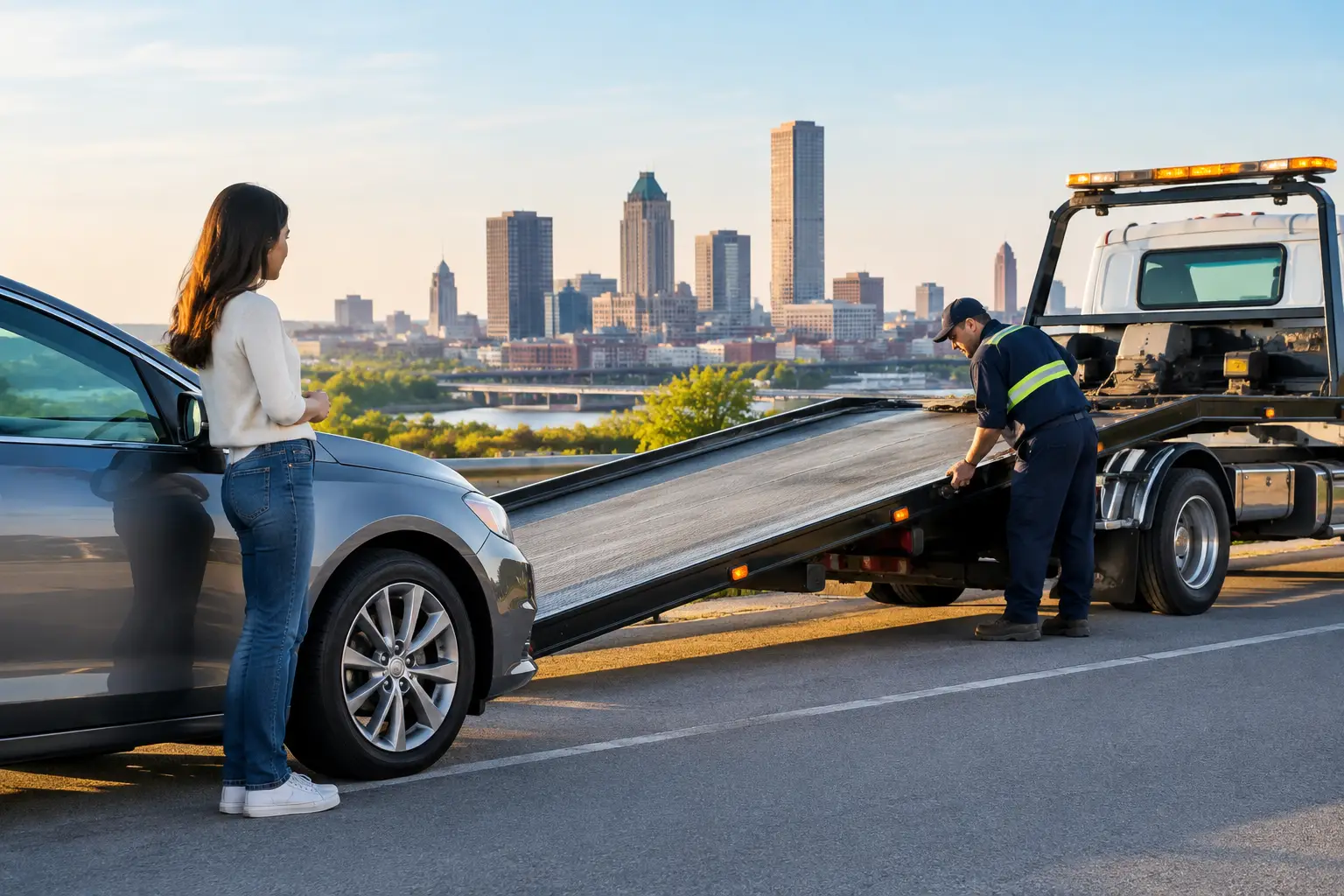
Flatbed towing is especially important for low-clearance vehicles, all-wheel-drive vehicles, heavy pickups, and electric vehicles. Those are not jobs to handle casually. Proper loading angle, securement, and transport matter if you want the vehicle to arrive without new damage.
The problem might be smaller than the decision
Sometimes the issue sounds mechanical when it is really roadside assistance. That is worth separating out.
A dead battery does not always mean you need a mechanic. A flat tire does not always mean you need a tow. A lockout definitely does not require either. If the vehicle can be put back on the road safely with a jumpstart, tire change, or basic roadside help, that is usually the fastest path.
This matters because many drivers search for a mobile mechanic when what they really need is someone who can get them moving in ten minutes, not someone diagnosing the whole car. On the other side, some people call for roadside help when the vehicle clearly needs transport and should not be touched beyond loading it safely.
The best decision comes from being honest about the condition of the vehicle. Not the hopeful version. The actual version.
What to ask before you decide
If you are stuck choosing between a tow truck or mobile mechanic, ask yourself a few simple questions.
Is the vehicle in a safe location to sit for a while? If not, towing comes first.
Did the vehicle shut down while driving, make loud mechanical noise, overheat, lose fluid, or get hit? If yes, towing is usually the safer option.
Is this likely a basic battery or no-start issue with no other warning signs? A mobile mechanic or roadside battery service may work.
Can the repair realistically be done in a parking lot or driveway? Some can. Many cannot.
Would driving it even a short distance risk worse damage? If there is doubt, tow it.
That last point matters most. A short-distance drive is still driving. A few miles with low oil pressure, cooling system failure, or drivetrain damage can turn a repairable problem into a much larger one.
Local traffic and location can change the answer
Where the breakdown happens matters just as much as what failed.
A car that will not start in a driveway in Broken Arrow is one thing. The same no-start on the shoulder of US 75 during traffic is a different call. Even if the actual repair is simple, the location may make towing the safer and faster option. Busy roads, narrow shoulders, parking garages, apartment complexes, and sloped lots all change how a disabled vehicle should be handled.
In Tulsa, a lot of roadside calls happen in places where quick access and safe loading matter more than diagnosis. Memorial, Riverside, Tulsa Hills, and highway ramps are not ideal places to troubleshoot a vehicle for an hour. In those situations, moving the vehicle first is often the smartest step.
Cost matters, but wrong decisions cost more
Many drivers compare the tow bill to a mobile mechanic visit and stop there. That is understandable, but it is not the full picture.
If a mobile mechanic fixes the issue on site and the vehicle is truly road-ready, that can save time and money. But if the repair does not hold, the issue is misdiagnosed, or the car still has to be towed afterward, the cheaper option was not actually cheaper.
The same is true when someone tries to drive a damaged car to avoid a tow. A short tow bill is usually less painful than replacing an engine, transmission, or damaged suspension parts because the vehicle was pushed too far.
The better way to think about cost is this: what gets the vehicle handled safely and correctly the first time?
Why towing is often the more practical answer
In real-world breakdowns, towing is often the cleaner solution because it removes uncertainty. The vehicle gets out of traffic, off the roadside, or out of an awkward location and goes directly to the place where full diagnosis and repair can happen.
That is especially true when the problem is unclear. If the car just died and you do not know why, transport to a repair facility can save hours of waiting around for a partial answer. It also helps if the vehicle needs more than one repair, needs specialty tools, or cannot be tested properly where it sits.
For drivers dealing with stress, weather, traffic, or family schedules, there is value in keeping the process simple. Get the vehicle loaded correctly, move it without damage, and deal with repairs in the right setting.
That is the approach companies like Tulsa Towing are built around – fast dispatch, clear communication, and safe transport without turning a breakdown into a bigger problem.
The right call depends on what happens next
If the vehicle can be repaired safely where it sits and returned to reliable condition, a mobile mechanic may be the right fit. If the vehicle is unsafe, damaged, stuck, in traffic, or likely to get worse if driven, call for a tow.
Most drivers do not need a perfect diagnosis before making that decision. They just need to know whether the car should stay put, be fixed on site, or be moved carefully. When there is real doubt, protecting the vehicle usually beats testing your luck.
When your car quits at the wrong time, the best choice is the one that gets you out of the situation safely and keeps the problem from getting more expensive.