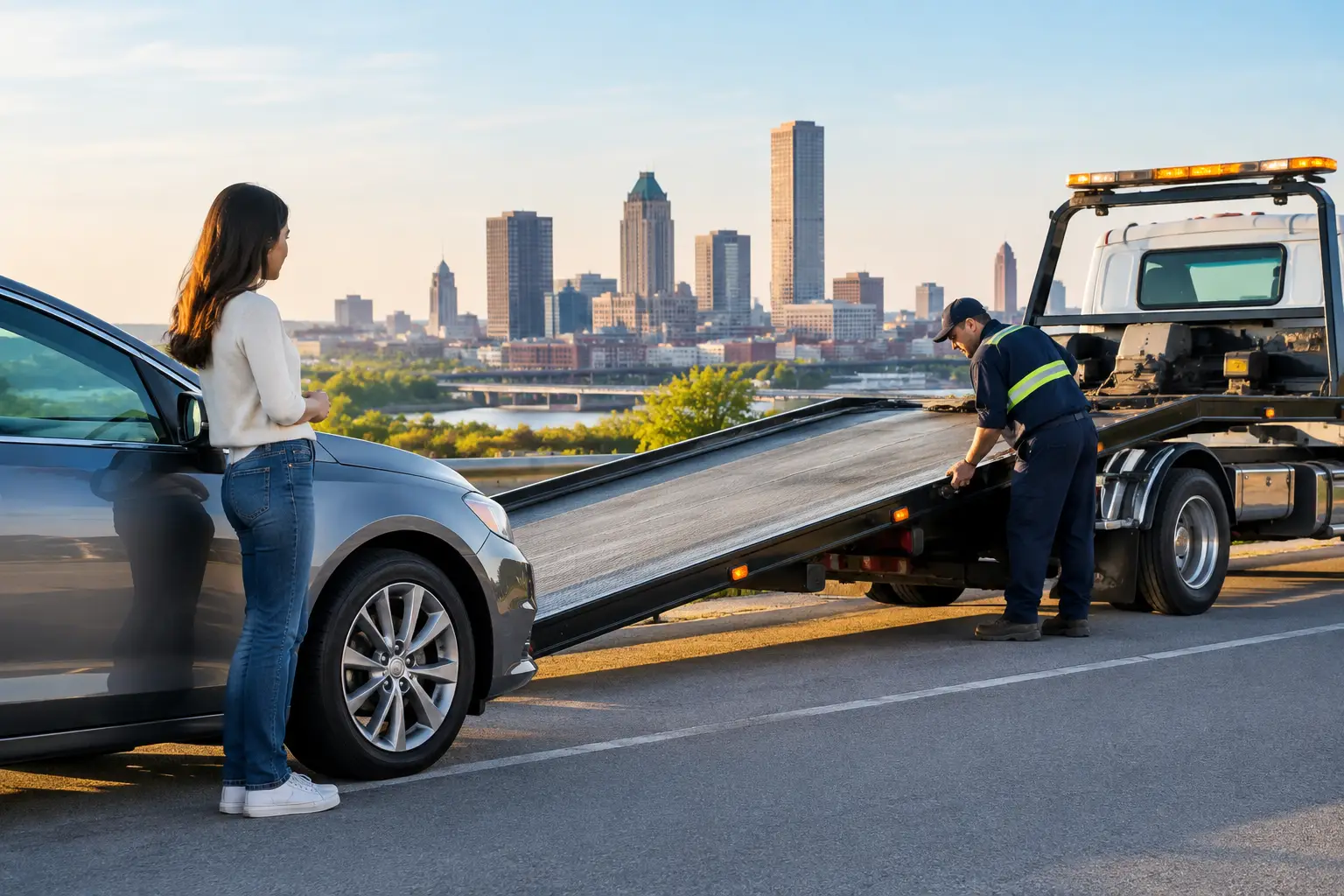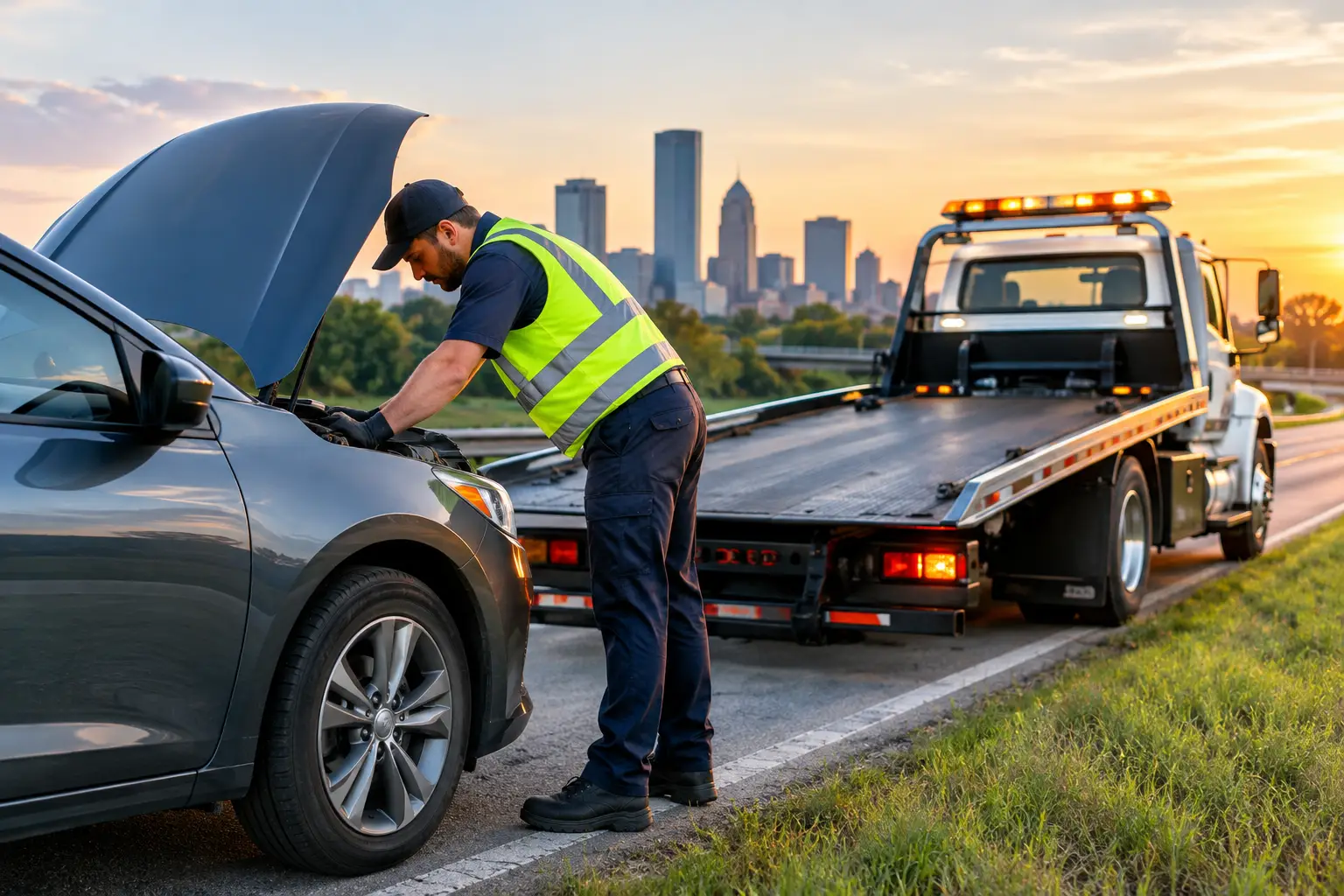
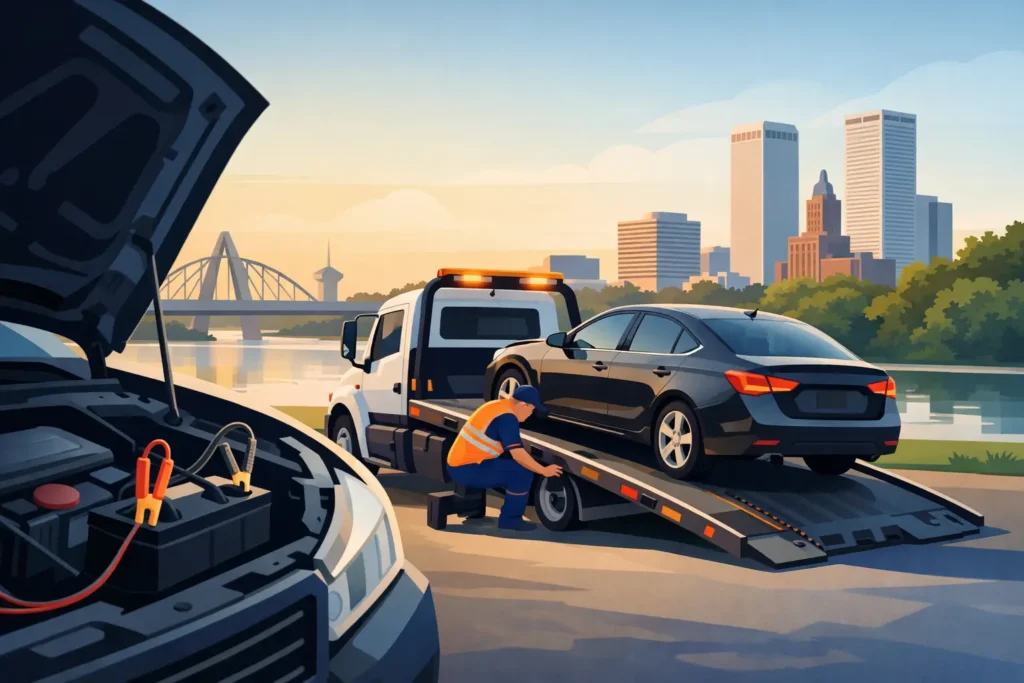
A dead battery can turn a normal Tulsa drive into a problem fast. You may be parked at work near Memorial, stuck in a grocery store lot, or sitting on the shoulder after the car died at a light. Dead battery towing Tulsa drivers need is not always about moving a car right away. Sometimes a proper jumpstart gets you moving. Other times, trying to restart it is the wrong move and a flatbed tow is the safer answer.
The first question is simple: will the vehicle start and stay running after the battery gets power? If the answer is no, the problem may be more than a discharged battery. Clear communication at the start helps determine whether roadside assistance can solve it where it sits or whether the vehicle needs safe transport to a shop, dealer, or home.
When a Jumpstart Is Usually the Right Call
A battery can go dead for ordinary reasons. A dome light may have been left on, an accessory may have drained power, or the vehicle may have sat unused for several days. In these cases, a jumpstart can often get the engine started and allow the alternator to recharge the battery while you drive.
A jumpstart makes sense when the car was running normally before the battery died, there are no warning lights beyond the battery issue, and the engine starts quickly once connected to a power source. It can also be a practical option if you are in a safe parking lot or driveway and can drive directly to a place where the battery can be tested.
That said, a successful jumpstart is not proof that everything is fixed. If the battery is old, weak, or unable to hold a charge, the vehicle may start once and fail again after you turn it off. A battery problem can also look like an alternator problem, and the difference matters.
Signs You Need Dead Battery Towing in Tulsa Instead
If the car will not start after a proper jump, towing is usually the better choice. Continuing to try can drain the battery further, strain the starter, and leave you stuck in a less safe location. This is especially true along high-traffic roads such as I-44, US 75, Highway 169, or Riverside Drive, where roadside troubleshooting should be kept short and safe.
A tow is also the right call when the vehicle starts but dies shortly afterward. That commonly points to a charging-system issue. The alternator may not be sending enough power back to the battery, so the vehicle is running only on stored battery power. It may make it a few blocks, or it may shut down before you get out of the parking lot.
Watch for a battery warning light that stayed on while driving, headlights that dimmed, electrical accessories that stopped working, or a burning smell near the engine. Those are not situations to gamble on by driving across town. Have the vehicle transported to the repair shop or dealership you choose.
Towing also makes sense if you are parked somewhere unsafe, the battery died in a busy traffic lane, or the vehicle cannot be shifted safely into neutral. A car that cannot move under its own power needs to be loaded correctly, not dragged into position or rushed onto the wrong equipment.
What to Do While You Wait for Help
Start by getting yourself out of danger if possible. If the vehicle is stopped in a travel lane, turn on the hazard lights and move to a safe location away from traffic when it is safe to do so. On a highway shoulder, stay well away from passing vehicles. Do not stand between your car and traffic, and do not open the hood near a busy lane unless it is necessary and safe.
When you call for help, have the vehicle’s location, make and model, and symptoms ready. A clear location can be more useful than a nearby business name alone. Let the dispatcher know whether you are in a parking garage, apartment complex, highway shoulder, driveway, or a tight lot. Access conditions affect how the truck approaches and loads the vehicle.
Also mention whether the car is an electric vehicle, has low ground clearance, is all-wheel drive, or cannot be put in neutral. Those details help ensure the right equipment and loading method are used from the beginning. They are not minor details when the goal is damage-free transport.
If you have jumper cables, it is fine to let the driver know, but avoid connecting them unless you are confident in the procedure and the area is safe. Reversed cable connections can cause expensive electrical damage. A portable jump pack can also be useful, but it will not repair a failed battery, alternator, corroded connection, or other underlying electrical issue.
Why a Flatbed Matters for a Vehicle That Will Not Move
A car with a dead battery may not release the electronic parking brake, shift out of park, or power up systems needed to place it in tow mode. Modern vehicles depend on electronics for more than starting the engine. That is one reason the loading process matters.
A flatbed allows the vehicle to be carried with all four wheels off the ground. For cars, trucks, all-wheel-drive vehicles, and many electric vehicles, this avoids unnecessary drivetrain movement during transport. It is also the practical choice for a vehicle that will not start or roll normally.
Low-clearance cars need extra attention during loading. The approach angle, ramps, and tie-down points all matter. A careful operator does not treat every vehicle like an older sedan with plenty of clearance underneath. The same goes for heavy-duty pickups, which may need a different setup because of their weight and size.
Electric vehicles require particular care. A dead 12-volt battery in an EV can prevent the vehicle from entering the right mode for movement, even if the main traction battery has charge. The correct procedure depends on the make and model. Improper towing can damage the drive system, so flatbed transport is generally the safe choice when an EV cannot be made ready to move as instructed by its manufacturer.
Battery Failure or Something Else?
Not every no-start is a battery issue. A single click when turning the key or pressing the start button may indicate a weak battery, but it can also point to a starter or connection problem. Rapid clicking is commonly associated with low battery power. No sound at all can be caused by a dead battery, a brake-switch issue, a faulty ignition component, or an electronic fault.
Corrosion at the battery terminals can create the same frustration as a dead battery. Loose or damaged cables can prevent a jump from working even when the battery itself is still usable. In some cases, the battery has enough power to turn on interior lights but not enough to crank the engine.
There is no benefit in guessing from a distance. If a jumpstart works and the vehicle stays running, you may be able to drive it for a battery test. If it will not start, dies after starting, or has warning signs of a charging issue, a tow keeps the situation simple and protects the vehicle from a second breakdown.
Getting Your Vehicle Where It Needs to Go
When you need towing after a dead battery, decide where the vehicle should go before the truck arrives. A repair shop is often best if the cause is unclear or the car dies after a jump. A dealership may make sense for newer vehicles, warranty work, or electric vehicle service. Home can be the practical choice if you need time to arrange repairs or the battery issue is already diagnosed.
Tulsa Towing, powered by Neptune Towing, handles these calls with a straightforward approach: assess the situation, attempt roadside help when it makes sense, and use proper flatbed equipment when transport is needed. There is no need to make the situation more complicated than it already is.
A dead battery is inconvenient, but it does not have to become a bigger vehicle problem. Stay in a safe spot, share clear details about what the vehicle is doing, and choose the option that gets you moving or gets the car to the right place without taking unnecessary chances.