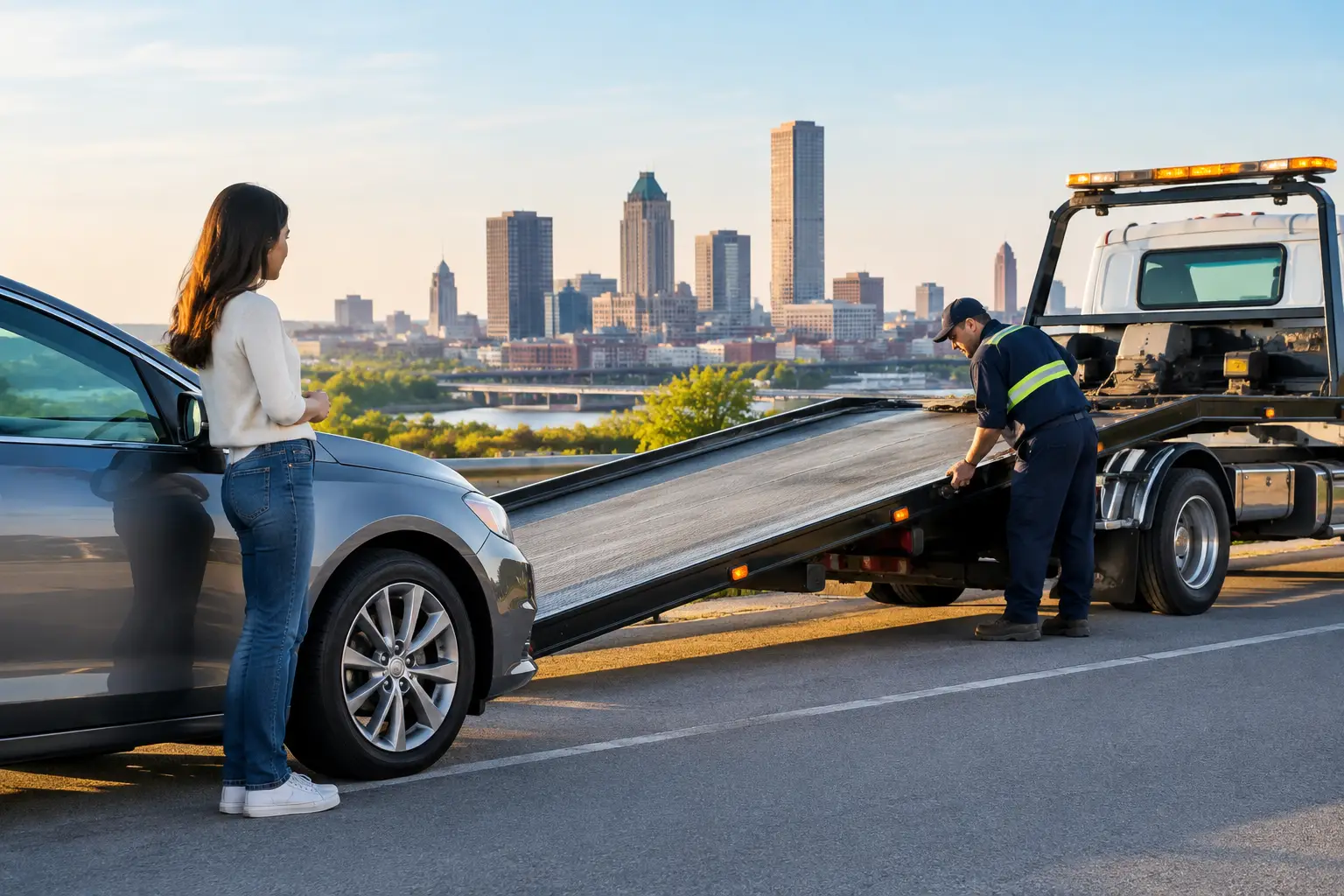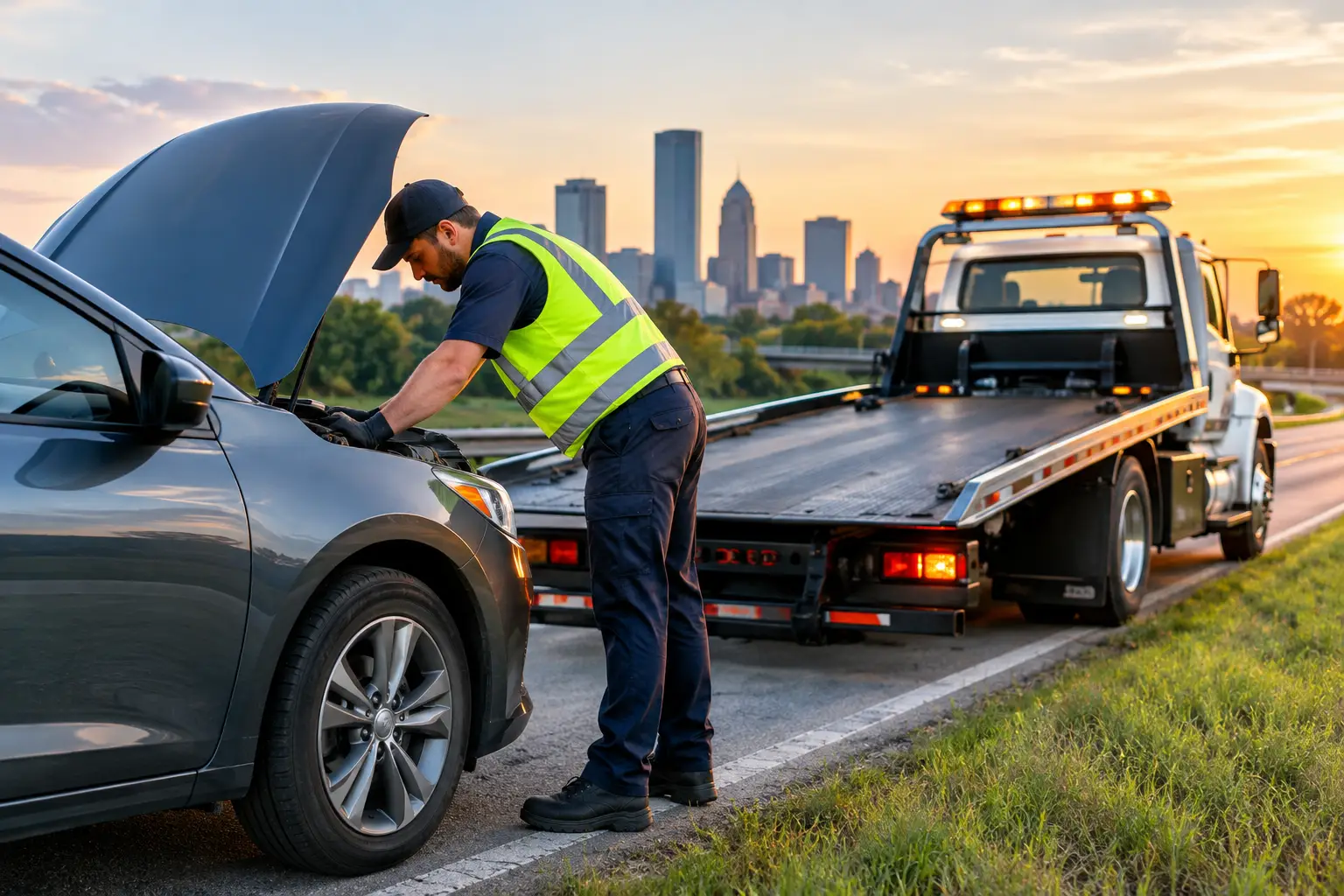
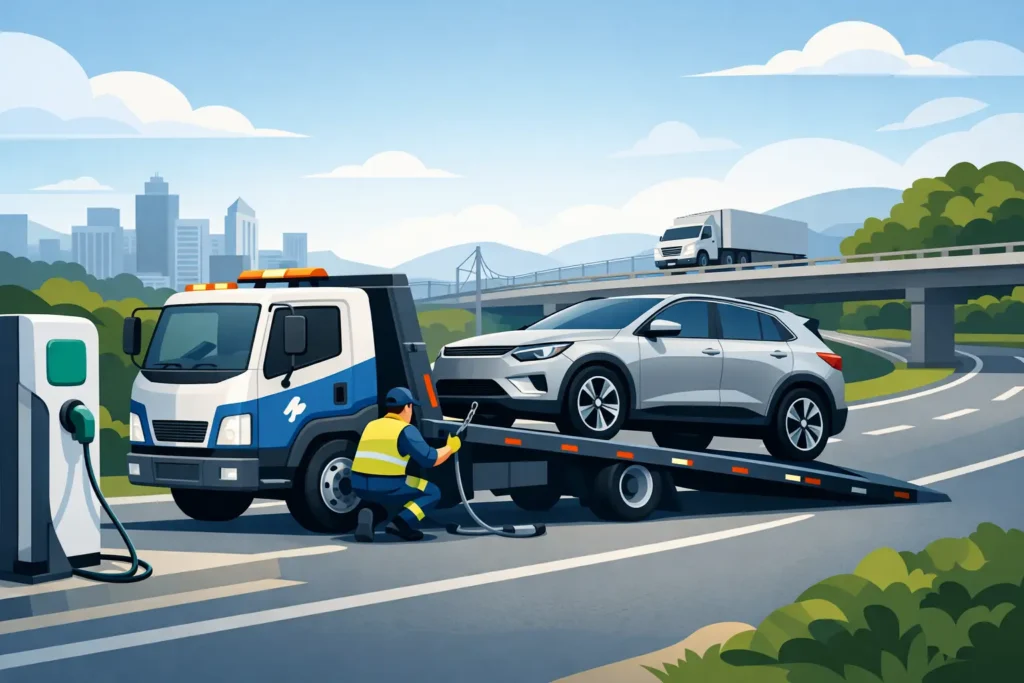
A disabled EV on I-44, US 75, or a crowded Tulsa parking lot is not just another vehicle that needs to be moved. Its battery system, low ground clearance, vehicle weight, and drivetrain all affect how it should be handled. The future of EV towing safety is not about making a difficult job look high-tech. It is about giving tow operators better information and the right equipment to move electric vehicles without turning a breakdown into a larger repair bill.
For EV owners, the basic message stays simple: when the vehicle will not drive, do not assume it can be pulled, dragged, or handled like a gas-powered car. A proper flatbed tow remains the safest answer in many situations. What is changing is how accurately a tow operator can identify the vehicle’s condition, secure it, and transport it.
EV Towing Safety Starts With Knowing the Vehicle
Electric vehicles do not all respond the same way after a breakdown, collision, dead 12-volt battery, or charging problem. Some have a transport mode that allows the wheels to roll. Some require a specific sequence to enter that mode. Others may lock the wheels or limit movement when the main battery is low or the vehicle detects a fault.
That is why guessing is never a good plan. The next stage of EV towing safety will rely more heavily on vehicle-specific information available to the driver, roadside service provider, and tow operator. Instead of treating every electric vehicle as the same, the operator will be able to confirm the recommended recovery method before loading begins.
This matters on real calls. A Tesla that will not shift out of Park in a South Tulsa driveway is different from an EV involved in an accident near Memorial Drive. In one case, the issue may be a low-voltage battery or electronic fault. In the other, damage underneath the vehicle may affect the battery enclosure, suspension, or wheels. The right approach depends on what happened, where the vehicle is sitting, and whether it can move safely at all.
Flatbeds Will Remain the Safe Standard
As more EVs reach the road, flatbed towing will continue to be the preferred method for many disabled electric vehicles. Keeping all four wheels off the ground avoids unnecessary drivetrain movement and reduces the chance of damage from improper recovery.
A flatbed is not automatically safe just because it is a flatbed. Loading angle, clearance, tie-down placement, wheel condition, and the position of the vehicle all matter. EVs often sit lower than trucks and SUVs, while their battery packs add substantial weight along the floor of the vehicle. Careful loading prevents scraping, bottoming out, and strain on parts that were not designed to be used as pull points.
Future equipment will likely make this process more controlled. Lower-angle beds, improved winches, wheel-lift accessories used only when appropriate, and more precise loading systems can help operators move a disabled EV from tight spaces without rushing the job. That is useful in downtown garages, apartment lots, and busy roadside locations where room is limited.
The equipment helps, but the operator still has to make the call. If a vehicle has damage that makes normal loading unsafe, the job may require a slower setup, extra clearance protection, or a different recovery plan. Taking a few more minutes at the scene is better than causing damage during a rushed load.
Better Tie-Down Practices Protect More Than the Wheels
EV towing safety is also moving toward more vehicle-specific securement. A vehicle needs to be held firmly on the bed without placing force where it does not belong. Proper wheel straps and correct anchor points help keep the vehicle stable during turns, braking, and rough road conditions.
This is especially important with heavy electric SUVs and pickups. EV weight changes how a vehicle sits on a bed and how it behaves during transport. The tow truck and loading method need to match the vehicle, not the other way around. A careful operator checks that the vehicle is balanced, secured, and clear of anything that could shift or rub during the trip to a repair shop or dealership.
Battery Damage Will Require Clearer Safety Decisions
Most EV breakdowns do not involve a damaged high-voltage battery. A flat tire, suspension issue, dead 12-volt battery, software problem, or drained charge can leave an EV stranded without creating a battery emergency. Still, collision damage changes the situation.
A battery pack is mounted low in the vehicle, where it can be exposed during a hard impact, curb strike, or underbody accident. If there is visible damage under the vehicle, smoke, unusual heat, a strong odor, hissing sounds, or warning messages related to the battery system, the tow operator needs to treat the scene differently.
The future of EV towing safety will include clearer communication between emergency responders, roadside providers, repair facilities, and vehicle manufacturers. The goal is not to alarm every EV driver after an accident. It is to identify the smaller number of vehicles that need added caution and make sure they are handled appropriately from the start.
For a driver, the practical move is simple. Step away from traffic, avoid touching damaged components or fluids, and tell the dispatcher what you see. Mention whether the vehicle was in a collision, whether it is showing battery warnings, and whether there is smoke or heat. That information helps send the right equipment and prevents an operator from arriving without a full picture of the situation.
Digital Vehicle Data Can Make Roadside Calls Safer
Modern EVs already collect a large amount of information about battery charge, faults, wheel position, and vehicle status. In the coming years, more of that information may be available in a useful format during a roadside event.
A tow operator does not need a screen full of engineering data. What helps is clear, practical information: Is the vehicle safe to roll? Are the wheels locked? Is tow mode available? Has the vehicle detected an impact affecting the battery area? Where are the approved recovery points?
This can reduce trial and error, especially when a driver is stressed and the vehicle is blocking a lane or sitting in an unsafe location. Better information also helps repair shops prepare for the vehicle before it arrives.
There are limits. Technology can fail, a phone may be dead, and a damaged vehicle may not communicate normally. That is why hands-on experience and proper equipment will still matter. Digital guidance should support careful towing, not replace it.
EV Owners Can Help Before the Truck Arrives
Drivers do not need to become towing experts, but a few details can make a roadside call go more smoothly. When requesting a tow truck, identify the vehicle as an EV, share the make and model, and explain why it is disabled if you know. Let the dispatcher know if the car is in a garage, has a flat tire, is locked in Park, or was involved in an accident.
If it is safe to do so, check the owner’s manual or vehicle screen for tow or transport instructions. Do not try to force the vehicle into Neutral, pull it with another vehicle, or hook a strap to an unknown point underneath. Low clearance and battery placement make improvised recovery a bad gamble.
For drivers in Tulsa, Jenks, Bixby, and Broken Arrow, location details matter too. Saying you are on the shoulder near a major exit, inside a parking garage, or in a tight residential drive gives the operator a better idea of the approach and loading conditions.
The Real Future Is Fewer Preventable Tow Damage Claims
The best sign that EV towing safety is improving will not be a flashy new gadget. It will be fewer damaged bumpers, fewer underbody scrapes, fewer drivetrain mistakes, and fewer customers discovering new problems after their vehicle reaches the shop.
That comes from a combination of better training, better manufacturer guidance, properly equipped flatbeds, and operators who slow down long enough to assess the vehicle. Tulsa Towing approaches EV work the same way it approaches any vehicle that needs careful handling: identify the problem, use the right setup, communicate clearly, and get the vehicle where it needs to go without adding to the trouble.
As electric vehicles become more common on Tulsa roads, safe towing will become less about treating EVs as unusual and more about treating each disabled vehicle according to its actual condition. When the truck arrives, careful handling should not be an extra. It should be the expected part of getting help.