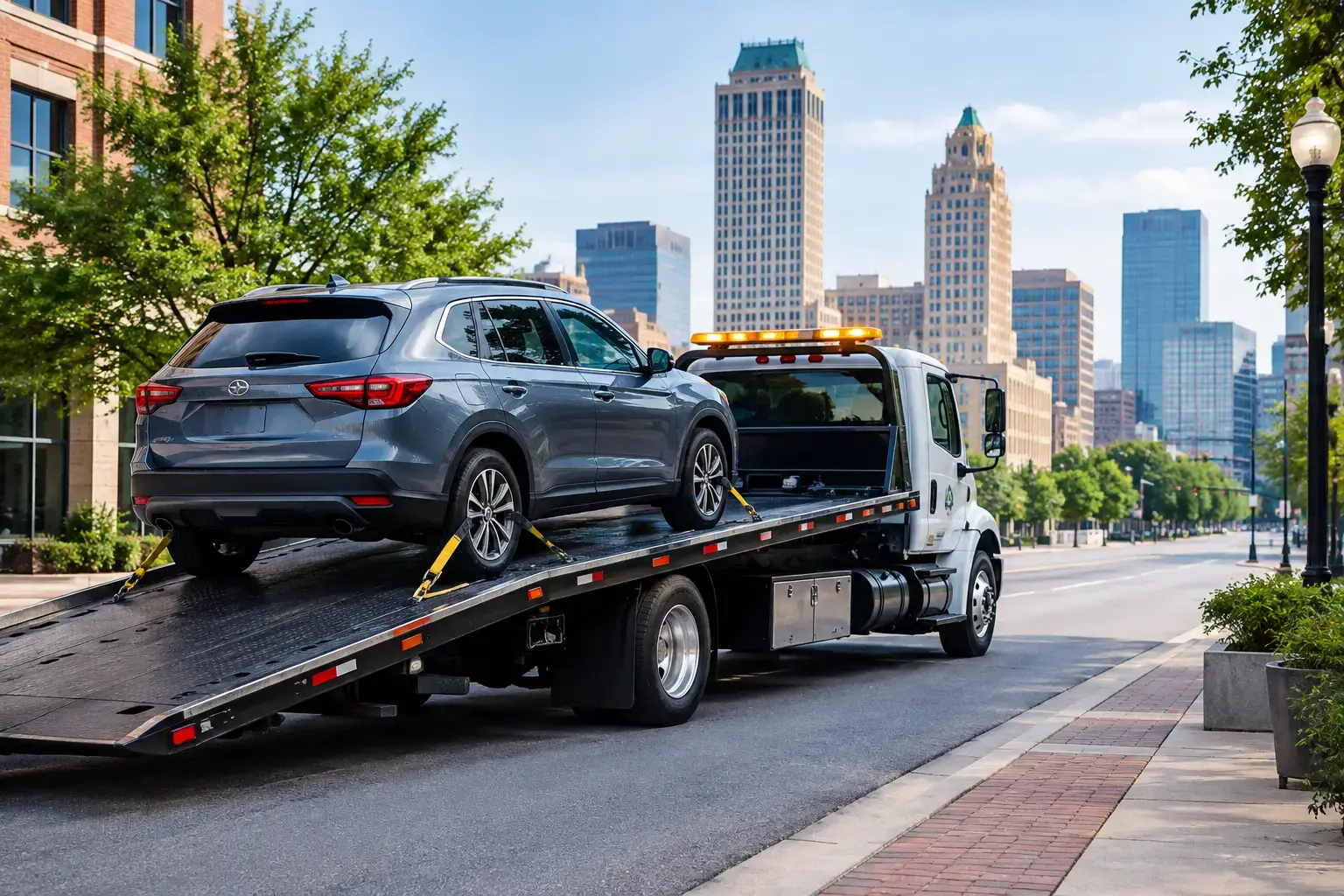
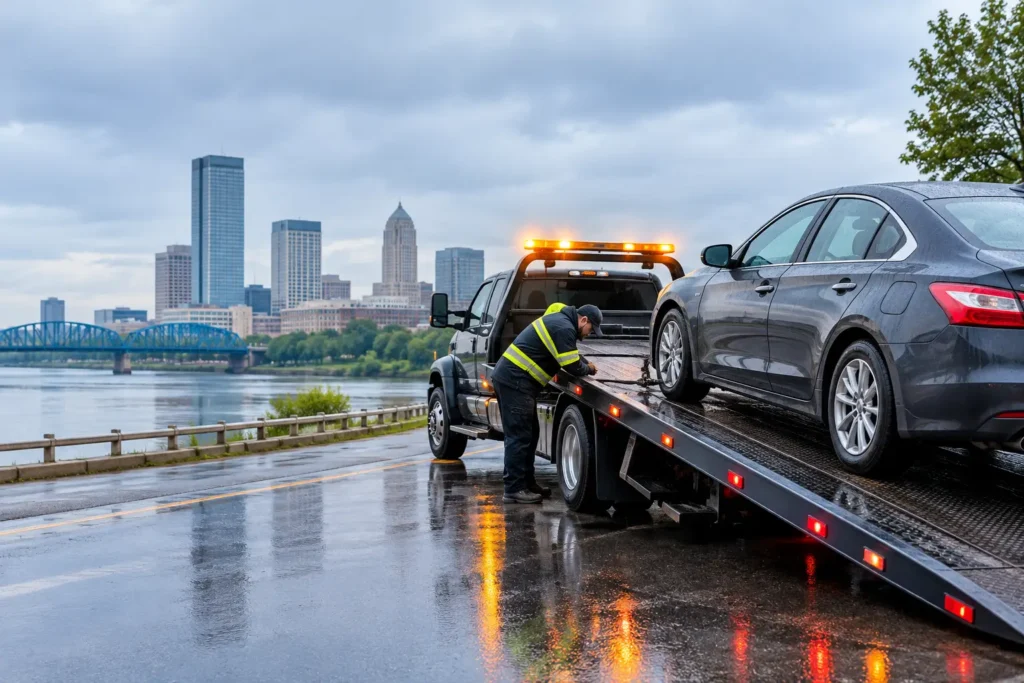
A hard Tulsa rain can turn a normal drive along Riverside into a problem quickly. This Riverside Drive wet-weather towing guide covers what to do when your vehicle breaks down, slides off the pavement, will not restart, or cannot be moved safely in wet conditions.
Riverside Drive has long curves, changing traffic, bridges, intersections, and low areas where standing water can build up. Add rain after a dry stretch, and the road surface can become slick before it looks dangerous. The right move is not always to keep trying to drive. In many situations, stopping in a safer spot and arranging proper towing prevents a small issue from becoming vehicle damage or an accident.
Why Riverside Is Different When the Road Is Wet
Wet pavement reduces traction everywhere, but Riverside has conditions that call for extra caution. Drivers are often moving between Downtown, Brookside, Maple Ridge, and South Tulsa, where traffic flow can change fast. A vehicle that loses power near a busy intersection or along a narrow shoulder creates a safety issue for both the driver and passing traffic.
Water can also hide the condition of the pavement. What appears to be a shallow puddle may cover a pothole, curb edge, debris, or a low spot. Driving through it can damage a tire, bend a wheel, loosen an underbody panel, or leave water where it should not be. If the engine stalls after entering standing water, do not keep cranking it. Repeated attempts can make internal damage worse if water has entered the engine.
Rain also affects visibility. Wipers, headlights, fogged windows, and spray from nearby vehicles all make it harder for drivers to see a disabled car in time. That is why where you stop and how you wait matters as much as the mechanical problem itself.
Riverside Drive Wet-Weather Towing Guide: First Steps
If your vehicle begins losing traction, overheating, stalling, or showing a warning light, ease off the accelerator and look for the safest available place to get out of the travel lane. Avoid sudden braking or sharp steering, especially near wet curves. If you can reach a parking lot, side street, or wide paved area without forcing the vehicle, that is usually safer than stopping on the roadside.
Once stopped, turn on your hazard lights. Keep your wheels pointed straight if you are near traffic, apply the parking brake if the vehicle is stable, and stay aware of the ground around you. Do not stand in a lane, cross a wet roadway unnecessarily, or try to inspect a vehicle where other drivers may not see you.
If the car is partly in traffic and you can safely exit, move away from the roadway and wait at a protected distance. If conditions do not allow a safe exit, remain buckled inside with the doors locked and call for help. Your exact location, direction of travel, nearby cross street, vehicle description, and whether the vehicle is blocking traffic will help a tow operator plan the safest approach.
A useful rule is simple: if the vehicle does not feel predictable, do not try to nurse it home through rain. A tow is often the safer choice when steering feels loose, a tire is damaged, the engine has stalled in water, or the vehicle cannot maintain normal speed without risk.
When Roadside Help Is Enough and When You Need a Tow
Some wet-weather problems can be handled where the vehicle sits. A dead battery, lockout, or flat tire in a safe parking area may only require roadside assistance. The decision depends on the vehicle’s condition and the location. A flat tire near Riverside can be a straightforward job in a parking lot but a much different situation on a tight shoulder in steady rain.
A tow is the better call when the vehicle is unsafe to drive, cannot move under its own power, has accident damage, or is stuck in mud, a ditch, or soft ground. It is also the right call after water exposure if the engine will not start or warning lights remain on. Trying to drive a damaged vehicle to a repair shop can create more expensive problems than arranging transport from the start.
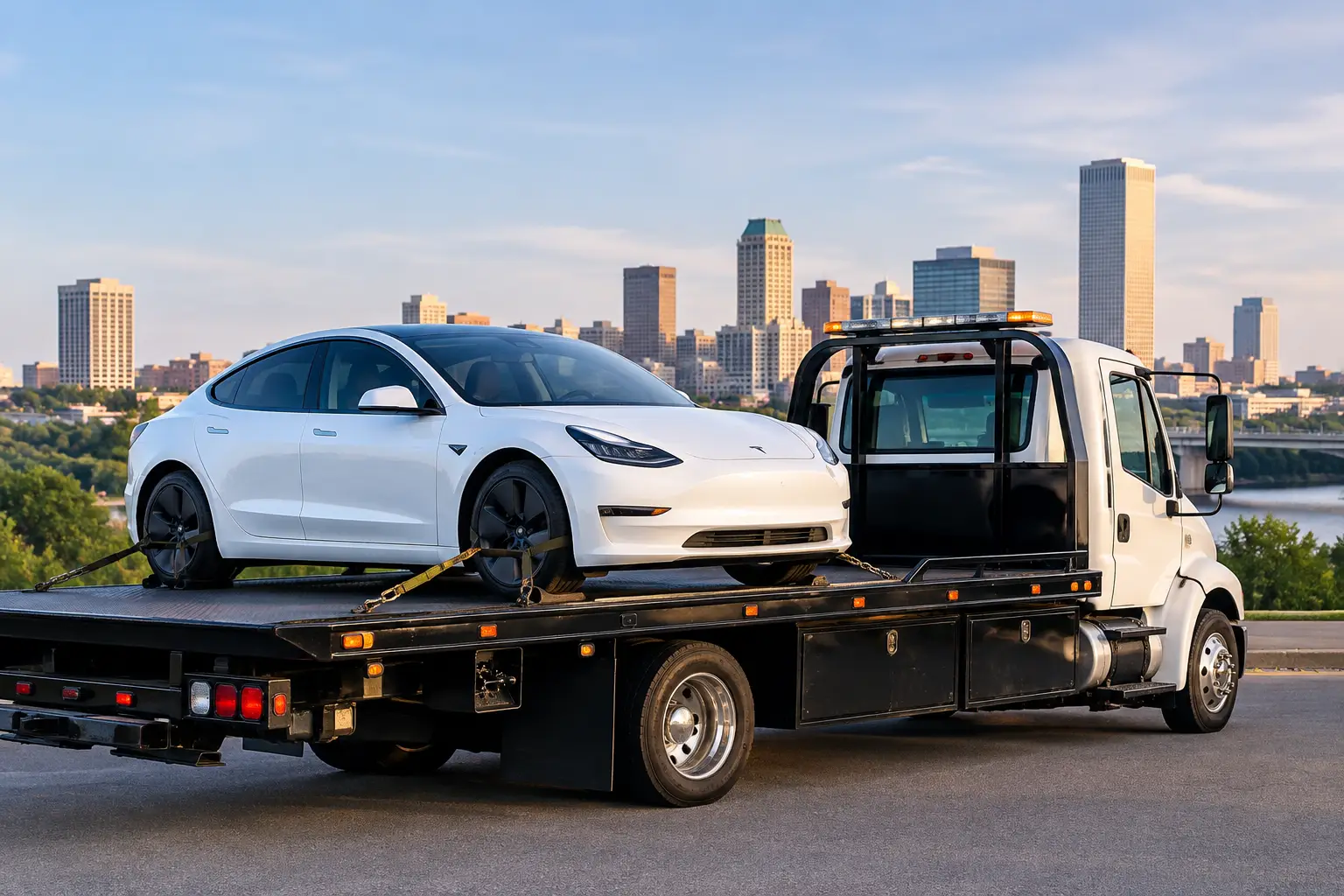
For electric vehicles, do not assume a basic tow setup is safe. EVs, including Teslas, have vehicle-specific loading and transport requirements. Improper recovery or dragging can damage the underbody, tires, or drive components. A flatbed keeps the vehicle fully off the ground and is generally the right method when an EV cannot be driven safely.
The same care matters for low-clearance cars, all-wheel-drive vehicles, and heavy-duty pickups. The right equipment and loading angle depend on the vehicle and where it is sitting. A careful operator will assess the condition before moving it instead of rushing into a pull that causes additional damage.
Avoid These Wet-Road Mistakes
The first mistake is driving around barricades or through water just because another vehicle made it through. Water depth changes, and larger trucks may have more clearance than a passenger car. Even shallow moving water can push against tires and reduce control.
The second is spinning the tires when stuck. Whether the vehicle is in mud near a Riverside trail entrance, on a slick grassy shoulder, or in a shallow ditch, aggressive acceleration can dig it in deeper. It may also damage the transmission, tires, or nearby pavement. Keep the wheels as straight as possible, stop trying to force it out, and arrange a winch-out when the vehicle cannot gain traction safely.
The third is accepting a risky tow method because the weather is unpleasant and you want the situation over fast. Rain does not make careful vehicle handling less important. If your car has low ground clearance, accident damage, all-wheel drive, or an EV battery pack underneath, proper flatbed transport is worth waiting for.
Finally, do not leave a disabled vehicle without clearly understanding where it will be taken. Have a repair shop, dealership, home address, or other destination in mind before the truck arrives. Clear communication saves time when rain, traffic, and visibility are already working against you.
What to Tell the Tow Operator
A short, accurate description helps get the right truck and equipment dispatched. Explain whether the vehicle is in a parking lot, driveway, shoulder, median, flooded area, or soft ground. Mention if it has gone through standing water, has a flat tire, will not shift into gear, has collision damage, or is an electric vehicle.
Location details matter on Riverside. “Near Riverside” covers a lot of roadway. Give the closest cross street, landmark, bridge, apartment complex, or business, along with the direction you were traveling. If you are near the Arkansas River, be clear about which side of Riverside you are on and whether the vehicle is accessible from the road.
Also tell the operator if the vehicle is in a garage, has very low clearance, or has been sitting with the wheels turned sharply. Those details affect how the truck positions, loads, and secures the vehicle. A few extra seconds on the phone can prevent delays once the truck arrives.
Protecting Your Vehicle While You Wait
If you can safely do so, take a few photos of the vehicle and the surrounding area before it is loaded. This is especially helpful after a slide-off or accident. Gather personal belongings you may need, including your wallet, medication, work items, garage remote, and child seats if they need to be transferred later.
Keep the keys available and make sure the operator knows about any special starting procedure, parking brake issue, aftermarket suspension, or alarm. If your vehicle is an EV, let them know the model and whether it can be shifted into transport mode. Do not attempt to crawl underneath the vehicle or attach your own recovery straps in rain or standing water.
Tulsa Towing, powered by Neptune Towing, handles local flatbed towing and winch-out situations with the goal of moving the vehicle without adding damage or confusion. The focus is simple: assess the scene, use the right equipment, and get the vehicle to the destination you choose.
Rain on Riverside does not automatically mean you need a tow truck. But if the car is stalled, stuck, damaged, or unsafe to drive, making the careful call early is usually the least stressful way to get out of a bad situation.