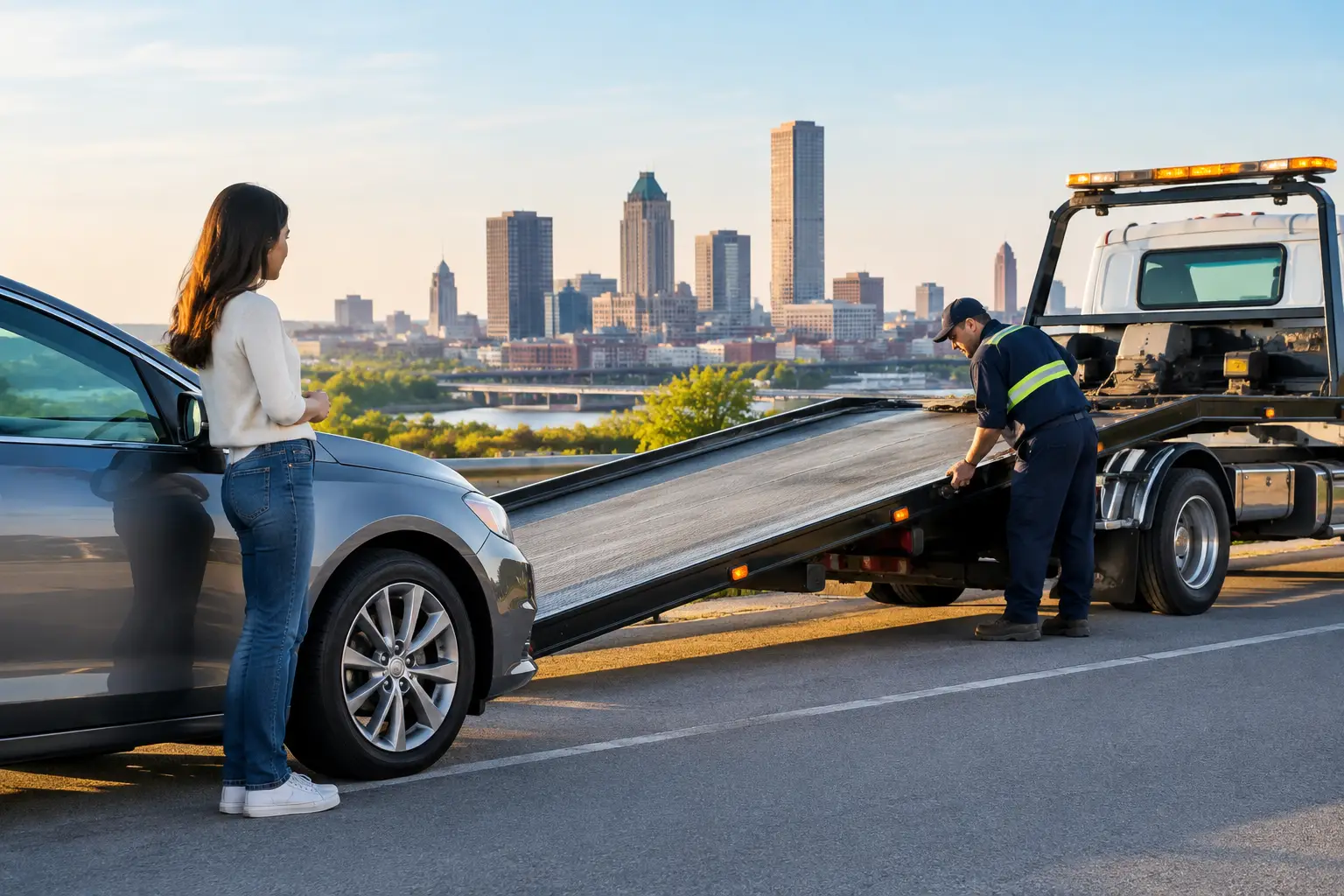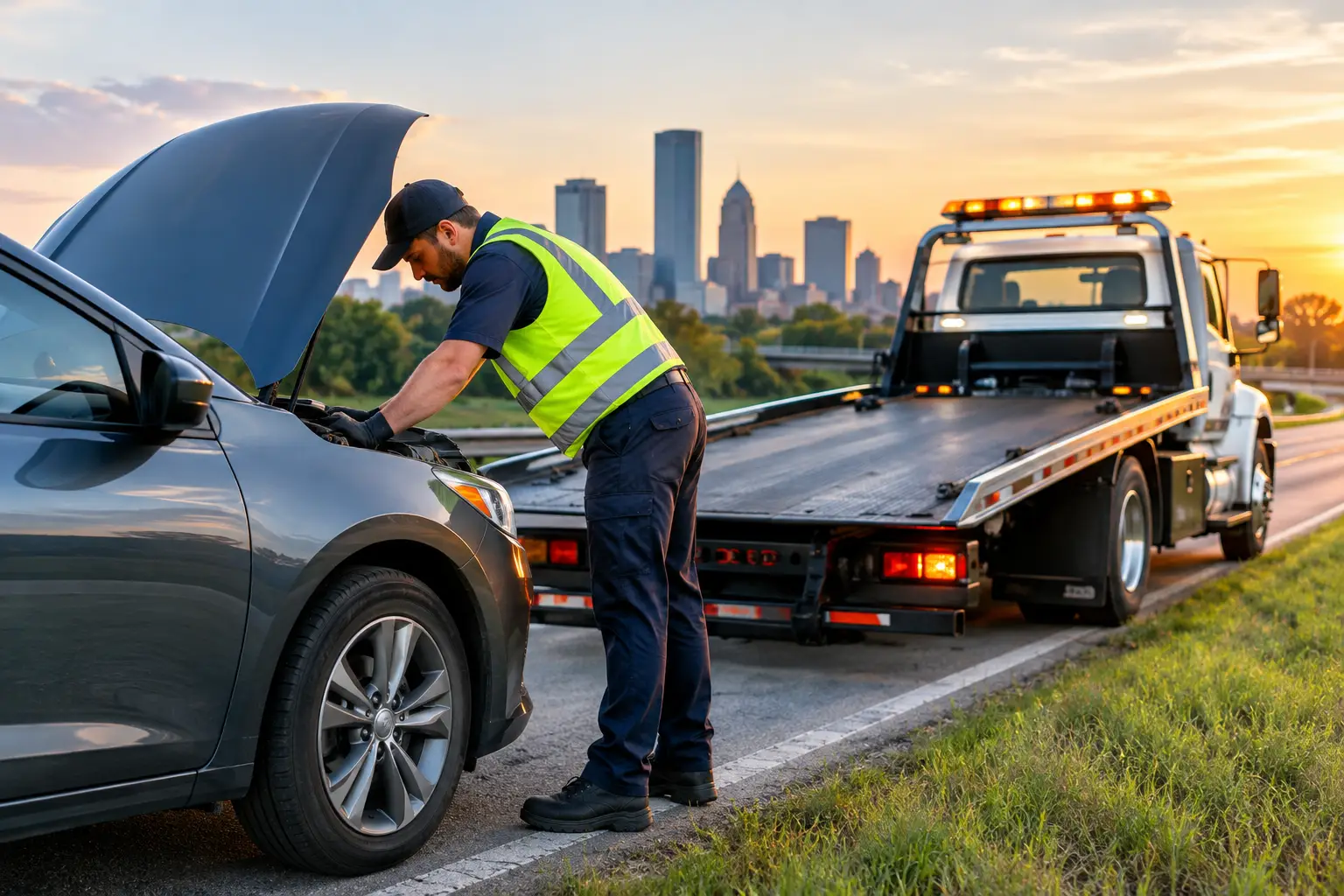
A dead truck on the shoulder of I-44, a pickup that will not start in a grocery store lot, or a vehicle stuck off a wet driveway all create the same immediate question: how much does a truck tow cost? The honest answer is that it depends on where the truck is, where it needs to go, and what has to happen before it can be loaded safely.
A clear quote should never feel like a guessing game. The towing company needs a few practical details first: your location, the make and condition of the vehicle, the destination, and whether the truck can roll and steer. Once those details are clear, the price is usually straightforward.
How Much Does a Truck Tow Cost in Tulsa?
For a standard local tow, drivers often see a base service charge plus a mileage charge after a certain distance. A short tow across town may cost roughly $100 to $200, while a longer trip can run higher based on mileage, truck size, traffic, and the work required at pickup. A disabled heavy-duty pickup, a vehicle that needs recovery before loading, or a tow from outside the main service area will generally cost more than a passenger car that is parked safely and ready to move.
Those figures are useful for planning, but they are not a one-price-fits-all promise. Towing is not just putting a hook on a vehicle and driving away. Proper loading, vehicle position, clearance, and destination all affect the job. That is especially true with trucks, which can be heavier, wider, and harder to access than a standard sedan.
The fastest way to get an accurate number is to provide the exact pickup point and destination. If you are near Riverside, Memorial, US 75, or another busy corridor, say which direction you are traveling and whether the truck is on the road, in a lot, or behind a building. That helps the dispatcher send the right equipment and avoid surprises when the tow truck arrives.
What Goes Into the Cost of a Truck Tow?
Base dispatch and loading
Most towing jobs begin with a base charge that covers sending a truck to your location, assessing the situation, and loading the vehicle. This is why a two-mile tow is not priced the same as simply paying for two miles of driving. The operator still has to reach you, secure the vehicle, complete a safe load, transport it, and unload it at the repair shop, dealership, home, or other destination.
For a truck that is parked in an open lot and rolls normally, loading may be quick. A truck with a locked steering wheel, flat tires, damaged suspension, or a dead battery can take more time and require different handling. Careful work matters here. Rushing a disabled vehicle onto equipment can cause additional damage.
Mileage and destination
Mileage is usually the biggest variable after the initial service charge. A short city tow from Midtown to a nearby repair shop is different from moving a truck from Tulsa to Broken Arrow, Jenks, Bixby, or Glenpool. The longer the transport, the more time, fuel, and equipment use are involved.
Your destination also matters because some locations are easier to access than others. A vehicle delivered to a repair shop during business hours is often simple. A tight apartment complex, a crowded dealership lot, or a location with low overhead clearance may require more careful positioning and extra time.
Vehicle size, weight, and condition
Not every truck is the same tow. A compact pickup, full-size half-ton truck, lifted 4×4, diesel pickup, and heavy-duty work truck may all require different equipment or loading methods. Larger trucks can weigh significantly more, and modified vehicles may have clearance, wheel, or drivetrain considerations that need to be handled correctly.
A truck that rolls freely is also less complicated than one that cannot move under its own power. If a wheel is damaged, the vehicle is stuck in park, the steering is locked, or the suspension has failed after an accident, the tow operator may need dollies, skates, or another safe loading method. That additional work can change the price, but it is better than dragging a truck or damaging the drivetrain to save a few minutes.
Recovery or winch-out work
A tow and a recovery are not always the same service. If your truck is on the pavement, accessible, and ready to load, it is generally a standard tow. If it is in a ditch, mud, a median, a drainage area, or against a curb where it cannot be loaded normally, winch-out work may be needed first.
Recovery pricing depends on how far the vehicle is stuck, the angle of the pull, ground conditions, access for the tow truck, and whether the truck needs to be stabilized before it can move. A light pull from a soft shoulder is very different from recovering a heavy pickup after rain has turned a roadside ditch into mud. Giving an honest description when you call helps the operator arrive prepared.
Time, traffic, and access
Towing in Tulsa can be simple or complicated depending on the location. A breakdown in a quiet residential driveway is usually safer and easier than a disabled truck on the shoulder of Highway 169 during rush hour. Traffic control, limited shoulder space, weather, and the need to work around other vehicles can add time to the job.
The same applies to parking garages and tight spaces. Some vehicles cannot be safely handled with the same setup used in an open lot. Proper equipment and a careful approach matter more than trying to force a quick load in a cramped area.
Flatbed Towing Can Affect the Price – and Protect the Vehicle
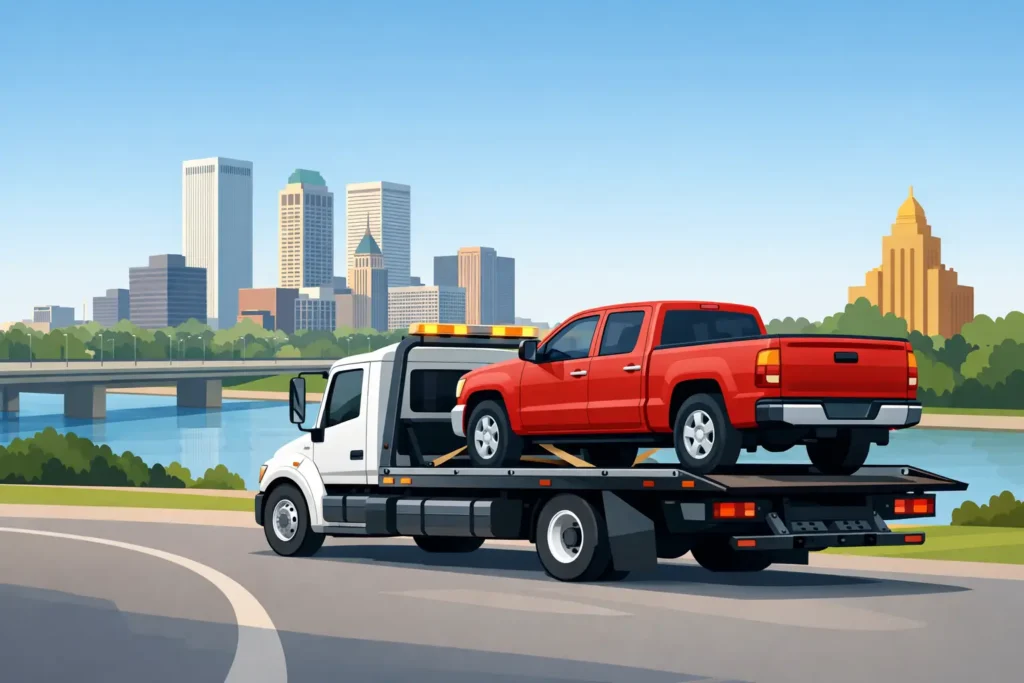
Flatbed towing may cost more than the simplest conventional tow in some situations, but it offers a clear advantage: all four wheels are carried off the road. For many trucks, all-wheel-drive vehicles, low-clearance cars, electric vehicles, and trucks with accident damage, that is the safer way to transport the vehicle.
A flatbed also makes sense when a truck has drivetrain concerns, a damaged tire or wheel, or a suspension issue. Rather than putting additional stress on a vehicle that is already disabled, the truck is loaded and secured for transport. The goal is to get it to the destination without turning one problem into a larger repair bill.
When comparing quotes, ask what equipment will be used and whether the vehicle will be safely loaded for its condition. The lowest number is not always the complete picture if the vehicle needs special handling.
What to Tell the Dispatcher for a Reliable Quote
A few details make a real difference. Start with your exact location, including nearby cross streets or a business name if you are in a large parking lot. Give the year, make, and model of the truck, then explain whether it runs, rolls, steers, and has all four tires inflated.
Also mention any issue that changes loading: accident damage, a locked wheel, a lifted suspension, a trailer attached, a low parking garage, or a truck stuck off the pavement. Let the dispatcher know where you want it delivered and whether the repair shop is open. These details help match the right tow truck to the job and produce a more accurate estimate before dispatch.
If roadside help may solve the problem, say that too. A jumpstart, tire change, lockout service, or minor on-site issue can sometimes get you moving without a tow. If the truck is unsafe to drive, though, the right call is to transport it rather than risk a breakdown in traffic or further damage.
Ways to Avoid Surprise Towing Charges
Before authorizing the tow, confirm the pickup location, destination, and whether the quoted amount includes the expected mileage. Ask whether the vehicle condition requires recovery or special equipment, particularly if it is stuck, damaged, or unable to roll. If there is a change after the truck arrives, a clear explanation should come before additional work is performed whenever conditions allow.
It also helps to remove personal items you need before the truck is loaded. Keep your keys available, have the destination address ready, and tell the operator about any garage codes or access instructions. Small details save time at both ends of the tow.
When your truck is disabled, price matters, but so does how it is handled. A clear estimate, the right equipment, and careful loading give you a better chance of arriving at the repair shop with only the original problem to deal with.